Written by Andrés Cifuentes — Chile
Stay: August 2025, 4 nights
The Plan: Four Days, Every Trail
I should probably explain something about myself before this story makes sense: I track everything. Steps, heart rate, sleep cycles, caloric intake, elevation gain. I have spreadsheets for my spreadsheets. My friends say I'm "a lot." My professors at the medical faculty in Santiago say I'm "thorough." My mother says I'm "obsessive, but at least you're not obsessive about something dangerous."
She clearly hasn't seen the trail to Cueva del Esplendor in the rainy season.
I came to Jardín with a specific mission: hike every major trail in four days. I'd researched them all beforehand — distances, elevation profiles, difficulty ratings, estimated times. I had a colour-coded itinerary. I had downloaded offline maps. I had packed precisely calculated quantities of trail mix (almonds, raisins, dark chocolate, ratio 3:2:1 by weight).
The plan was perfect. Jardín, predictably, had other ideas.
Day One: Cristo Rey — The Warm-Up
Trail stats:
- Distance: ~3.5 km one way
- Elevation gain: ~450 meters
- Time: 1 hour 15 minutes up, 50 minutes down
- Difficulty: Moderate
- Heart rate peak: 168 bpm (I was pushing it)
I started with Cristo Rey because every hiking guide calls it the easiest. "A pleasant morning walk," said one blog. "Suitable for all fitness levels," said another.
Lies. Well-intentioned lies, but lies.
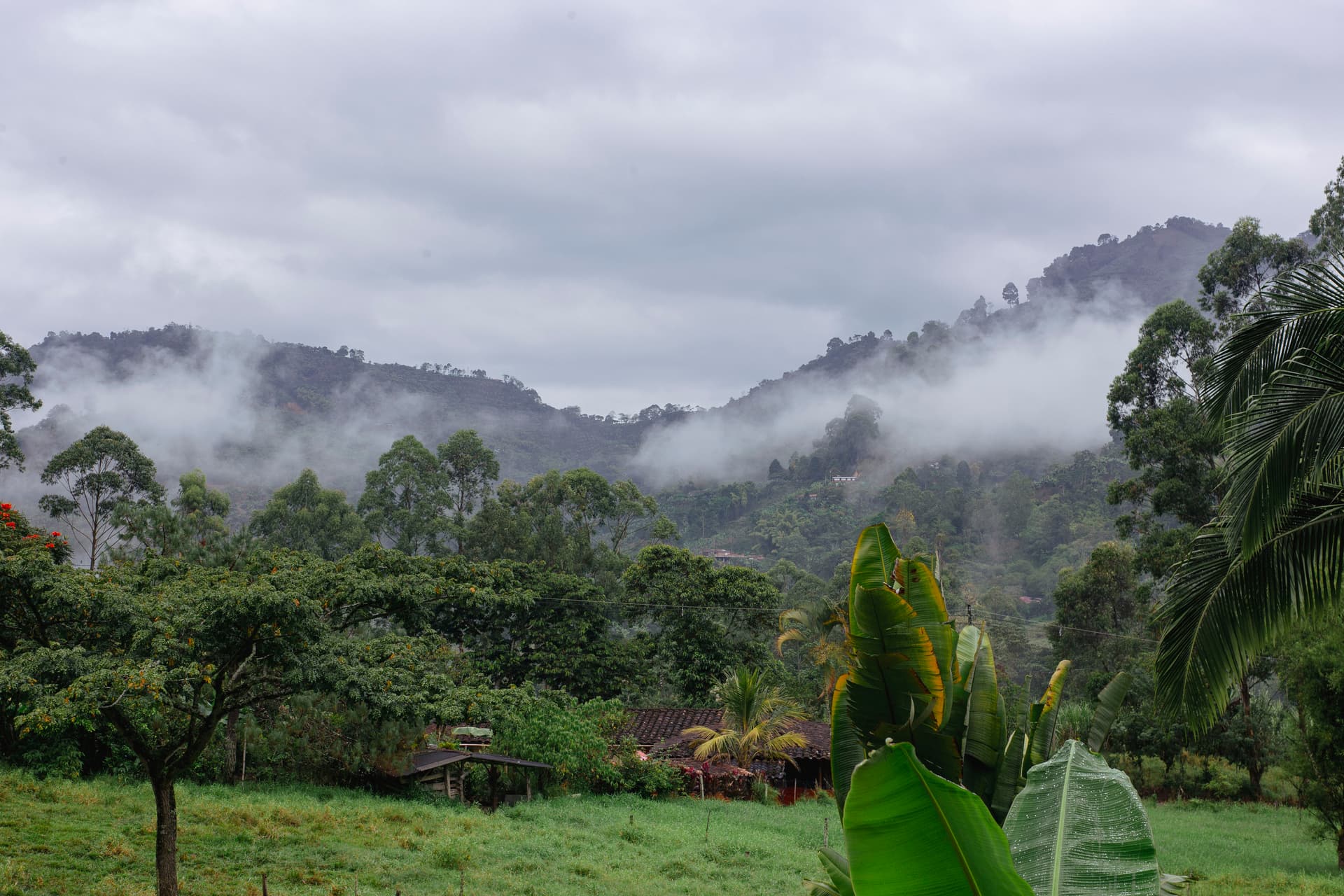
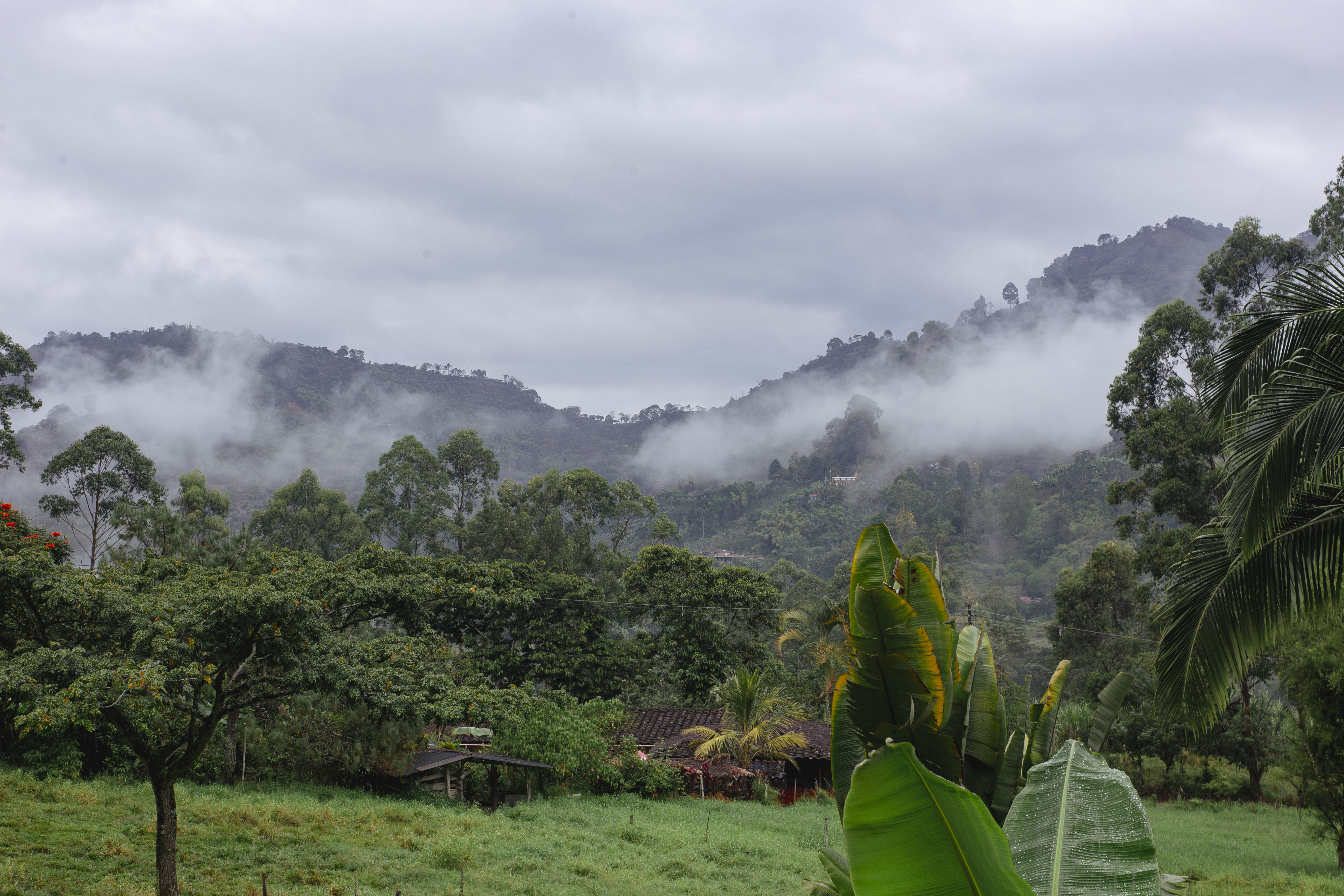
The trail is steep. Not Patagonia steep, not Torres del Paine steep, but steep enough that the casual tourists in flip-flops were turning back after twenty minutes. The path winds up through farmland — cows staring at you with that bovine judgment — and then through patches of cloud forest where the vegetation closes in and the air gets thick and humid.
I was dripping sweat within fifteen minutes. The altitude in Jardín (approximately 1,750 meters above sea level) isn't extreme, but combined with the humidity, it hits differently from the dry altitude I'm used to in the Chilean Andes. My heart rate monitor confirmed what my lungs were telling me: this was not a casual warm-up.
But the summit. The summit made everything worth it.
The Cristo Rey viewpoint gives you a 360-degree panorama of the Jardín valley. The town below looks miniature — you can pick out the Basilica's spires, the coloured buildings around the plaza, the grid of streets disappearing into green. Beyond the town, mountains layer upon mountains, each ridge a slightly different shade of green, fading to blue at the horizon. On a clear morning, you can see deep into the Andes.
I stood there for twenty minutes, taking photos, recording GPS coordinates, measuring visibility. Then I put my phone down and just looked. Sometimes the data isn't the point.
Day Two: Cueva del Esplendor — The Real Test
Trail stats:
- Distance: ~10 km round trip
- Elevation change: ~600 meters total (undulating)
- Time: 3 hours 20 minutes to cave, 2 hours 45 minutes return
- Difficulty: Challenging (especially in wet conditions)
- Mud incidents: 4 (one catastrophic)
The Cueva del Esplendor is the marquee hike in Jardín, and I understood why within the first hour. This trail doesn't mess around.
I hired a guide through the hostel — not because I needed navigation help (my offline maps were excellent), but because the terrain in the rainy season is genuinely tricky, and I'm a med student, which means I know exactly how many ways you can injure yourself on a slippery trail. Knowledge is not always comforting.
The first section crosses open farmland, gradually ascending through pastures dotted with cattle and the occasional horse. The footing is already challenging — the clay soil in this region turns to a consistency somewhere between butter and ice when wet. My hiking boots, which handled the Atacama Desert and the Carretera Austral without complaint, were sliding on every incline.
Then you enter the cloud forest. The trail narrows. The canopy closes overhead. The air becomes thick, damp, and fragrant — decomposing leaves, orchids, the sharp green smell of ferns. The biodiversity here is staggering. Our guide pointed out at least twelve species of epiphytes on a single tree trunk. My medical brain started cataloguing potential allergens and gave up after five minutes.
The catastrophic mud incident occurred at kilometre six. I planted my left foot on what appeared to be solid ground. It was not solid ground. It was a mud pocket of approximately forty centimetres depth, and my leg disappeared into it up to the knee. The extraction took four minutes and cost me one sock.
But the cave. My God, the cave.
I have been to some impressive natural formations. I've seen the geysers of El Tatio at 4,300 meters. I've stood at the base of glaciers in Patagonia. But watching a waterfall pour through the ceiling of a cave, creating a column of white water that crashes into a turquoise pool below, while sunlight streams through the opening and turns the mist into gold — that is something that transcends data.
I forgot to check my heart rate. I forgot to record the GPS coordinates. I stood in the spray and felt the cold water on my face and thought about nothing except the extraordinary fact that this place exists.
Day Three: Cloud Forest Reserve
Trail stats:
- Distance: ~8 km loop
- Elevation change: ~500 meters
- Time: 4 hours (including multiple stops)
- Difficulty: Moderate-challenging
- Bird species spotted: 14 (I started counting accidentally)
Day three I explored the cloud forest trails above Jardín. This was different from the previous hikes — less about reaching a dramatic destination and more about the trail itself.
The cloud forest is an ecosystem I'd read about in biology textbooks but never experienced firsthand. It exists in a narrow elevation band — roughly 1,800 to 3,000 meters — where warm, moist air rising from the lowlands meets cooler mountain temperatures and condenses into a permanent layer of mist. The result is a forest that is perpetually damp, extraordinarily biodiverse, and eerily beautiful.
Walking through it feels like being inside a living organism. Every surface is covered in something — moss, lichen, orchids, bromeliads, ferns. The trees are draped in curtains of Spanish moss that filter the light into a pale green glow. The silence is profound, broken only by bird calls and the dripping of moisture from leaf to leaf.
I spotted fourteen bird species, including three that the guide identified as endemic to this specific altitude range. One was a tanager with plumage so blue it looked artificial, like someone had dipped it in paint. The birdwatching in this area is apparently world-class — serious birders come from around the globe for species you can't find anywhere else.
Day Four: Swimming Holes and Recovery
Trail stats:
- Distance: ~5 km total walking
- Elevation change: Minimal (descending to river)
- Time: Unhurried (I stopped tracking)
- Difficulty: Easy
- Water temperature: approximately 16°C (refreshing/painful)
My legs were destroyed. Three consecutive days of mountain hiking in humid conditions had left my quadriceps staging a formal protest. My right knee, which has been temperamental since a football injury in university, was making noises that no joint should make.
As a med student, I prescribed myself the following: rest, cold water immersion (anti-inflammatory), and approximately 2,500 calories of Colombian food.
I walked to the swimming holes at a pace that can only be described as "elderly." The trail descends to the river through lush vegetation, and the pools are stunning — clear, cold, surrounded by rocks and tropical plants.
I lowered myself into the water with the caution of someone who knows exactly which muscle groups are inflamed. The cold hit like an electric shock — roughly 16°C by my estimate — but within seconds, the anti-inflammatory effect was tangible. My legs stopped screaming and started merely complaining.
I floated on my back, staring up at the canopy and the clouds beyond it, and for the first time in four days, I wasn't thinking about elevation profiles or heart rate zones. I was thinking about how strange and wonderful it is that water this cold and air this warm can exist in the same place.
The Hostel as Base Camp
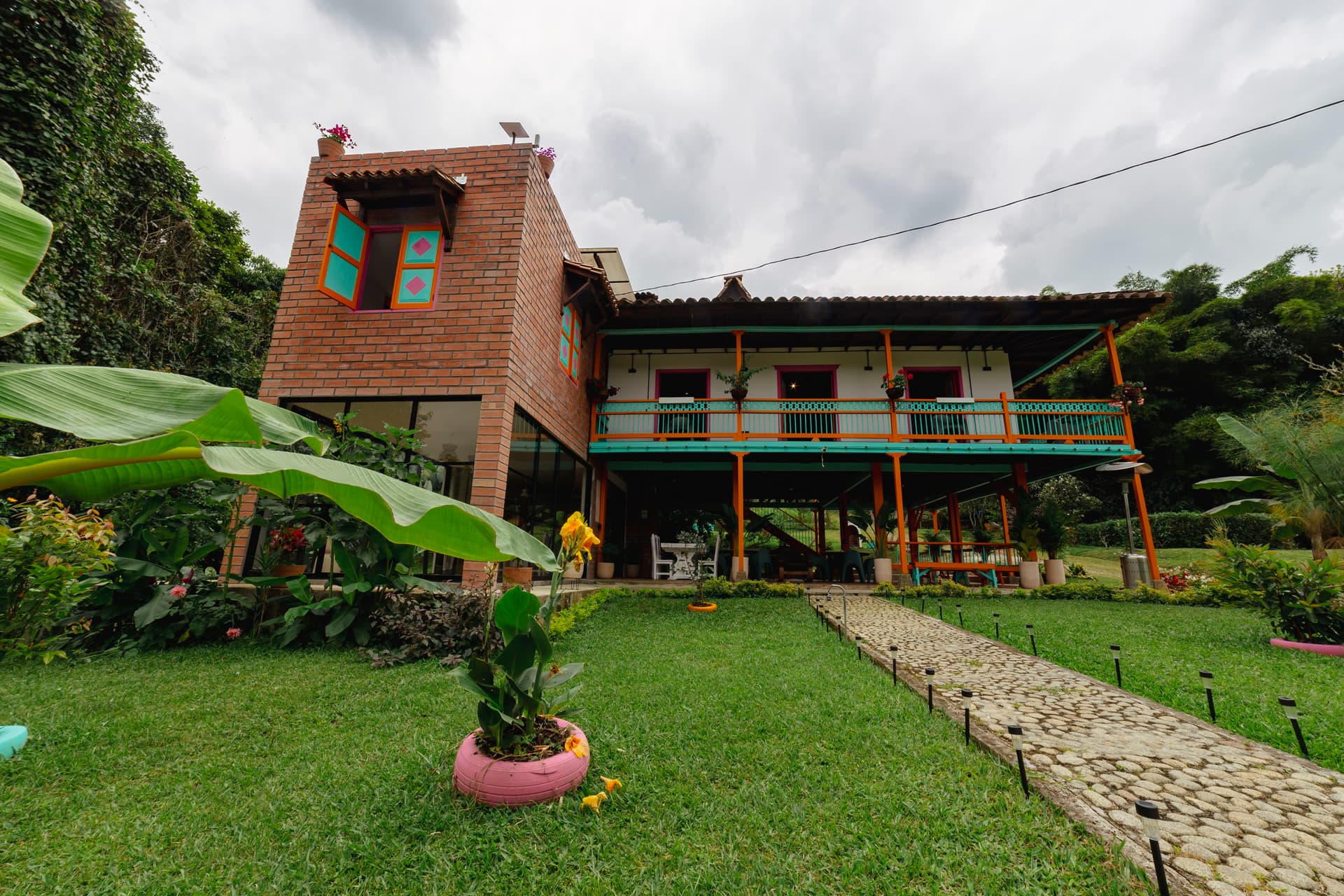
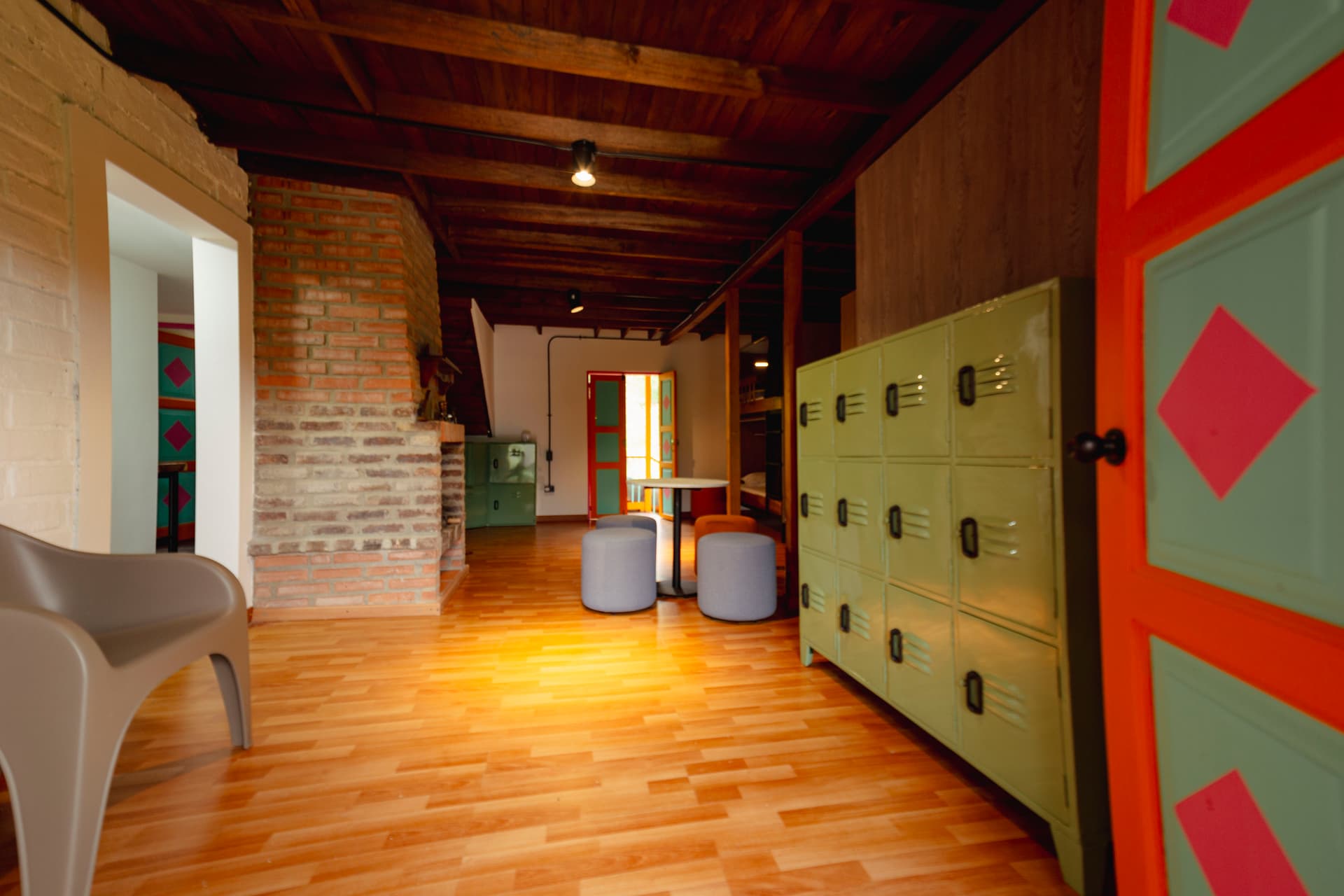
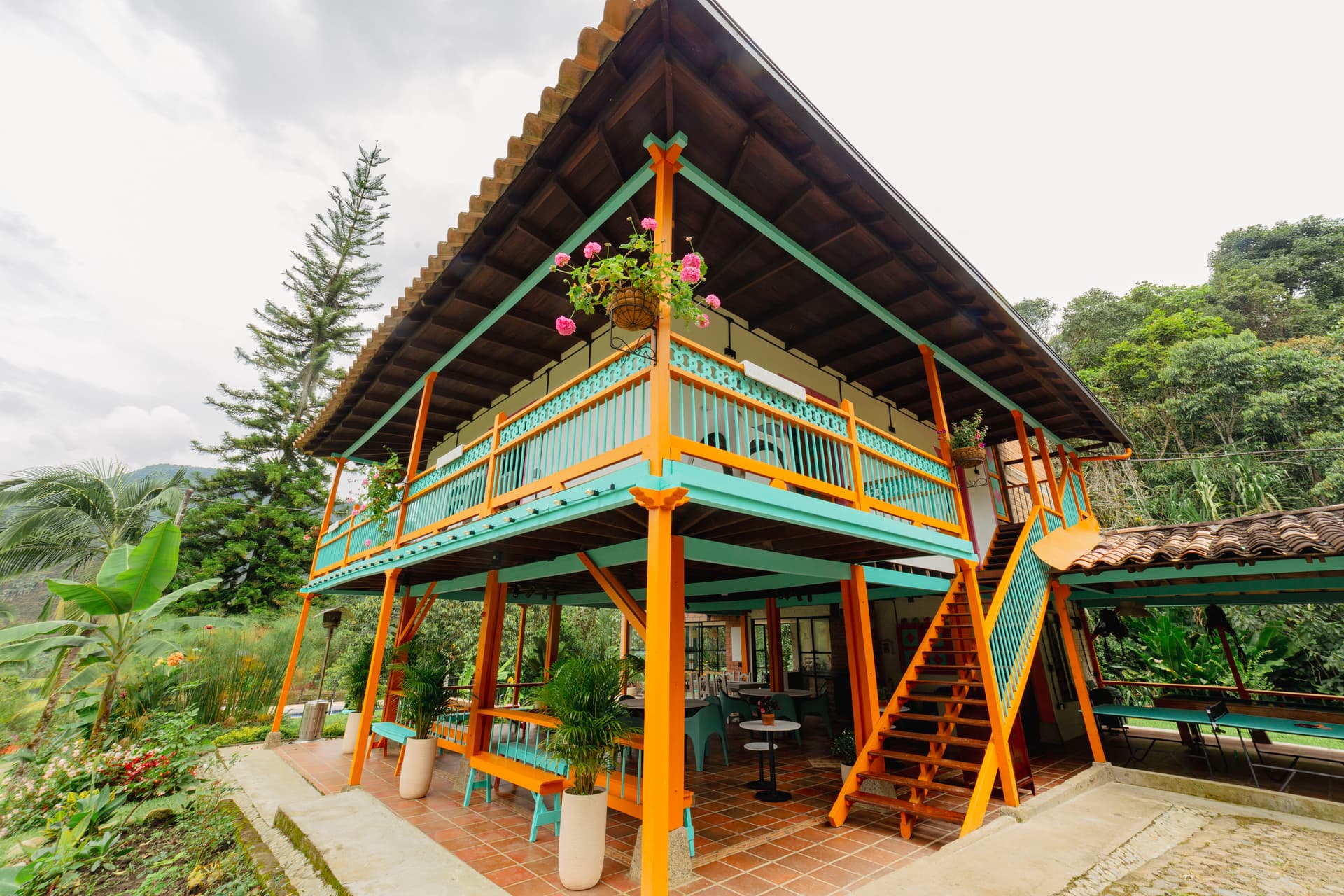
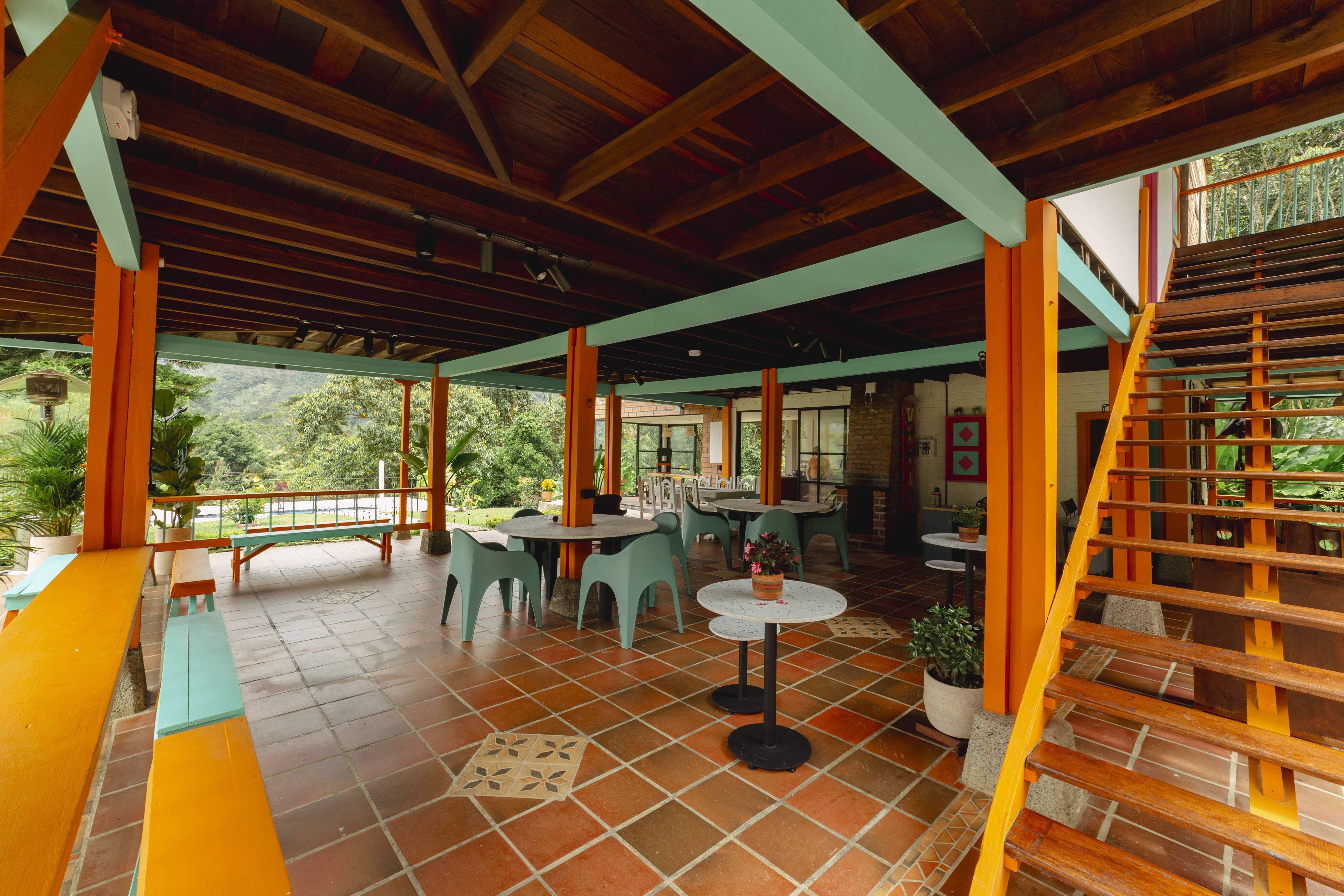
I need to mention Isla de Pascua hostel because it was the perfect base for this kind of hiking trip. After each day on the trail, I returned to the hostel genuinely grateful for its existence.
The pool was essential for recovery — warmer than the river, cold enough to help with muscle inflammation. The common area had good food and the kind of social atmosphere that's perfect when you're tired enough to enjoy conversation but too exhausted to go out. The beds were comfortable (critical when your body has been abused on mountain trails for eight hours).
The staff were knowledgeable about the trails and helped me adjust my itinerary when day two ran longer than expected. They also connected me with an excellent local guide who understood that I wanted a challenging pace, not a tourist stroll.
What the Numbers Don't Capture
I'm going to say something that goes against every analytical instinct I have: the best parts of Jardín can't be measured.
I can tell you the elevation of Cristo Rey (approximately 2,200 meters at the summit). I can tell you the flow rate of the Cueva del Esplendor waterfall is roughly 200 litres per minute during the rainy season (estimated). I can tell you my average heart rate across four days of hiking was 142 bpm.
But I can't quantify the feeling of standing in a cave while a waterfall pours through the ceiling. I can't assign a number to the quality of silence in a cloud forest. I can't create a spreadsheet for the experience of floating in a cold river after three days of pushing your body through mountains.
Medicine teaches you to measure, diagnose, and treat. Jardín taught me that some things don't need diagnosing. Some things just need experiencing.
I'll come back. Next time, I'll add the horseback trails and the cable car to La Garrucha. I'll bring better socks. And maybe — just maybe — I'll leave the heart rate monitor at home.
Or not. Let's not get crazy.
— Andrés Cifuentes, Santiago, Chile. August 2025.
Ready to experience Jardín?
Book Now Isla de Pascua