Written by Elena Volkov — Russia
Stay: March 2026, 6 nights
The Dance of Jardín: A Russian Ballet Teacher Finds the Rhythm of the Mountains
I have spent my life in studios with mirrors and barres, counting beats, correcting posture, asking young dancers to hold their arabesque for one more second, always one more second. In Saint Petersburg, where I taught for twelve years, the studios were grand — high ceilings, polished floors, the ghost of Vaganova in every corner. In Moscow, where I trained, the Bolshoi's shadow fell across every plié. My world was structured, disciplined, measured in counts of eight.
I came to Colombia on an impulse that felt, to me, like a grand jeté — a leap into space with no certainty of where I would land. A former student, now dancing with a contemporary company in Bogotá, had been sending me videos of her life in South America. "Elena Mikhailovna," she wrote, "there is a town in the mountains that moves like music. You need to see it."
She was speaking of Jardín. She was not exaggerating.
First Position: Arrival
The journey from Medellín is a descent into green. The bus follows the curves of the mountain roads with a fluidity that reminded me of port de bras — the carriage of the arms through space, each movement flowing into the next without pause or interruption. The valleys opened and closed like curtains on a stage, revealing and concealing the landscape in a slow, deliberate sequence.
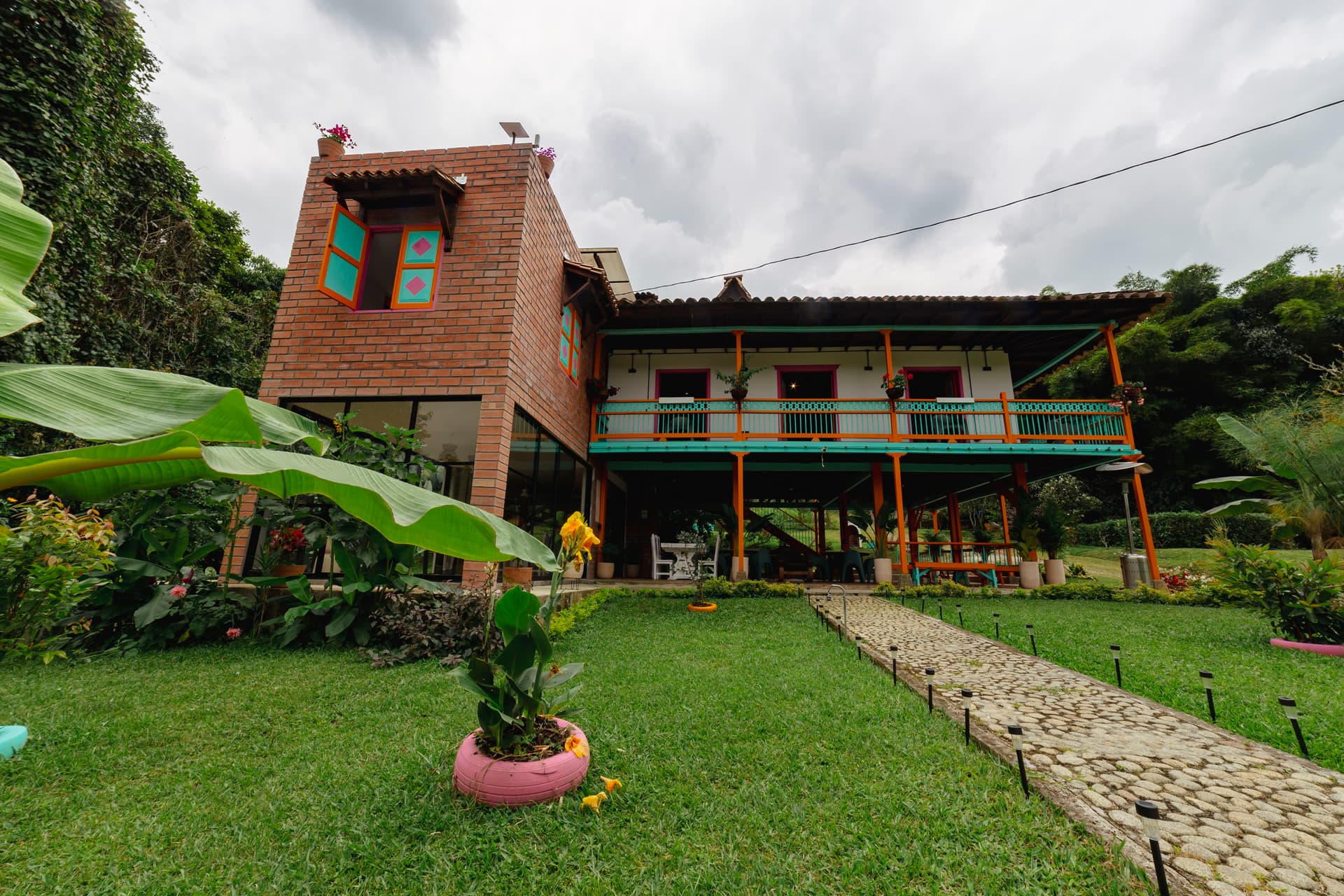
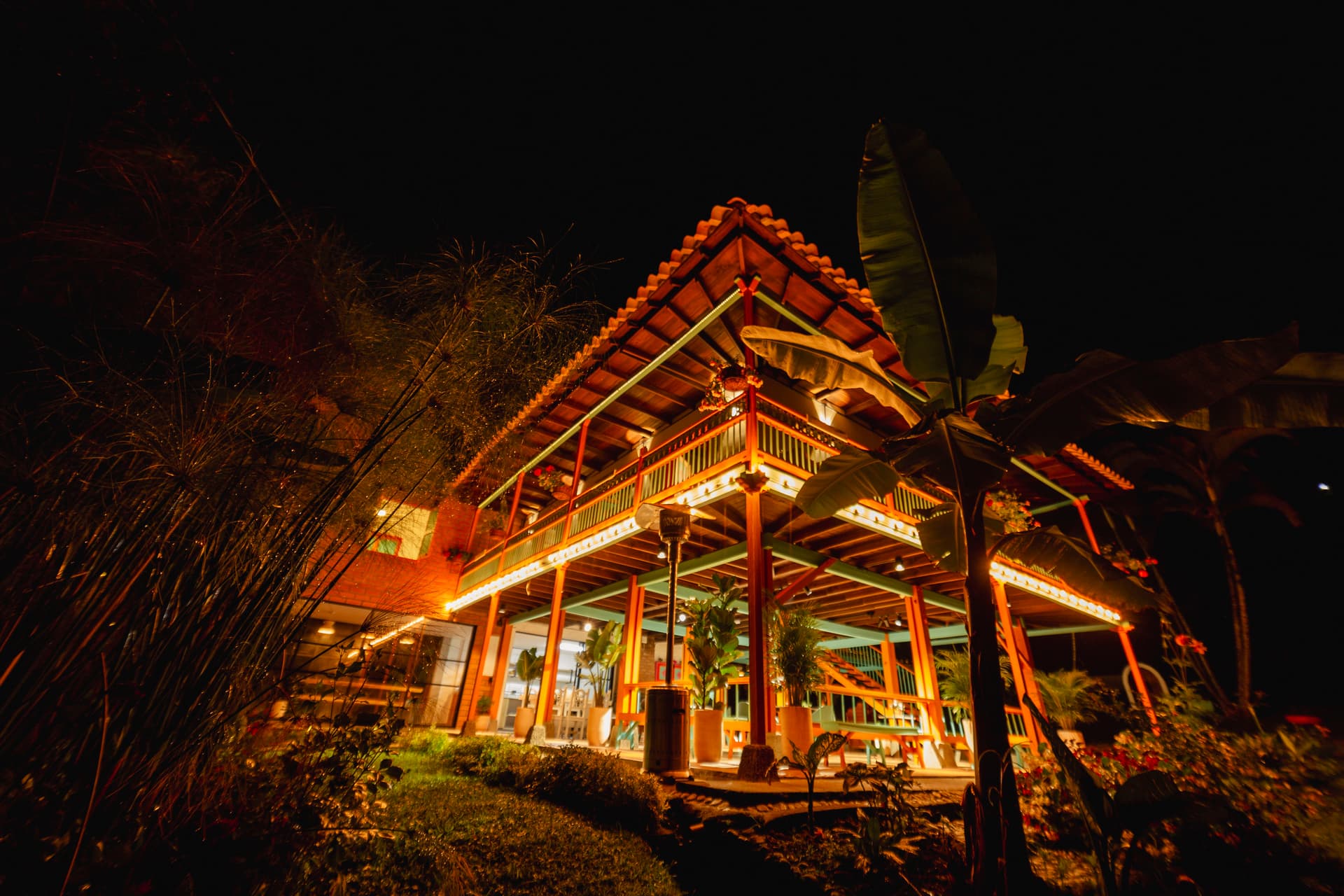
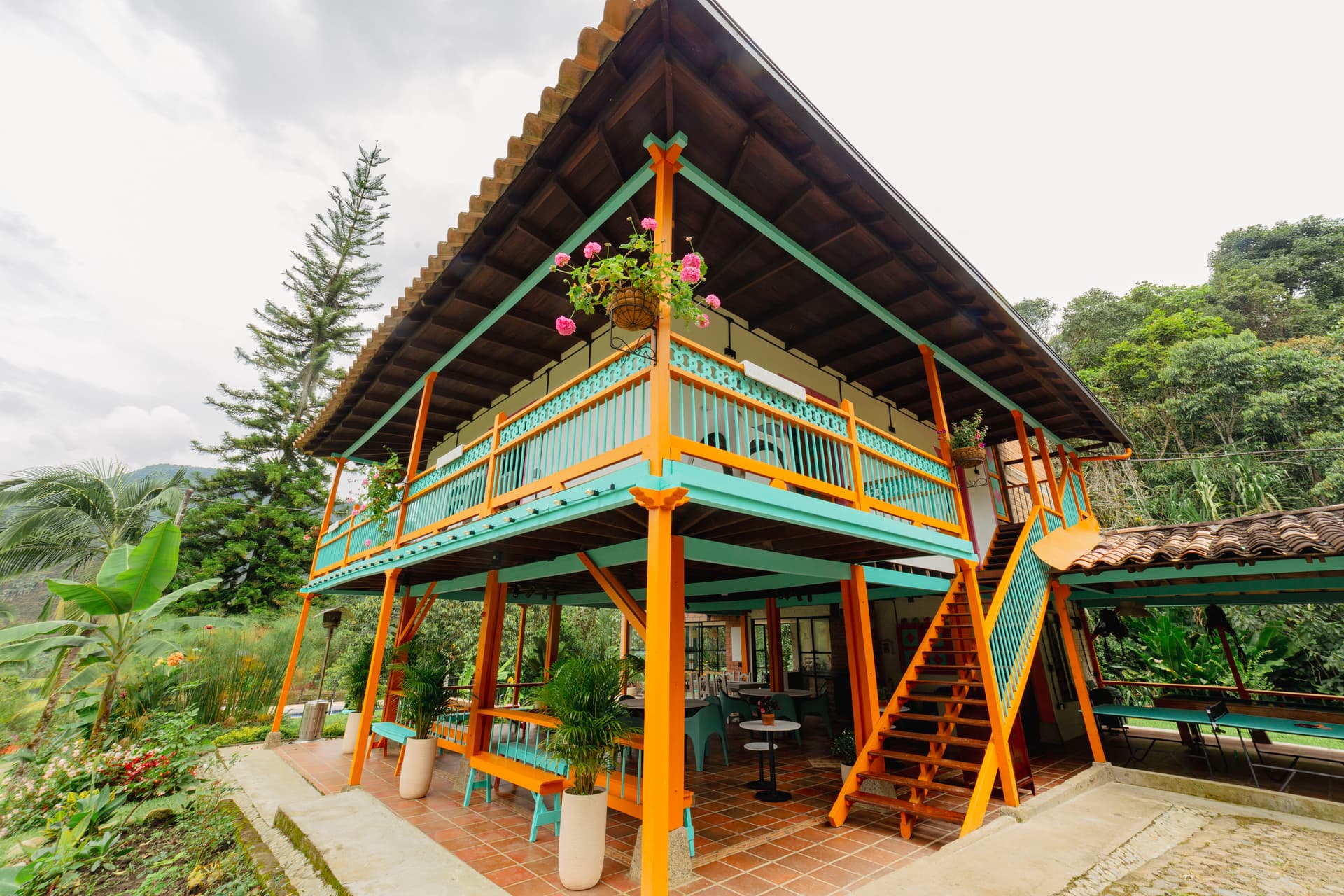
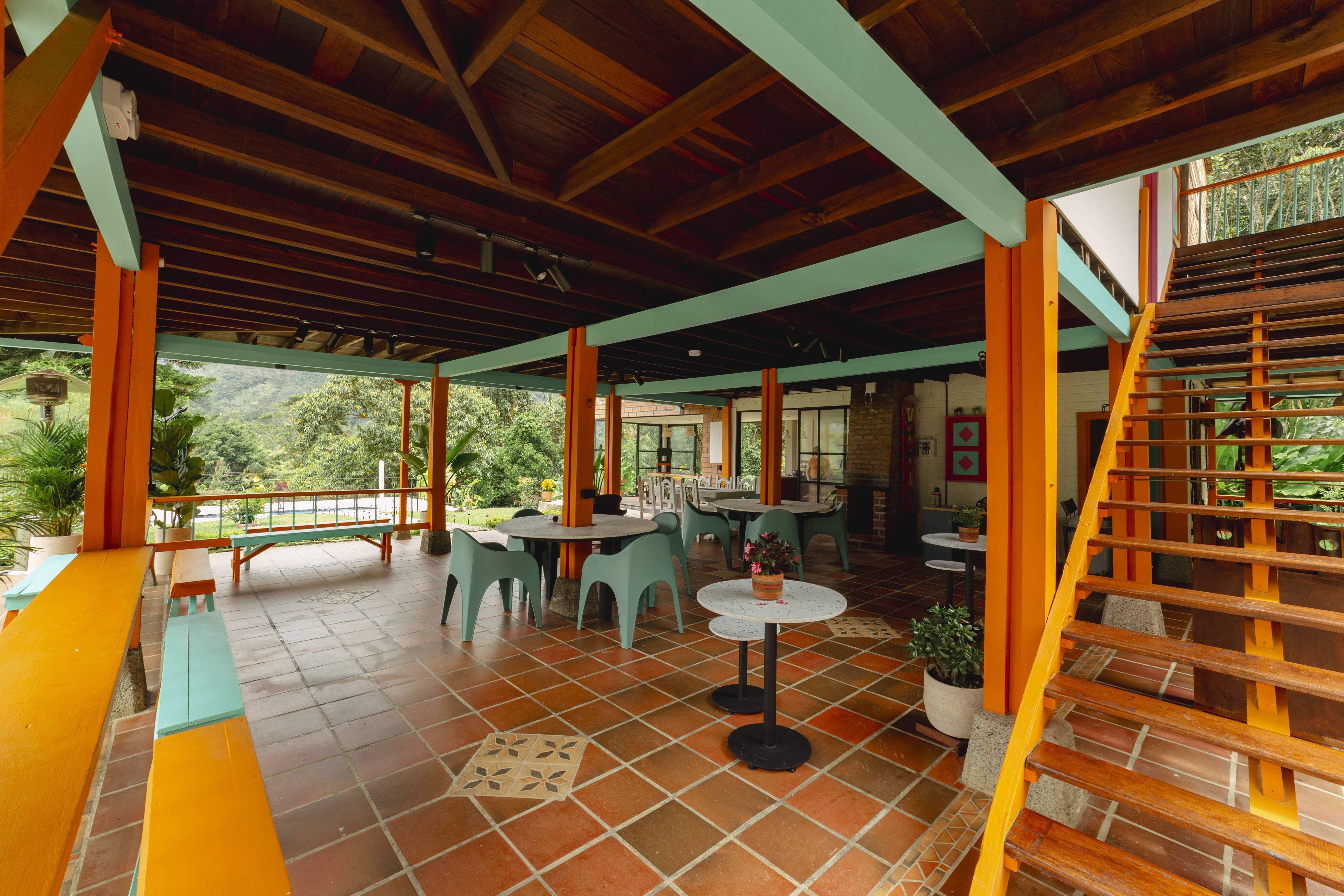
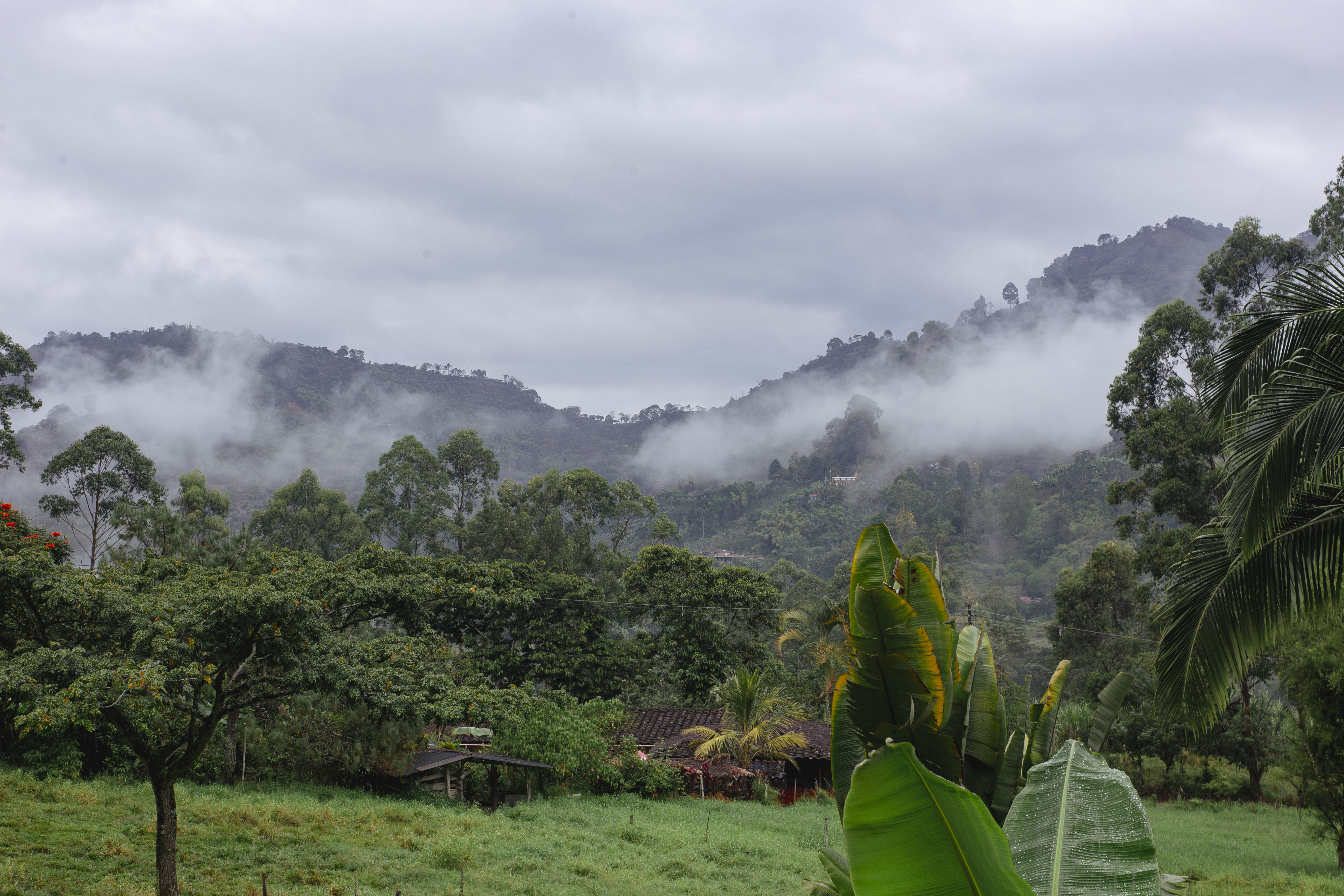
I arrived at Isla de Pascua in the late afternoon. The hostel is set against the mountains in a way that creates a natural amphitheater — the pool at center stage, the gardens as wings, the mountains as a painted backdrop that no set designer could improve upon. I stood in the courtyard and felt that particular sensation that I have learned to recognize after years on stage: the awareness of being in a space that was designed for something beautiful.
Morning Barre
I am a creature of routine. Even on vacation — a concept I find fundamentally suspicious — I wake early and stretch. At Isla de Pascua, I found a quiet corner of the garden where the morning light filtered through the leaves and the only sound was birdsong and the distant murmur of the river. I did my barre exercises there each morning, using the garden railing as my barre, the mountains as my mirror.
On my second morning, a young Colombian woman joined me. She was not a dancer — she told me she was a university student from Bogotá visiting for the weekend — but she had done yoga and was curious about ballet stretches. I taught her first position, second position, a basic plié. She laughed at the formality of it, the turned-out feet, the straight spine, but she tried. And she was graceful, in that unconscious way that people who have never been taught to perform are often graceful. Unself-conscious grace is the rarest and most beautiful kind.
By my fourth morning, there were five of us stretching in the garden. A small, accidental class. The hostel staff brought us coffee afterward, and we sat in the common area, sweating lightly, laughing about our various levels of flexibility, feeling that particular warmth that comes from moving your body alongside strangers and discovering that the body's language needs no translation.
The Basilica as Theater
I spent an entire afternoon in the Basílica de la Inmaculada Concepción, and I need to speak about this building as a dancer sees it. The nave is a promenade — a grand walkway that draws you forward with the inevitability of a musical phrase. The columns are vertical lines that create rhythm through repetition, like dancers in a corps de ballet, each one identical yet each one contributing to a pattern that is greater than its parts.
The arches overhead are the opposite of the columns — they curve where the columns stand straight, they soar where the columns ground. Together, they create the same tension that a great pas de deux creates: the vertical and the curved, the grounded and the airborne, in constant, beautiful dialogue.
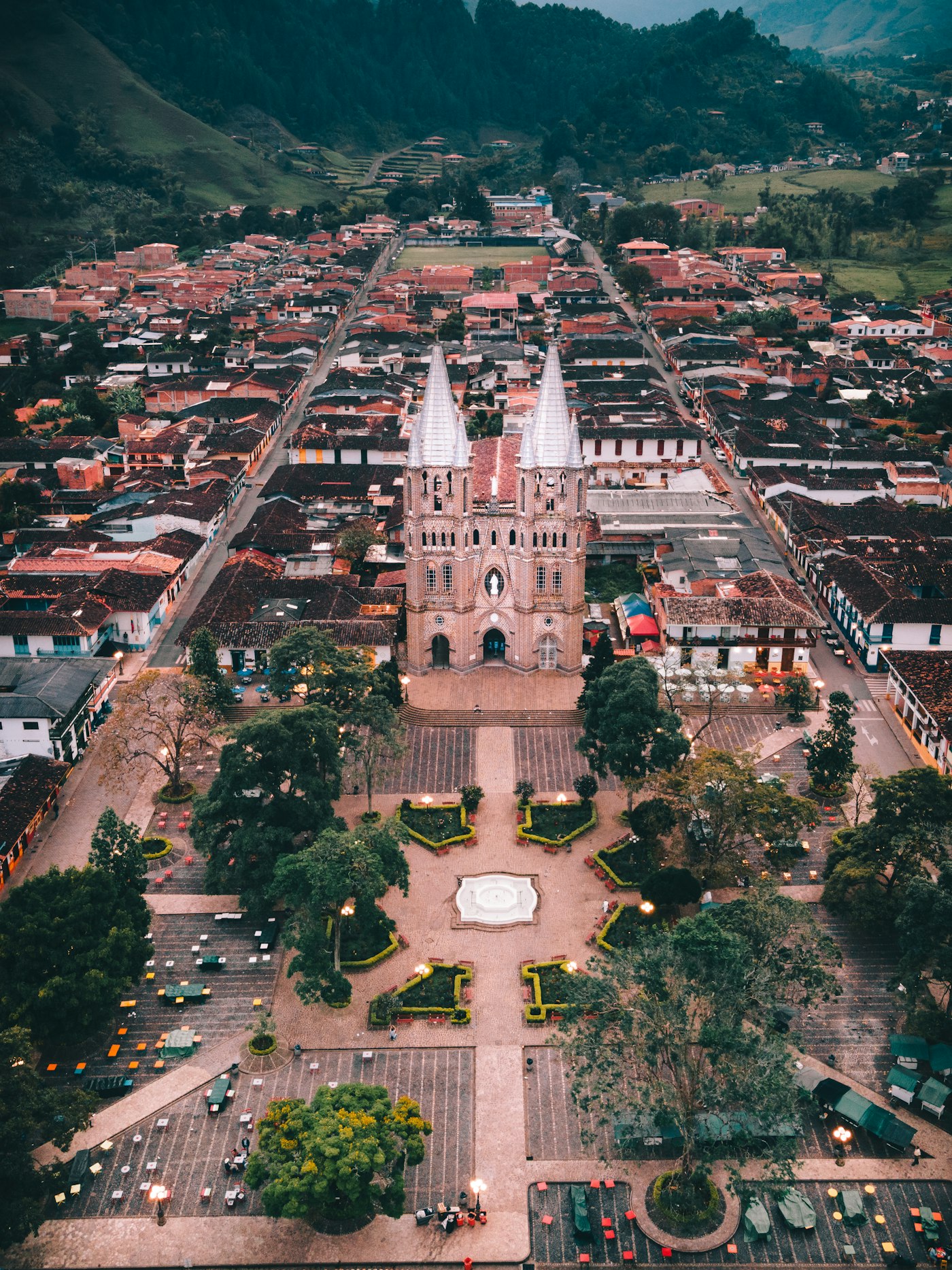
The light through the stained glass windows moved across the floor like a spotlight following a soloist. I sat in a pew and watched it travel for an hour, thinking about how architecture and choreography share the same fundamental concern: the organization of space and time to create meaning.
An old man entered the Basilica, crossed himself, and walked to a side chapel. His movements were economical and precise — the gestures of a lifetime of practice. There is a choreography to devotion, I realized, as disciplined and beautiful as anything I have taught in a studio.
The Movement of Daily Life
In Jardín, I discovered that everything moves, and everything has rhythm. The women carrying baskets on their heads walk with the posture of queens — straight spine, level gaze, each step placed with intention. The men playing tejo in the afternoon throw with a follow-through that any pitcher would envy. The children in the plaza run in chaotic spirals that have their own wild logic, like Pina Bausch choreography.
I took the cable car to La Garrucha one morning and watched the valley move beneath me. The clouds drifted across the mountains in slow adagios. The river below traced silver arabesques through the green. A hawk circled overhead in wide, lazy pirouettes. The whole landscape was dancing, and I was suspended in the middle of it, weightless, watching the performance from the best seat in the house.
Evenings: The Social Choreography
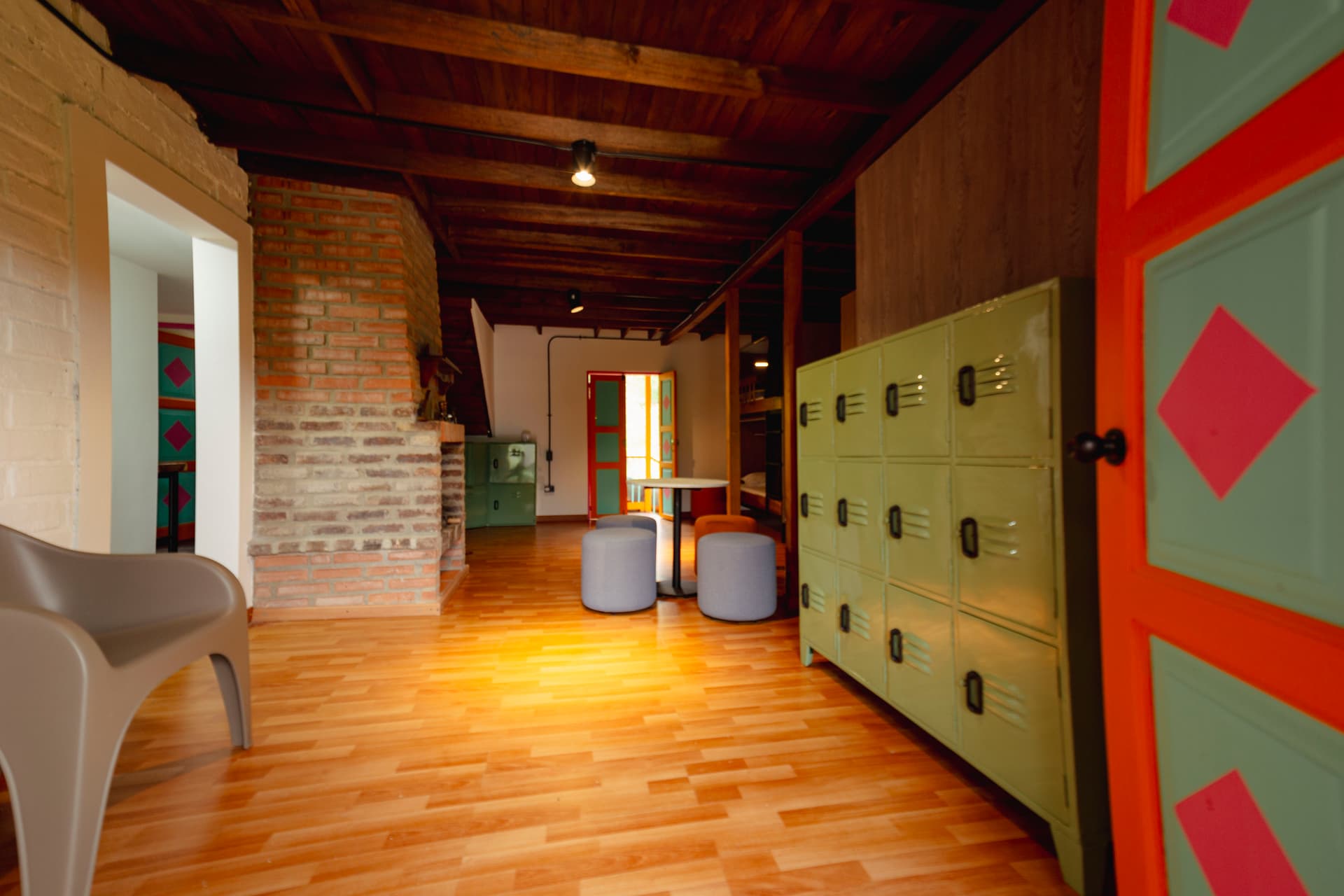
The common area at Isla de Pascua has its own choreography. In the morning, people move through the space slowly — coffee, book, hammock, a gradual warming up. By afternoon, the tempo increases — groups form, plans are made, conversations layer over each other like musical voices. In the evening, the energy peaks — laughter, music, the clink of glasses, the fluid movement of people from table to pool to hammock and back.
One evening, someone played cumbia on a speaker, and the garden became a dance floor. I watched a Colombian couple dance together with the effortless synchronicity of partners who have been dancing for years — not performing, just moving. Their bodies knew each other's rhythms the way a pianist's hands know the keyboard. I watched them with the professional attention of someone who has spent a lifetime studying movement, and I was moved. Not by technique — their technique, by ballet standards, was nonexistent — but by the truthfulness of their movement. They were dancing because they wanted to dance, and that is the most important thing about dance that I sometimes forget to teach.
The Mountain Walk
On my fifth day, I hiked up to Cristo Rey at dawn. The trail through the mist was like walking through a stage curtain — the world appeared and disappeared around me in soft, gauzy transitions. At the summit, the mist cleared and the valley revealed itself in one grand, breathtaking tableau: the town below, the mountains beyond, the sky above, all held together by the first light of morning.
I stood there and did something I have not done in twenty years of professional discipline: I danced. Not ballet — something formless and instinctive, something that came from the landscape rather than from any studio. I lifted my arms to the sky and turned, slowly, feeling the mountain air on my face and the earth beneath my feet, and for a moment I understood what my student in Bogotá meant when she said this town moves like music. It does. And if you let it, it will teach your body a dance it has always known but never performed.
Curtain Call
I left Jardín after six nights with the feeling of having attended a performance that changed the way I understand my art. Ballet is discipline and structure and control. Jardín is the opposite — it is surrender and spontaneity and grace without effort. But these are not contradictions. They are complementary movements in a larger dance, the way the inhale complements the exhale, the way the plié prepares the jump.
To Isla de Pascua: thank you for the garden where I found my morning barre, the pool where I floated like a dancer resting between acts, and the common area where the social choreography was as beautiful as anything I have seen on stage.
To Jardín: you move like music. And you taught this old ballet teacher that the most important dance is the one you do without counting.
— Elena, back in her studio in Saint Petersburg, a photograph of the Jardín mountains pinned above the barre
Ready to experience Jardín?
Book Now Isla de Pascua