Written by Pablo Hernández — Uruguay
Stay: March 2026, 4 nights
The Town Where Magical Realism Still Lives: A Literature Professor in Jardín
I have spent nineteen years teaching Latin American literature at the Universidad de la República in Montevideo. I have read Cien Años de Soledad fourteen times — I keep count, the way some people count laps in a pool. I have written two books and thirty-seven papers about magical realism. I have argued, in academic conferences from Buenos Aires to Barcelona, that García Márquez did not invent magical realism so much as transcribe it — that he simply wrote down what Colombia already was.
I believed this theoretically. Then I went to Jardín and believed it with my entire body.
The Literary Pilgrimage
Every literature professor has a secret vice, and mine is this: I travel to the places my favorite authors wrote about, looking for the seams between fiction and reality. I have stood in the Parisian café where Cortázar wrote Rayuela. I have walked the streets of Mexico City that Bolaño mapped in Los Detectives Salvajes. I have visited Aracataca, García Márquez's birthplace, and found it — I must confess — somewhat disappointing. Too aware of its own mythology. Too many signs pointing to Macondo.
A colleague at a conference in Bogotá said, "Pablo, forget Aracataca. If you want to see the Colombia that Gabo wrote about — the Colombia that still exists, undiluted — go to Jardín." He paused, adjusted his glasses in the manner of a man about to deliver a thesis statement, and added: "Jardín is what Macondo would be if it were real and had not yet been discovered by literary tourists."
I booked a bus ticket that afternoon.
The Plaza as Text
The bus from Medellín deposited me in Jardín on a Thursday afternoon. I walked to the plaza with my suitcase — I am too old for backpacks and not embarrassed to admit it — and sat on one of the painted chairs and opened my notebook.
The plaza in Jardín is a text. I do not mean this metaphorically. I mean that it can be read the way one reads a novel: with attention to character, setting, rhythm, and the interplay between the ordinary and the extraordinary. Within my first hour, I observed the following:
An old man crossed the plaza carrying a birdcage containing a toucan. Not a parakeet. Not a canary. A toucan. He carried it the way one carries a briefcase — casually, as if this were the most normal thing in the world. In Macondo, this would be a detail on page forty-seven.
A woman sold dulces from a cart decorated with paper flowers. The dulces themselves were works of miniature art — brevas stuffed with arequipe, cocadas in colors that did not exist in nature, manjar blanco wrapped in bijao leaves. She arranged them with the precision of a museum curator. In a Gabo story, she would have been selling them for a hundred years.
Two men played chess with pieces carved from coffee wood. One of them narrated his moves aloud, as if dictating to an invisible secretary. "Bishop to king four," he announced to no one in particular. "A bold move. History will judge me."
I wrote four pages of notes before I remembered that I had not yet checked into my hostel.
The Hostel as Reading Room
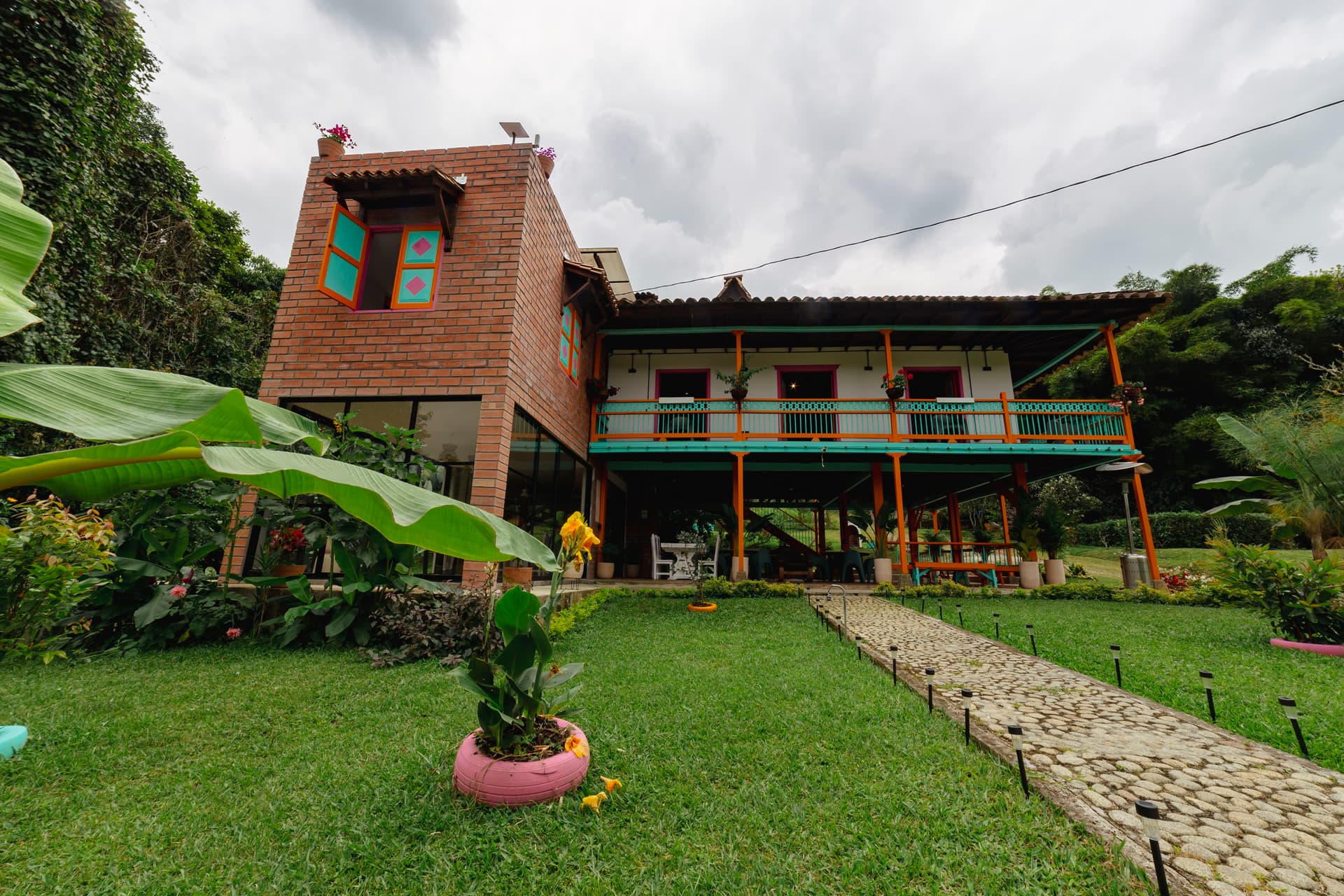
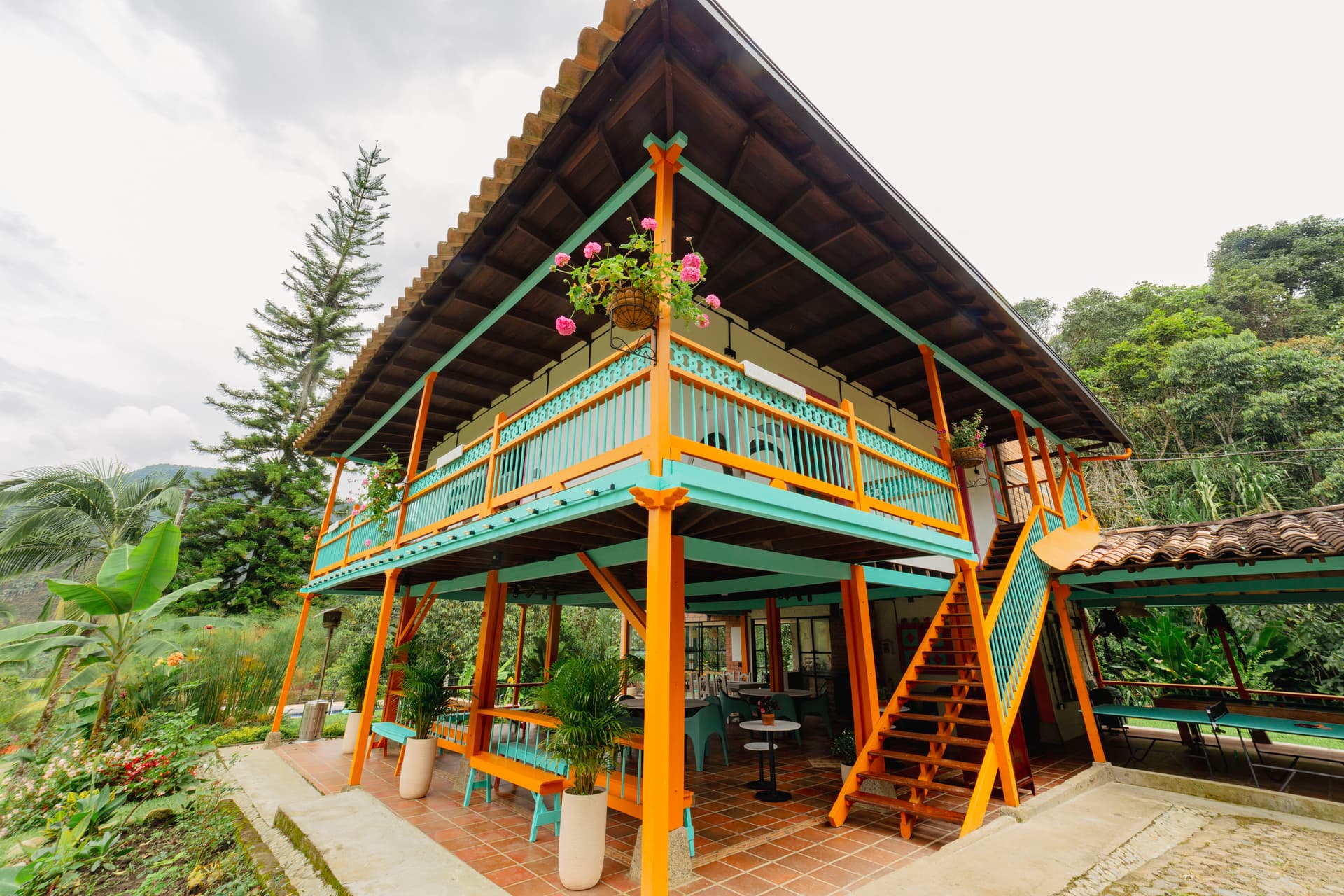
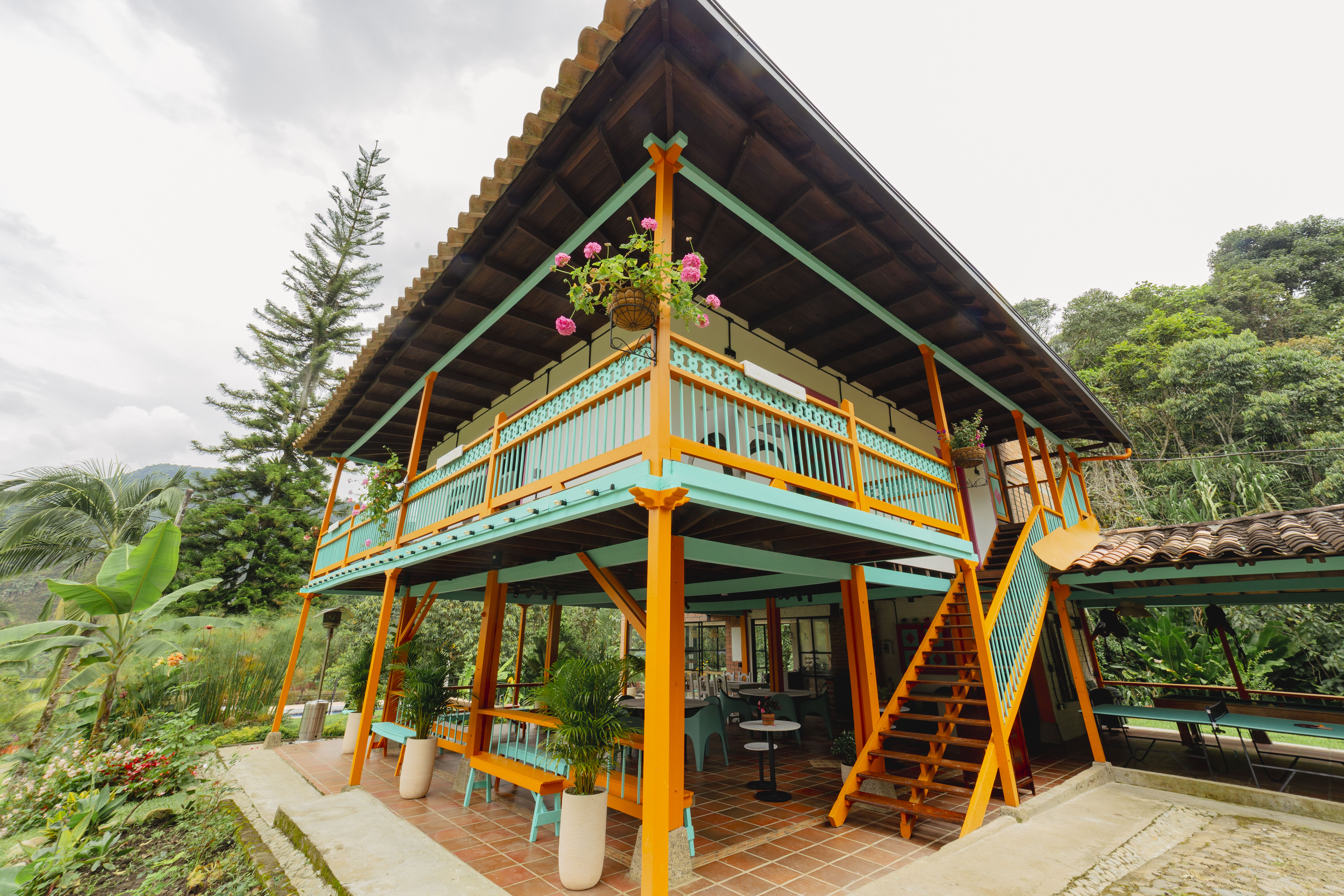
Isla de Pascua is, among its many qualities, an excellent place to read. The garden has hammocks positioned at precisely the correct angle for a book, with light that is kind to the page and a view that rewards every upward glance. The common area has a small library of paperbacks left by previous guests — a beautifully random collection that included, to my delight, a water-damaged copy of El Amor en los Tiempos del Cólera in Spanish.
I claimed a hammock on my first afternoon and read for three hours, looking up occasionally at the mountains, which served as a kind of enormous, green bookmark — reminding me of my place not in the book but in the world.
A young German backpacker saw my book and asked if García Márquez was "worth reading." I spent the next forty-five minutes explaining why he was the most important Spanish-language writer of the twentieth century, complete with biographical context and thematic analysis. The German listened politely, then said, "So it's good?" I said yes. He borrowed the water-damaged copy. I consider this a pedagogical victory.
The Basilica and the Sacred Text
The Basílica de la Inmaculada Concepción is the physical center of Jardín, and like all great churches, it is a story written in stone. I am not a religious man — I am an Uruguayan academic, which is practically a contradiction in terms — but I understand the power of sacred architecture as narrative. The Basilica tells a story of aspiration: this small pueblo, nestled in the mountains of Antioquia, building a cathedral that would not be out of place in a European capital. The ambition of it. The faith, not just in God but in the idea that beauty is worth the effort, even here, especially here.
I sat inside for an hour, reading the building the way I read a text. The stained glass windows were chapters. The columns were paragraphs. The altar was the climax. And the light — that extraordinary Jardín light that enters through the windows and moves across the floor like a slow sentence — was the prose style: luminous, unhurried, and impossible to imitate.
Characters
In Jardín, everyone is a character. I do not mean this condescendingly — I mean that the people of this town carry themselves with the vividness of fictional creations. The history of Jardín has produced a people who are simultaneously rooted and extraordinary, practical and poetic.
At a restaurant on the plaza, I met Don Ernesto, who was eighty-three years old and had never left Jardín. Not once. He had been born here, married here, raised five children here, and buried his wife here. When I asked if he ever wanted to see the rest of the world, he looked at me with genuine puzzlement and said, "Why? The world came to me." He gestured at me — the Uruguayan professor with the notebook — as evidence.
In a García Márquez novel, Don Ernesto would be the character who provides the novel's moral center. The man who understands what the wandering protagonists do not: that place is not a limitation but a choice, and that depth is more valuable than breadth.
I wrote down everything he said. He seemed pleased by this, in the way that all natural storytellers are pleased when someone finally brings a pen.
The Coffee Farm as Metaphor
I visited one of the coffee farms outside town, and I want to be honest: I went expecting a tourist experience. What I found was a literary education.
The farmer — a woman named Doña Lucía, sixty-two, with the hands of someone who has spent a lifetime in conversation with the earth — explained the coffee process with a narrative sophistication that would impress any writing workshop. She spoke of patience (the plant takes four years to produce its first harvest). She spoke of attention (each cherry must be picked at precisely the right moment of ripeness). She spoke of transformation (the green bean becomes the brown bean becomes the liquid that makes the morning possible).
"Coffee," she said, stirring a pot of tinto over a wood fire, "is a story of waiting. Most people only read the last page."
I wrote that down too. Doña Lucía is a better aphorist than half the writers I teach.
Writing in Jardín
On my third evening, I sat in the hostel garden with my notebook and attempted to write. Not an academic paper — I have enough of those in various stages of abandonment — but something else. A story, perhaps. Or the beginning of a story. About a literature professor who comes to a small town expecting to find echoes of García Márquez and instead finds something that novels, even the greatest novels, cannot fully capture: the unnarrated beauty of an ordinary Tuesday in a place that does not know it is extraordinary.
I wrote three pages. They were not good. But they were alive, which is more than I can say for most of my academic writing. Jardín had done something to my prose. It had loosened it. Made it less afraid of beauty.
The Library of the Plaza
On my last morning, I returned to the plaza and sat in the same painted chair and opened my notebook for a final observation. The old man with the toucan passed again. The dulce seller was arranging her cart. The chess players were resuming a game from the previous day, as if no time had passed.
And I understood, finally, what magical realism actually is. It is not a literary technique. It is not flying carpets and women ascending to heaven while hanging laundry. It is the refusal to separate the ordinary from the extraordinary. It is the insistence that a man carrying a toucan is not strange but simply alive. It is the conviction that a plaza full of painted chairs and chess players and dulce sellers is not quaint but profound.
García Márquez did not invent this. He reported it. And Jardín is still filing the reports.
To Isla de Pascua: thank you for the hammock where I read, the garden where I wrote, and the community of strangers who reminded me that the best literary criticism is lived experience.
To Jardín: you are the novel I have spent nineteen years teaching but never fully understood until I walked through your pages.
— Pablo, back in Montevideo, the water-damaged copy of El Amor en los Tiempos del Cólera still unreturned (apologies to the German backpacker)
Ready to experience Jardín?
Book Now Isla de Pascua