A Town Shaped by Time
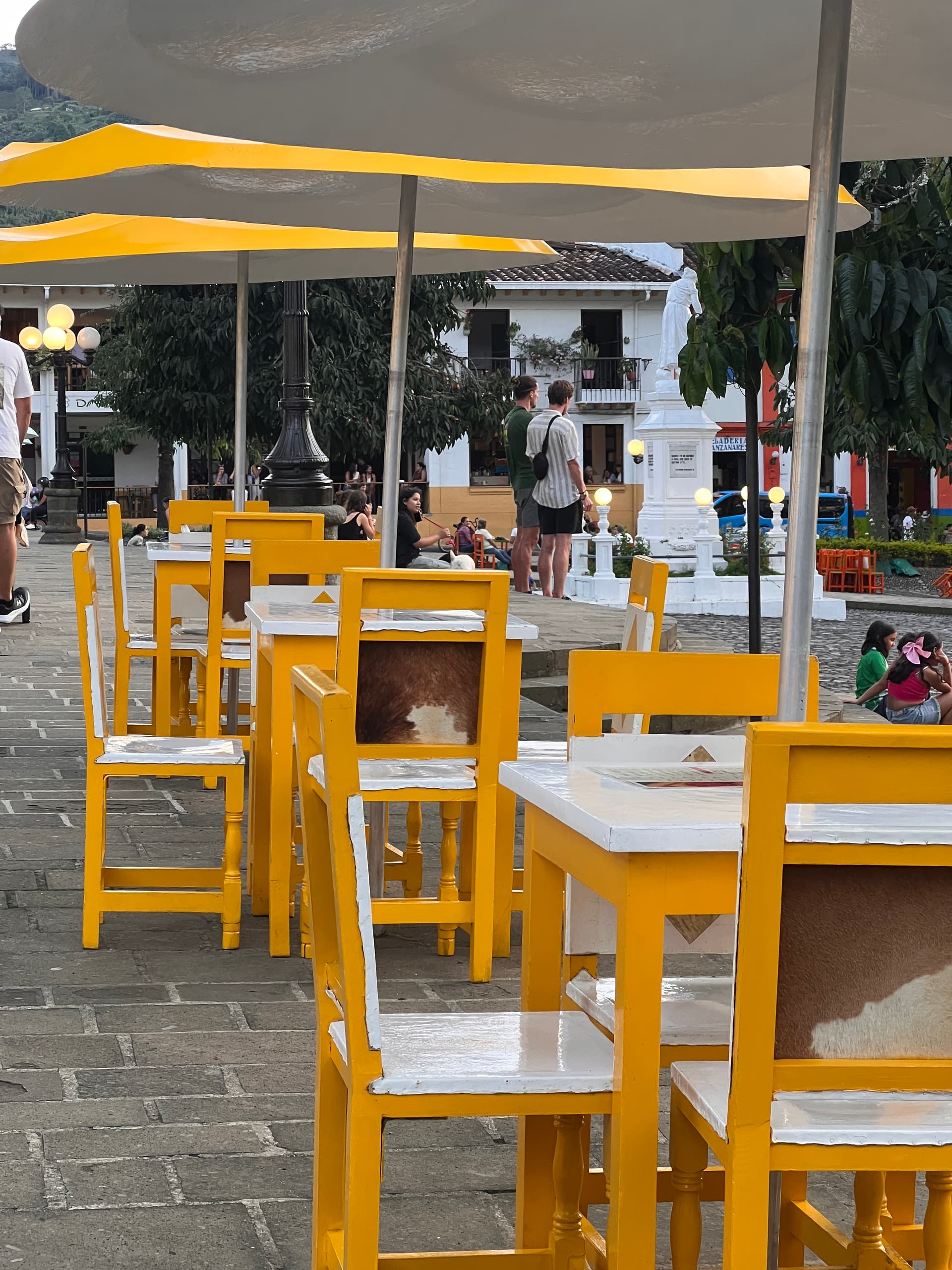
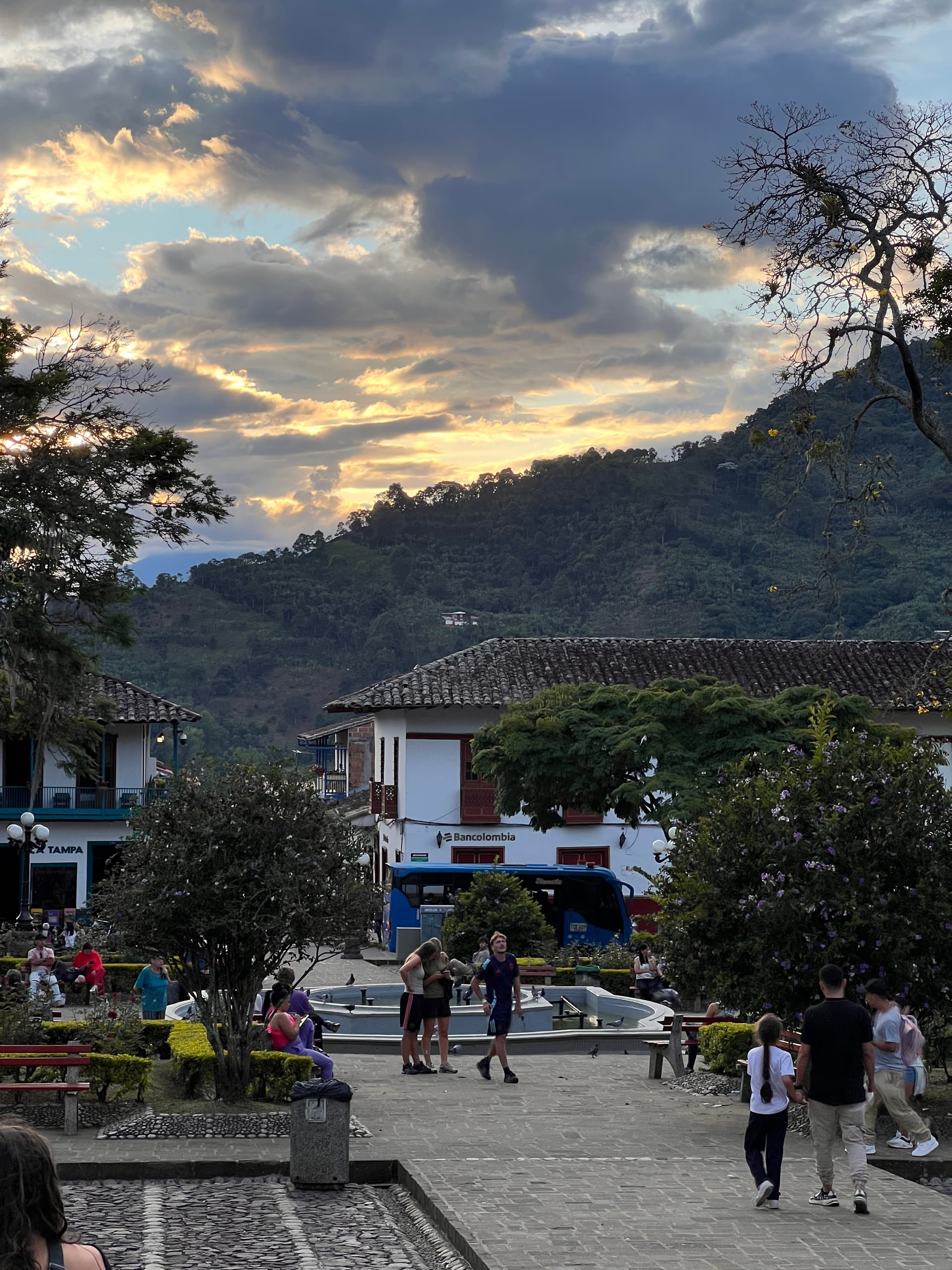
Every town has a history, but few wear it as visibly as Jardín. Walk through the main square and you are not looking at a reconstruction or a theme park version of colonial Colombia — you are standing in a place that has looked essentially the same for over a century. The colorful balconies, the neo-Gothic basilica rising above the plaza, the cobblestone streets radiating outward into a grid of traditional Antioquian houses — all of it is original, preserved through a combination of geographic isolation, community pride, and, eventually, official heritage protection.
Jardín's story is the story of Antioquia itself: colonization, faith, coffee, conflict, resilience, and reinvention. Understanding how this small mountain pueblo came to be — and how it managed to keep its character while so many similar towns lost theirs to modernization — makes visiting it a richer experience. This is not just a pretty place. It is a place with depth.
The Founding: 1863
The official founding of Jardín dates to May 23, 1863, when a group of Antioquian colonizers led by Indalecio Peláez established a settlement in the lush valley of the Río Jardín, nestled between the western and central ranges of the Colombian Andes at approximately 1,750 meters above sea level.
Peláez was part of the broader Antioquian colonization movement (colonización antioqueña) — one of the most significant demographic phenomena in Colombian history. Throughout the nineteenth century, families from the older Antioquian cities of Medellín, Santa Fe de Antioquia, and Rionegro pushed southward and westward into largely uninhabited mountain territory, founding dozens of new towns along the way. They were driven by a combination of population pressure, the search for arable land, and the entrepreneurial spirit that has long defined Antioquian culture.
The site chosen for Jardín was not random. The valley offered fertile volcanic soil, abundant water from mountain streams, a mild climate ideal for agriculture, and a natural defensive position surrounded by steep ridges. Indigenous Emberá and Chamí communities had inhabited the broader region for centuries, and their knowledge of the land — its growing seasons, water sources, and medicinal plants — influenced the early settlers, even as the colonial process displaced and marginalized indigenous populations.
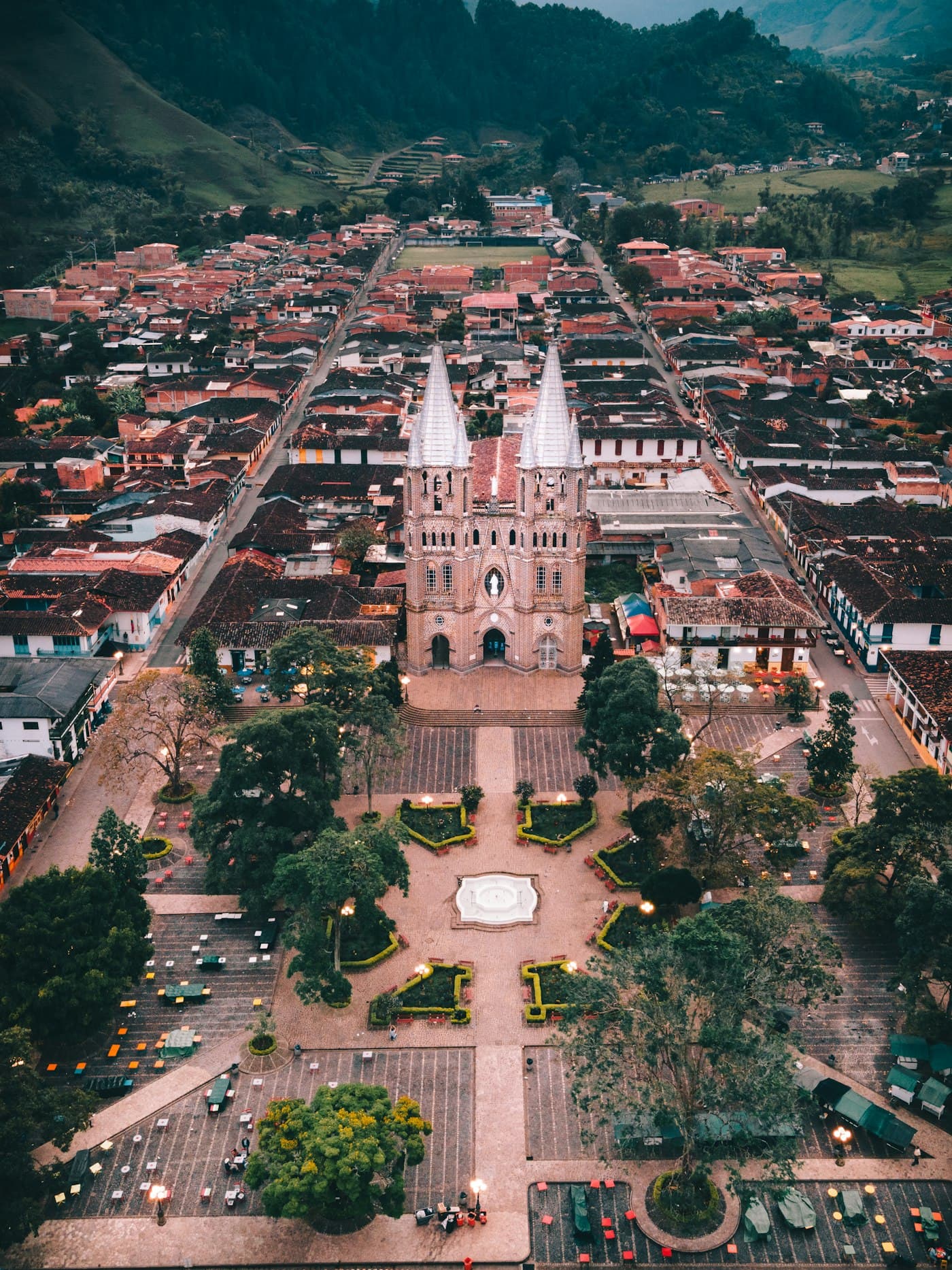
Peláez and his fellow founders laid out the town according to the Spanish colonial grid pattern: a central plaza surrounded by public buildings and a church, with residential streets extending outward in straight lines. This layout, common across Latin America, was both practical and symbolic — it placed civic and religious authority at the literal center of community life.
The new settlement was named Jardín — garden — reportedly because of the extraordinary natural beauty of the valley. Early accounts describe a landscape of wild flowers, towering palms, and views of cloud-wrapped mountains that seemed to stretch to the edge of the world. The name stuck because it was simply accurate.
Early Settlers and Growth
The first decades of Jardín's existence were defined by the hard work of clearing forest, establishing farms, and building a functioning community in remote mountain terrain. The early settlers were predominantly Antioquian mestizo families — hardworking, devoutly Catholic, and accustomed to the demands of mountain agriculture.
They grew maize, beans, plantains, and yuca for subsistence, and quickly discovered that the valley's altitude, rainfall, and soil were exceptionally well-suited to a crop that would transform the entire region: coffee. The first coffee plants were established in Jardín within years of the town's founding, and by the 1880s, coffee had become the primary cash crop driving the local economy.
The population grew steadily through the late nineteenth century as word spread about the fertility of the Jardín valley. New families arrived from other Antioquian towns, bringing skills in carpentry, masonry, blacksmithing, and the artisan crafts — including cestería (basket weaving) — that would become part of the town's identity. By 1880, Jardín had a functioning market, a primary school, and the basic infrastructure of a self-sustaining pueblo.
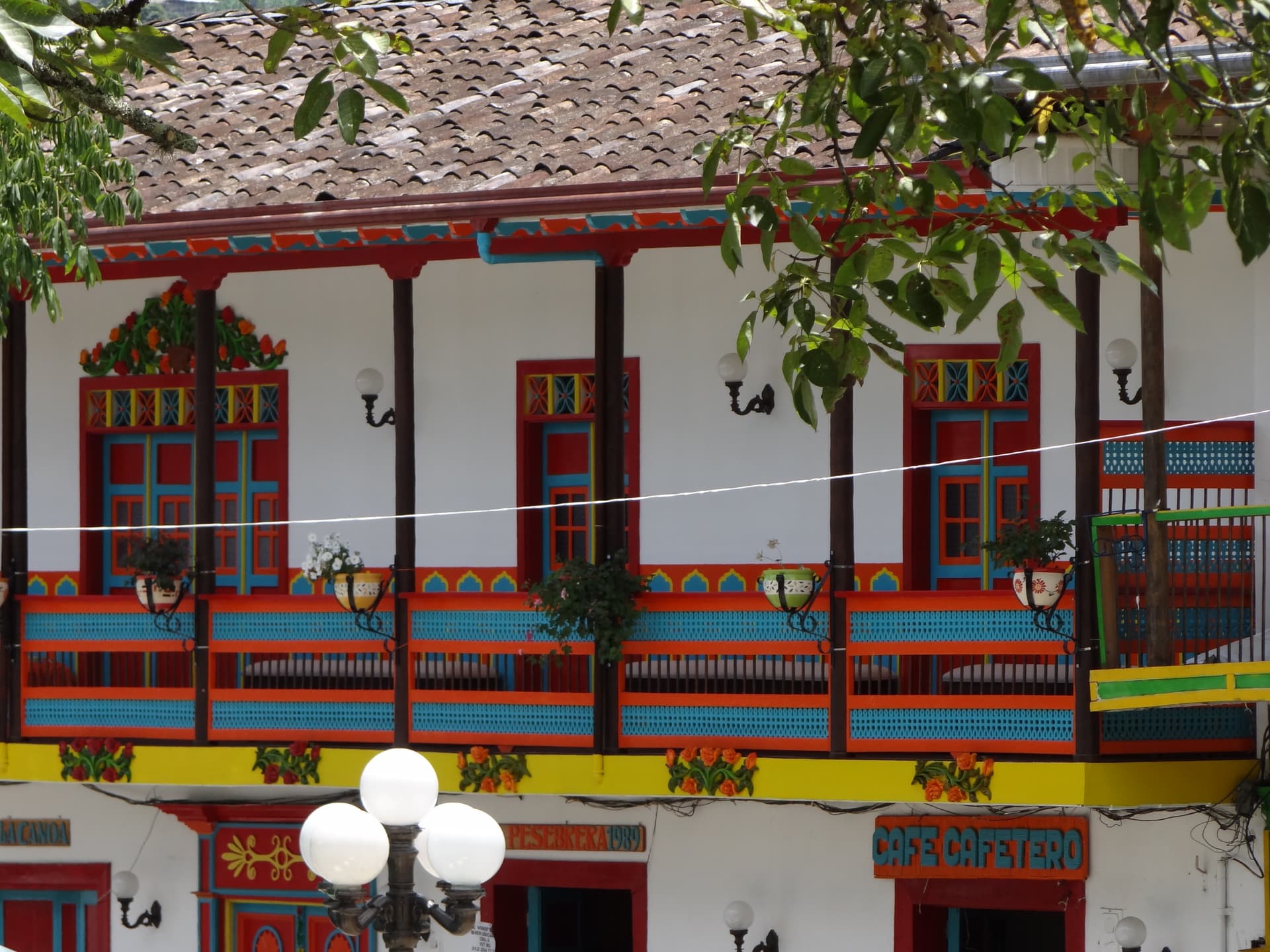
The architecture that emerged during this period established the visual character that Jardín retains today. Houses were built in the traditional Antioquian style: thick adobe or bahareque (wattle-and-daub) walls, tile roofs, internal courtyards, and the signature wooden balconies painted in vivid colors — greens, blues, yellows, reds — that give the town its postcard appearance. Every building around the main square dates from this foundational era or was built in strict adherence to the original style.
The Basilica: 1918–1942
No structure in Jardín commands attention like the Basílica Menor de la Inmaculada Concepción, and no single project did more to shape the town's identity and sense of civic pride than its construction.
The original parish church, built shortly after the town's founding, was a modest structure befitting a small frontier settlement. But as Jardín grew and prospered through the coffee boom of the late nineteenth and early twentieth centuries, community leaders began planning something far more ambitious — a church that would reflect the town's faith, aspirations, and growing wealth.
Construction of the basilica began in 1918 under the direction of Father Juan Nepomuceno Barrera, with design elements inspired by European neo-Gothic architecture. The choice of style was bold for a remote Antioquian pueblo. Neo-Gothic churches were being built in major Colombian cities, but for a town of Jardín's size to attempt one was an extraordinary act of ambition.
The building material was equally remarkable: the basilica was constructed primarily from locally quarried stone, cut and fitted by local masons. The grey stone exterior, with its pointed arches, flying buttresses, and soaring bell tower, gives the church an almost European appearance that contrasts dramatically with the colorful painted wood of the surrounding houses.
Construction continued for 24 years, finally reaching completion in 1942. The extended timeline reflects both the scale of the project and the economic realities of building a major stone church with local labor and funds. The community financed much of the work through donations and volunteer labor — families contributed their time, their skills, and their savings to raise a church that would stand for centuries.
The result is one of the most striking religious buildings in all of Antioquia, and today the Basilica serves as both the spiritual heart of Jardín and its most recognizable landmark. Its interior features stained glass windows imported from Europe, carved wooden altars, and detailed stonework that rewards careful examination. For visitors, the basilica is often the first thing they notice upon arriving in town — its grey stone tower rises above the rooftops and is visible from every approach road.
The Coffee Era
Coffee did not just shape Jardín's economy — it shaped its culture, its social structures, and its relationship with the outside world. From the 1880s onward, coffee became the dominant force in the life of the town, and the rhythms of planting, harvesting, and processing coffee defined the calendar year as surely as the religious festivals.
Jardín sits within the Colombian coffee axis (Eje Cafetero), though it is south of the more famous coffee towns of the Caldas-Risaralda-Quindío triangle. The altitude (1,750 meters), the volcanic soil, the consistent rainfall, and the protected valley location create ideal conditions for growing high-quality Arabica coffee. Local varieties, particularly Colombia and Caturra cultivars, thrive here and produce beans with the bright acidity, medium body, and sweet notes that define Colombian specialty coffee.
The coffee economy created a distinctive social structure in Jardín. Unlike the large hacienda model that dominated some coffee regions, Jardín's coffee production was (and remains) largely based on small family farms — fincas of five to twenty hectares, worked by the family that owns them with occasional hired help during harvest season. This smallholder model fostered a culture of independence, hard work, and community solidarity that persists today.
During the mid-twentieth century, when Colombian coffee commanded premium prices on world markets, Jardín experienced a period of relative prosperity. The money was not extravagant — this was never a wealthy town — but it was enough to maintain the existing architecture, support local businesses, and keep young people on the farms rather than driving them to the cities. This quiet stability, ironically, is one of the reasons Jardín's built heritage survived: there was never enough money to tear down the old buildings and replace them with modern concrete structures, as happened in many Colombian towns during the construction booms of the 1970s and 1980s.
Conflict and Resilience
Colombia's long internal conflict, which lasted for more than five decades, touched every corner of the country, and Jardín was not immune. While the town itself was spared the worst violence that devastated other rural areas — there were no massacres or major battles within the town limits — the broader region experienced periods of instability that affected daily life.
During the most intense years of the conflict in the 1990s and early 2000s, armed groups operated in the mountains surrounding Jardín, and the roads connecting the town to Medellín and other cities were sometimes dangerous to travel. Tourism, which had begun to develop modestly in the 1980s, essentially stopped. The town turned inward, relying on its agricultural base and its tight-knit community to weather the storm.
The resilience of Jardín during this period is a testament to the character of its people. Rather than abandoning their town for the perceived safety of cities — as happened in many rural Colombian communities — jardinenses stayed, maintained their farms, kept their traditions alive, and waited for better times. The architecture was preserved not by decree during these years, but by the simple fact that the people who lived in these houses loved them and took care of them.
The Colombian peace process and the dramatic improvement in security across rural Antioquia from the mid-2000s onward gradually reopened Jardín to the outside world. When visitors began arriving again, they found a town that had not changed — the same colorful houses, the same basilica, the same basket weavers and coffee farmers — and that authenticity became Jardín's greatest asset.
Heritage Town Designation: Pueblo Patrimonio
The formal recognition of Jardín as a Pueblo Patrimonio (Heritage Town) by the Colombian Ministry of Commerce, Industry, and Tourism was the culmination of decades of organic preservation. The Heritage Town network, established to identify and protect Colombia's most culturally and architecturally significant small towns, recognized Jardín for the exceptional integrity of its built environment, its living cultural traditions, and its stunning natural setting.
The designation brought several important changes:
- Architectural protection: New construction and renovations within the historic center must comply with guidelines that preserve the traditional aesthetic. This means no glass-and-steel towers, no neon signs, and no alterations that compromise the colonial streetscape.
- Tourism promotion: Heritage Town status puts Jardín on the national tourism map, directing resources and marketing support toward the town.
- Infrastructure investment: Government funding has supported improvements to roads, public spaces, and utilities, making the town more accessible and comfortable for visitors without altering its character.
- Cultural programming: Festivals, artisan fairs, and cultural events receive support, helping to keep traditions like cestería, traditional music, and local cuisine vibrant and economically viable.
The designation was not universally celebrated at first — some residents worried about increased tourism changing the quiet character of their town, and those concerns have not been entirely unfounded. But the overall impact has been positive: the Heritage Town framework has given Jardín the tools and resources to manage growth while protecting the qualities that make it special.
Architecture Preservation
What strikes most visitors about Jardín's architecture is not any single building, but the consistency of the whole. The town center presents a remarkably unified streetscape of traditional Antioquian construction: one- and two-story buildings with whitewashed or brightly painted walls, wooden balconies with turned balusters, clay tile roofs, and heavy wooden doors.
This consistency is not the result of a single master plan, but rather of a shared building tradition. The original settlers and the generations that followed them built within a common vocabulary of materials and forms dictated by available resources (wood, adobe, tile) and cultural preferences (balconies for socializing, courtyards for privacy and air circulation, bright colors for visual delight).
Several specific architectural elements define the Jardín style:
- Balcones corridos: Continuous wooden balconies that run the full width of a building's upper floor, supported by carved brackets and enclosed by turned wooden railings. These balconies serve as both outdoor living spaces and visual statements — their colors are the most photographed feature of the town.
- Bahareque construction: A traditional building technique using a wooden frame filled with a mixture of mud, straw, and sometimes bamboo. Bahareque walls are thick, excellent at regulating temperature, and remarkably durable when properly maintained.
- Zaguanes: Deep, shaded entrance corridors that transition from the public street to the private interior of a house. These thresholds are functional (they provide shade and ventilation) and social (neighbors stop to chat in the zaguán).
- Internal courtyards: Almost every traditional house in Jardín is built around a central courtyard (patio) open to the sky, filled with potted plants and often featuring a stone or tile fountain. The courtyard provides light, ventilation, and a private outdoor space.
The preservation of these elements is what earned Jardín its Heritage Town status and what continues to draw architecture enthusiasts, photographers, and cultural travelers from around the world.
Modern Jardín: Tourism, Culture, and the Future
Today, Jardín sits at an interesting crossroads. The town that spent most of its existence as a quiet agricultural community has become one of the most talked-about destinations in Colombian tourism. International travel publications regularly feature it in "hidden gem" and "places to visit before they change" lists, and the flow of both Colombian and foreign visitors has increased dramatically over the past decade.
Tourism has brought economic benefits that coffee alone could no longer provide. Hostels, restaurants, tour operators, and artisan shops have created new employment opportunities, particularly for young jardinenses who might otherwise have left for Medellín or Bogotá. The restaurant scene has expanded and diversified, the coffee tour industry connects visitors directly with local farmers, and cultural experiences like cestería workshops generate income while preserving tradition.
But the town faces challenges familiar to any heritage destination experiencing rapid tourism growth: rising property prices, the risk of cultural commodification, the strain on infrastructure designed for a small pueblo rather than a tourist hub, and the tension between economic opportunity and quality of life for long-term residents.
So far, Jardín has managed these pressures better than many comparable towns. The Heritage Town regulations prevent the worst architectural excesses, the community is vocal about protecting its character, and the relative difficulty of getting here (a four-hour bus ride from Medellín with no airport) acts as a natural filter that keeps visitor numbers manageable. The town has not yet tipped into the overtourism that has affected places like Guatapé or parts of Cartagena's old city.
The future of Jardín will depend on whether the community can continue to balance openness with preservation — welcoming visitors while ensuring that the traditions, architecture, and rhythms of daily life that make the town worth visiting remain intact. Based on the evidence of the past 160 years, the jardinenses are more than capable of that balancing act.
Timeline of Key Events
- 1863: Jardín founded by Indalecio Peláez and a group of Antioquian colonizers
- 1871: Jardín officially recognized as a parish
- 1880s: Coffee cultivation becomes the dominant economic activity
- 1918: Construction of the Basilica of the Immaculate Conception begins
- 1920s–1930s: Coffee boom brings relative prosperity; current architectural character solidified
- 1942: Basilica construction completed after 24 years
- 1950s–1960s: La Violencia period affects rural Antioquia; Jardín largely spared direct violence
- 1970s–1980s: Moderate growth; town avoids the demolition-and-rebuild trend of other Colombian pueblos
- 1990s–2000s: Internal conflict affects surrounding region; tourism declines
- 2005–2010: Security improvements reopen the region; visitors begin returning
- 2012: Jardín designated as a Pueblo Patrimonio (Heritage Town)
- 2015–present: Tourism grows steadily; town balances development with preservation
Experience the History Yourself
Reading about Jardín's history is one thing. Standing in the main square, surrounded by buildings that the founders' grandchildren built, looking up at a basilica that took an entire community 24 years to raise from quarried stone — that is something else entirely. The history here is not behind glass. It is the floor under your feet, the walls around you, and the culture of the people you meet.
Base yourself in the center at Isla de Pascua to be surrounded by history — the hostel sits within the historic core, just minutes from the basilica, the main square, and the traditional artisan streets.
For practical information about visiting, start with our complete travel guide. To explore the architectural crown jewel, read our guide to the Basilica. And to see living history in action, visit the town's cestería artisans or explore the best restaurants serving traditional Antioquian cuisine passed down through generations.
Where to Stay in Jardín
Isla de Pascua is a social hostel with a swimming pool, coworking space with 50 Mbps WiFi, and a common area that makes it easy to meet other travelers. It's steps from the main square and the best base for exploring everything Jardín has to offer.
Learn more about Isla de Pascua →Jardín has been here since 1863, and it has never looked better. Come see what 160 years of care, pride, and mountain air can preserve.
Ready to experience Jardín?
Book Now Isla de Pascua