Our Story
The Story of Jardín
From the ancient Caramanta people to Colombia's most beloved heritage town — a journey through time.
Year Founded
Heritage Town
UNWTO Award
~
Population
Before the Founders
The Ancient Peoples
Long before the Spanish, the valley was home to the Caramanta people, a Caribe group, and the Chamí (Embera Chocó), also known as Docatoes. The Embera Chamí community still thrives today at the Cristianía (Karmata Rúa) reserve, just 11 kilometers from town — one of the oldest indigenous reserves in Antioquia.
Their traditions, crafts, and worldview remain alive at the Cristianía (Karmata Rúa) reserve, a reminder that Jardín's story began millennia before the settlers arrived.
1860 – 1863
The Founding
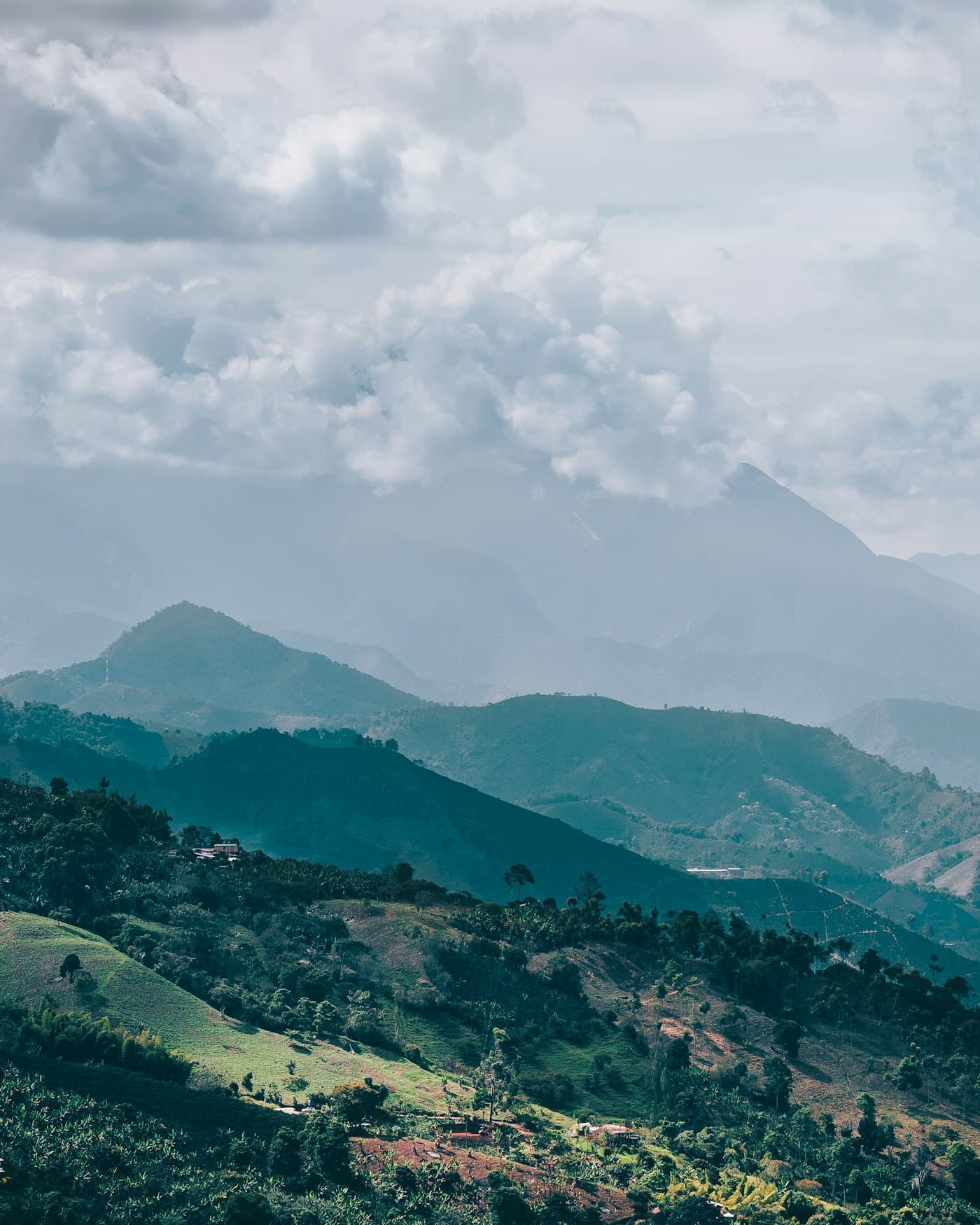
In 1860, Indalecio Peláez and Clara Echeverri stood at Alto de las Flores, overlooking a valley filled with white yarumos and two crystalline streams. 'Esto es un jardín!' — 'This is a garden!' — they exclaimed. The town was officially founded on May 23, 1863.
The name was born from pure wonder. When Indalecio and Clara looked down upon the valley from the heights, they saw something that seemed designed by nature to be admired — not conquered. That philosophy endures in every corner of the town to this day.
Esto es un jardín! — This is a garden!
— Indalecio Peláez & Clara Echeverri, 1860
Upon beholding the valley for the first time from Alto de las Flores
Through the Ages
163 years of history, a town that refused to change
The Original Peoples
The Caramanta, a Caribe people, and the Embera Chamí (Docatoes) inhabit the valley for centuries, cultivating the land and leaving their mark on the mountains of southwestern Antioquia.
The Discovery of the Valley
Indalecio Peláez and Clara Echeverri arrive at Alto de las Flores and behold a lush valley of white yarumos and crystalline streams. 'Esto es un jardín!' — they exclaim, naming the place that would become legend.
Official Founding
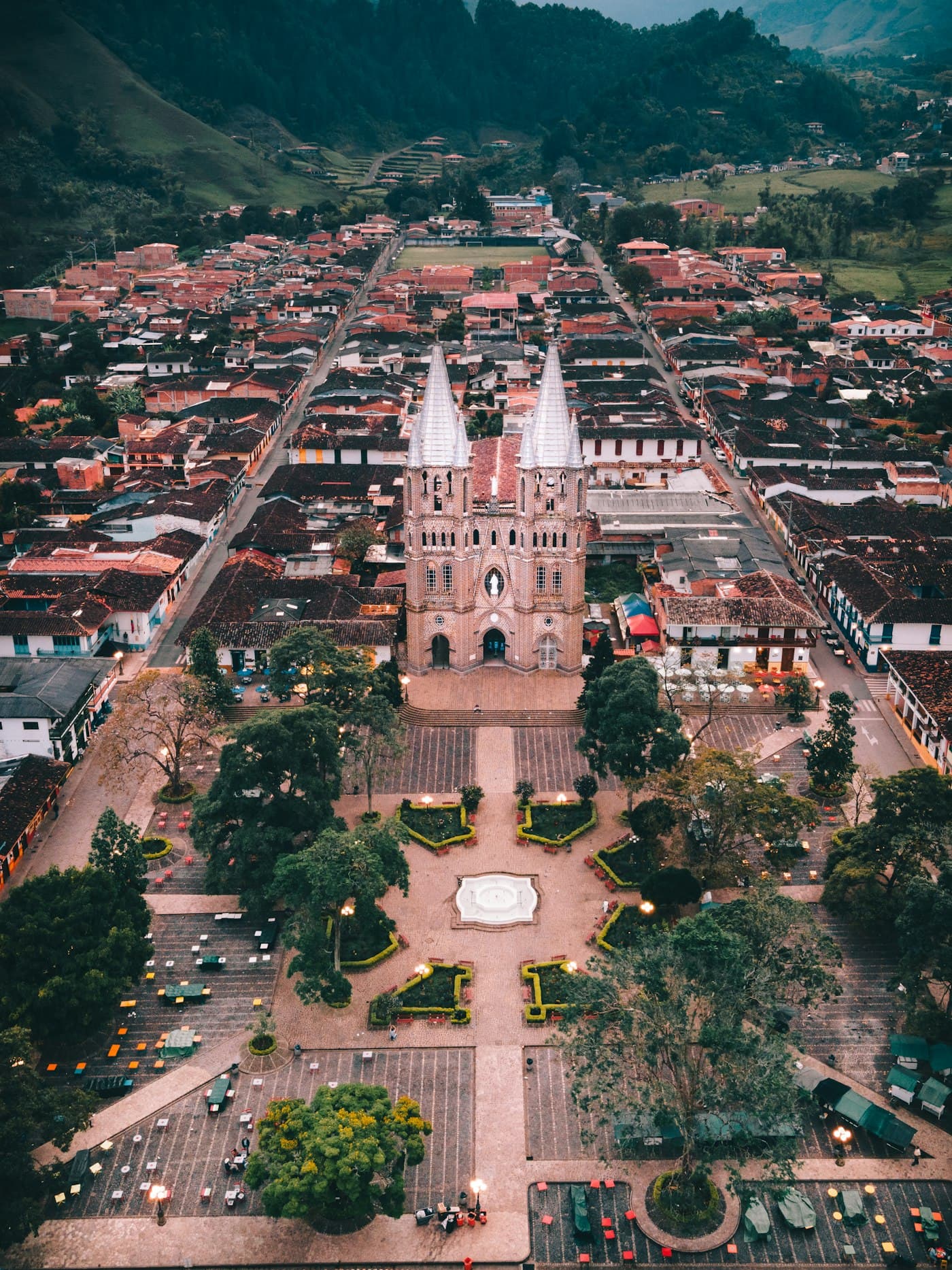
On May 23, 1863, Jardín is officially founded. The first settlers lay out the central plaza that, more than 160 years later, remains virtually unchanged — a testament to the vision of its founders.
Declared a Parish
Jardín is elevated to the status of a parish, consolidating the religious and communal identity that would define its character forever.
Declared a Town
The town receives its official status as a municipality of Antioquia, recognizing its growth and the determination of its people.
Basilica Construction Begins
Under the direction of Italian-Colombian priest Giovanni Buscaglione, construction begins on the Basilica of the Immaculate Conception. Legend holds that sinners carried volcanic stones equal to the weight of their sins as penance.
The Basilica Completed
After 22 years of devoted labor, the Basilica is completed. Its neo-Gothic towers carved from volcanic stone rise above the town — a masterpiece born of faith and collective effort.
National Monument
The Basilica of the Immaculate Conception is declared a National Monument of Colombia, ensuring its preservation for generations to come.
The Plaza, National Monument
Plaza El Libertador is declared a National Monument. With its colorful tables, century-old trees, and painted facades, it is recognized as one of the most beautiful plazas in Colombia.
Minor Basilica Title
The church receives the prestigious Minor Basilica title from the Vatican, an honor recognizing its architectural and spiritual significance.
Heritage Town of Colombia
Jardín is named a Heritage Town of Colombia, joining a select group of towns whose colonial architecture and cultural traditions are protected by law.
UNWTO Best Tourism Village
The UN World Tourism Organization names Jardín one of the Best Tourism Villages in the world — the only Colombian town selected. A recognition of sustainable tourism and cultural preservation.
1918 – 1940
The Basilica
Between 1918 and 1940, the people of Jardín built their masterpiece: the Basilica of the Immaculate Conception. Designed by Italian-Colombian priest Giovanni Buscaglione, its neo-Gothic towers were carved from volcanic stone. Legend says sinners carried stones equal to the weight of their sins as penance.
Every stone was quarried from nearby deposits and transported by hand by the people of Jardín. It was not merely the construction of a temple — it was an act of collective faith that united an entire town for more than two decades.
The plaza of Jardín is not merely a square — it is the living heart of a town that refused to change.
2012 – 2024
Heritage Town
In 2012, Jardín was declared a Heritage Town of Colombia, preserving its colorful colonial architecture for generations. Then in 2024, the UNWTO named it one of the Best Tourism Villages in the world — the only Colombian town selected.
What makes Jardín special is not just what was preserved, but what was deliberately not built. While other Colombian towns modernized their plazas and demolished colonial houses, Jardín chose a different path. Today, that decision makes it one of the most authentic destinations on the continent.
Global Recognition
The only Colombian town in the world
In 2024, the United Nations World Tourism Organization recognized Jardín as one of the Best Tourism Villages on the planet. Out of thousands of candidates, Jardín was the only Colombian representative — an achievement reflecting decades of commitment to sustainable tourism, cultural preservation, and community development.
It is not an award for what Jardín built. It is an award for what Jardín refused to destroy.
Keep exploring
The story of Jardín continues
Discover more stories, people, and secrets of one of Colombia's most enchanting towns.
Stay in the heart of this historic town Isla de Pascua →