The Moment Your Feet Leave the Ground
There is a particular kind of silence that arrives in the seconds after you leave the station. The metal seat lurches gently forward, the cable hums above your head, and then — almost without warning — the earth falls away. The cobblestone path you were walking on moments ago is suddenly twenty meters below, then forty, then seventy, and what was a hillside town of painted facades and tiled roofs has become a miniature world spread beneath your dangling feet.
This is La Garrucha, and this is the moment every visitor to Jardín remembers.
It is not a polished tourist attraction with turnstiles and branded merchandise. There is no safety glass, no enclosed cabin, no recorded announcements. It is an open metal chair suspended from a steel cable, pulled by a motor across one of the most beautiful valleys in all of Colombia. It is thrilling and serene in equal measure — the kind of experience that belongs only to places where the landscape is so dramatic that the simplest technology becomes extraordinary.
For more than half a century, La Garrucha has been carrying people across the gorge of the Río Volcanes, connecting the town of Jardín with the farms and forests on the far hillside. What began as practical mountain infrastructure has become the single most iconic experience in a town that already overflows with unforgettable moments. And yet, for all its fame, La Garrucha remains refreshingly unpretentious — a wooden ticket window, a patient operator, a seat for two, and the entire Andes stretching out before you.
A History Written in Cable and Steel
The word garrucha means "pulley" in Spanish, and across the Colombian Andes, garruchas were once as common as footbridges. In a landscape where rivers carve deep gorges between steep mountainsides, cable systems offered the most efficient way to move people, goods, and even livestock from one side of a valley to the other. Coffee farmers used them to send sacks of grain across chasms. Families depended on them to reach markets and schools. For communities perched on the flanks of the Western Cordillera, the garrucha was not a novelty — it was a lifeline.
Jardín's garrucha dates back more than 50 years, built during an era when the road network in this part of Antioquia was sparse and the terrain made conventional transport nearly impossible. The cable stretched across the valley of the Río Volcanes, linking the town center to the rural veredas on the opposing hillside — communities of coffee growers, small farmers, and families whose daily lives depended on crossing that gap.
Over the decades, as Colombia built roads and bridges into its remotest corners, most garruchas were abandoned, their cables rusting, their pulleys seized by disuse. But Jardín did something different. The town recognized that its garrucha was more than infrastructure — it was identity. The cable car was maintained, its safety systems upgraded, its operation formalized. When tourism began to grow in the early 2000s, La Garrucha was already there, waiting, as if it had always known that one day the world would come to ride it.
Today, La Garrucha occupies a unique place in Jardín's cultural landscape. It is simultaneously a working transport link — some farmers on the far side still use it for practical crossings — and the town's most beloved attraction. It appears on postcards, in Instagram reels, on the covers of travel magazines. But step into the seat and feel the cable begin to move, and all of that falls away. What remains is just you, the valley, and the extraordinary sensation of floating through the mountains.
The Ride: A Sensory Journey
Departure
The lower station sits on the southern edge of Jardín, about a 10-minute walk from the main plaza. You follow the road downhill past painted houses and small tiendas, and at some point the valley opens up before you — a sudden, breathtaking reveal of green ridgelines and distant peaks. The station itself is modest: a small building with a ticket window, a waiting area with a bench or two, and the cable stretching out over the void like a line drawn across the sky.
You buy your ticket, wait your turn, and when the operator calls you forward, you sit down on the metal chair. A safety bar locks across your lap. You grip the handrail. The operator gives a thumbs-up. And then, with a gentle mechanical hum, you begin to move.
The Crossing
The first thing you notice is the wind. It arrives softly at first, then steadily as you pick up speed, pressing against your face and tugging at your hair. The second thing you notice is the sound — or rather, the absence of it. The town noise fades behind you. The motor is distant. What fills the space is the rushing of the Río Volcanes far below, the call of birds, and the whisper of air moving through the valley.
You are now suspended roughly 70 to 80 meters above the river. The cable stretches approximately 250 meters from station to station. Below you, the landscape unfolds like a living map: the river, silver-green and muscular, weaving between boulders; the steep banks covered in thick tropical vegetation; patches of coffee plants in their orderly rows, their dark leaves glistening; banana palms swaying gently; and scattered farmhouses with red-painted doors and laundry drying on fences.
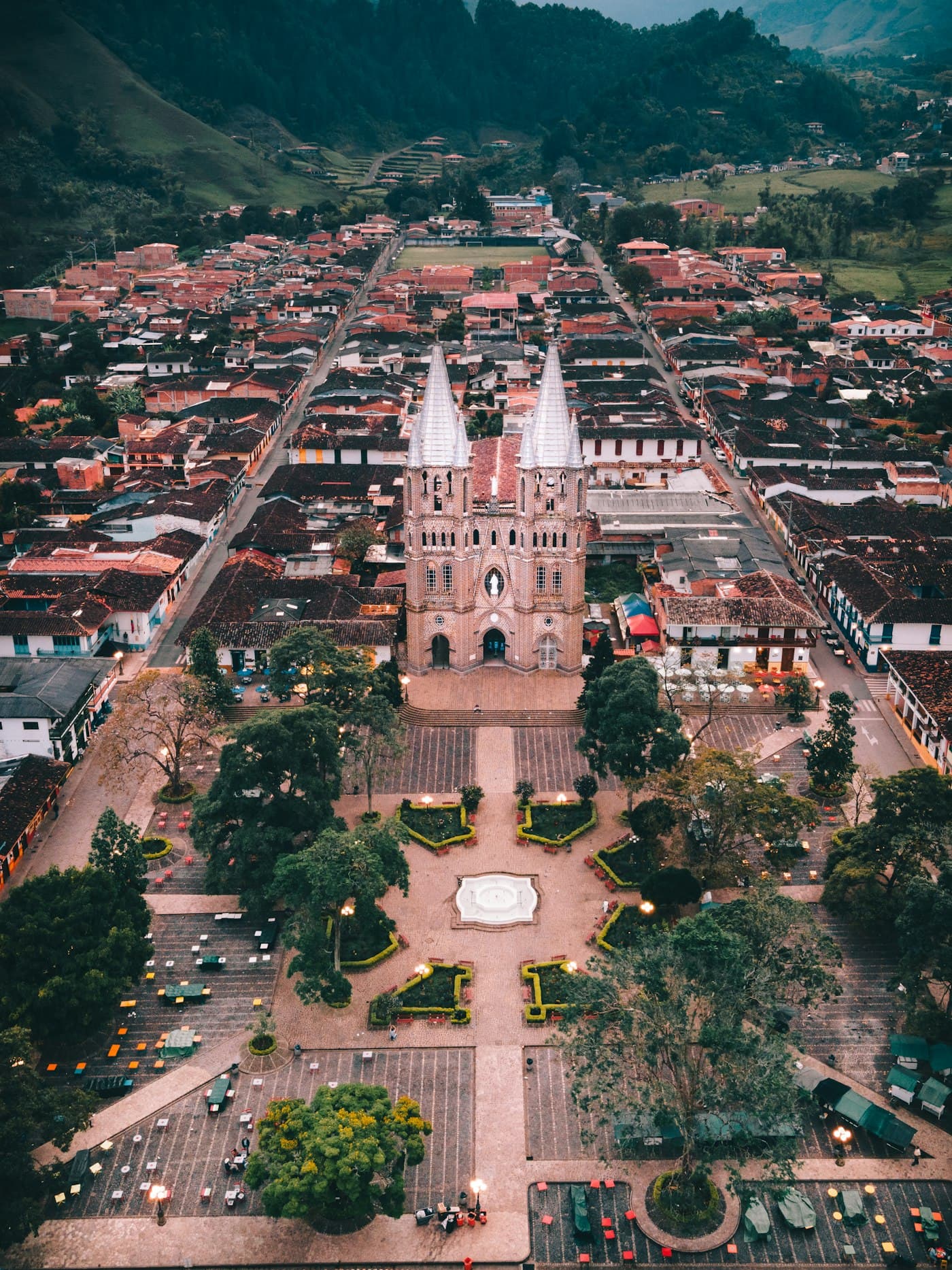
Looking back toward Jardín, the view is postcard-perfect. The town clings to its hillside in a cascade of color — terracotta roofs, white walls, balconies draped in flowers — and above it all, the twin spires of the Basílica Menor de la Inmaculada Concepción rise like sentinels against the mountain backdrop. It is one of the most photographed angles in all of Antioquia, and from the garrucha seat, with your feet hanging in open air, it feels impossibly beautiful.
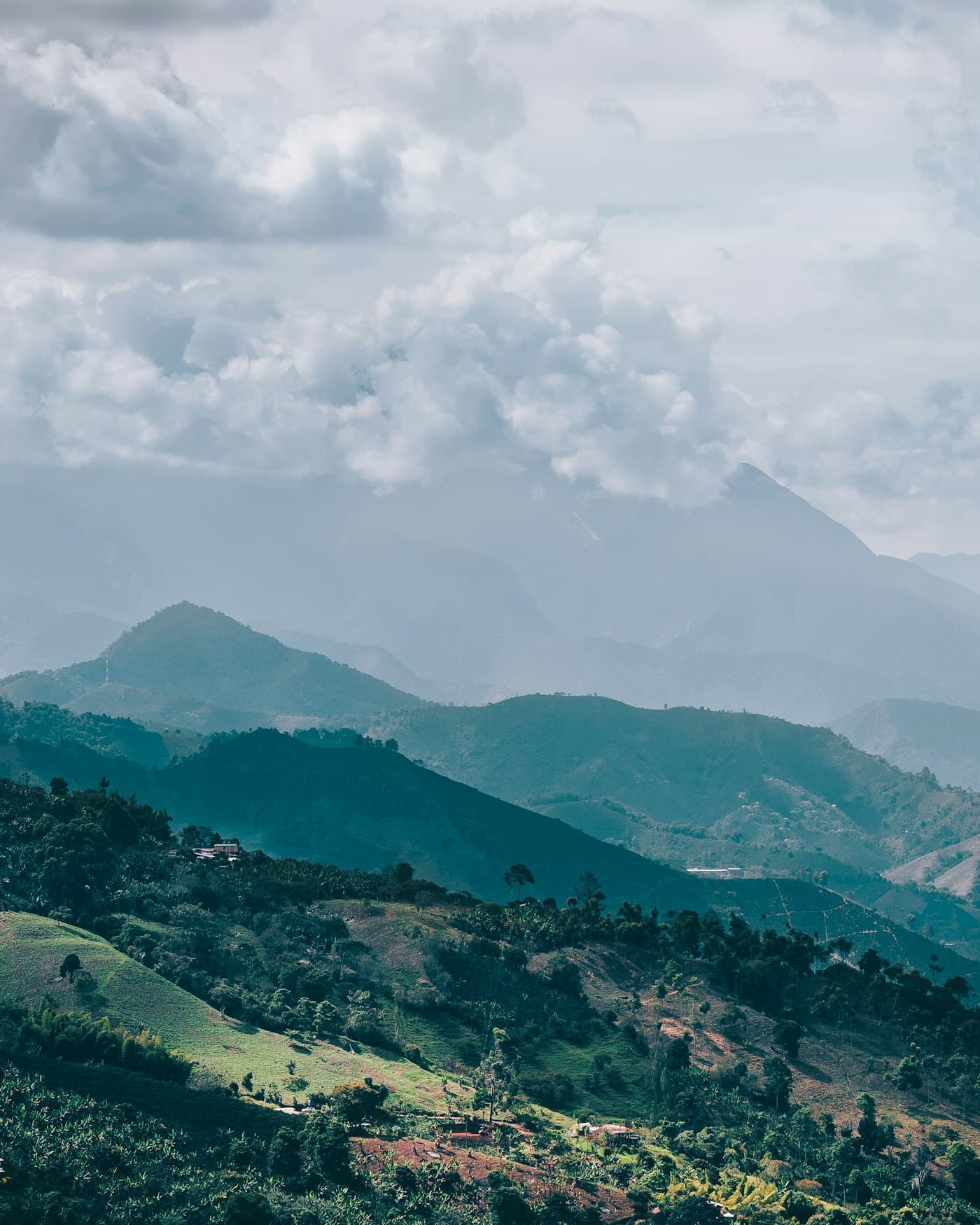
Looking forward, the opposite hillside approaches slowly: a wall of green, terraced with coffee and plantain, dotted with the rooftops of fincas, and crowned by cloud forest that disappears into mist. The mountains behind it stack up in layers — each ridge slightly paler, slightly bluer than the one before, until the farthest peaks dissolve into the sky.
The crossing takes about 5 to 10 minutes. It feels like both an eternity and an instant.
Arrival
The upper station deposits you on the far hillside, where the world feels markedly different from the town you just left. The air is slightly cooler, thick with the scent of damp earth and vegetation. The sounds are rural — a rooster crowing, a dog barking in the distance, the rhythmic chop of a machete clearing brush on a nearby farm.
Here you will find a small park and mirador (viewpoint) with benches where you can sit and absorb the panorama at your leisure. The view back across the valley to Jardín is magnificent — the entire town laid out before you, framed by mountains, with the cable of the garrucha tracing its improbable line through the air.
Beyond the viewpoint, walking trails wind through the surrounding countryside. A short loop takes you through working coffee and banana farms, past wildflowers and ancient guadua bamboo groves, with constant views across the valley. Longer trails lead deeper into the hills for those who want to explore further.
A small vendor or shop near the station often sells drinks, snacks, and sometimes handmade crafts — though availability varies by day and season. Bring water and a snack just in case.
Most visitors spend 30 minutes to an hour exploring the upper side before riding back. Your ticket covers the round trip, and there is no time limit — ride back whenever you are ready.
The Return
The ride back offers an entirely different emotional register. Where the outward crossing was about departure and discovery, the return is about homecoming. You watch Jardín grow closer — its colors sharpening, its sounds returning, the familiar shape of the plaza and the basilica resolving from miniature to life-size. Many riders say the return trip is actually more beautiful than the crossing out, because you approach the town head-on and see it revealed in all its improbable charm.
Practical Guide
Getting There
From the main plaza (El Libertador), walk south along the main road heading downhill toward the river. Follow signs for "La Garrucha" — they are posted at key intersections. The walk takes approximately 10 minutes at a gentle pace. The route itself is pleasant, passing through residential streets with views opening up as you descend.
Hours
- Weekdays: 9:00 AM -- 5:00 PM
- Weekends and holidays: 8:00 AM -- 6:00 PM
Hours may vary seasonally. The garrucha does not operate during heavy rain, strong winds, thunderstorms, or other adverse weather conditions. If skies look threatening, check at the station or ask at your accommodation before making the walk.
Cost
- Round trip: COP $8,000 -- $10,000 per person (approximately USD $2 -- $2.50)
- Children: Reduced rates or free for young children accompanied by an adult (ask at the ticket window)
This is one of the most remarkable values in Colombian tourism. For the price of a good coffee, you get an experience that most visitors rank as the single highlight of their time in Jardín.
Wait Times
La Garrucha carries 1 to 2 passengers per crossing, so during busy periods the line can build. Expect:
- Weekday mornings: Minimal wait, often immediate boarding
- Weekday afternoons: Short waits of 5--15 minutes
- Weekend afternoons and holidays: Waits of 15--45 minutes are common
- Long weekends (puentes festivos): The longest waits; consider arriving early
Pro tip: Visit on a weekday morning between 9:00 and 11:00 AM for the shortest lines, the clearest skies, and the best light for photography.
When to Ride: Timing Your Crossing
Morning (9:00 -- 11:00 AM)
The optimal window for most visitors. Morning air is typically clear and still, offering the sharpest views and the deepest blue skies. Light falls warmly on the valley, illuminating the coffee terraces and the town behind you. Crowds are thinnest. If you only ride once, ride in the morning.
Midday (11:00 AM -- 2:00 PM)
Clouds often begin building over the mountains by late morning. The light becomes harsher and more overhead. This is still a fine time to ride, but the photographic conditions are less ideal. On the positive side, midday crossings can feel warmer and more comfortable if the morning was cool.
Golden Hour (4:00 -- 5:30 PM)
When the weather cooperates, late afternoon brings the most dramatic light of the day. The valley turns golden, shadows lengthen across the mountainsides, and the town of Jardín glows in warm amber tones. However, afternoon cloud cover is frequent, and there is no guarantee of clear skies. If golden hour is your goal, check the sky around 3:00 PM and make your decision.
Overcast and Misty Days
Some of the most atmospheric garrucha crossings happen on cloudy days. When mist drifts through the valley, the ride takes on an almost dreamlike quality — the river appears and disappears below you, the mountains emerge from cloud and vanish again, and the entire experience feels intimate and otherworldly. Do not skip La Garrucha because of clouds. Some of the best stories begin with imperfect weather.
Photography Tips
La Garrucha is one of the most photogenic experiences in the Colombian Andes, but the open-air, moving platform presents unique challenges and opportunities.
Secure your gear. This is the single most important tip. There is nothing between your camera and an 80-meter drop. Use a wrist strap for your phone, a neck strap for your camera, and never hold any device casually over the edge. A dropped phone here is gone forever.
Shoot wide. The scale of the landscape demands wide-angle compositions. On a phone, use the standard lens or ultra-wide. On a camera, anything in the 16--35mm range captures the sweep of the valley beautifully.
Embrace video. The smooth, steady motion of the cable car creates natural cinematic movement. A slow, sweeping video clip of the crossing — the valley unfolding, the town receding or approaching — is often more evocative than any still photo. Shoot in landscape orientation for maximum impact.
Include the cable and seat. Some of the most compelling La Garrucha images show the cable stretching into the distance, the metal frame of the seat, or the rider's feet dangling above the void. These elements add context, scale, and the visceral sense of being suspended in air.
Portraits work beautifully. The soft, diffused light of an overcast day and the stunning valley backdrop make La Garrucha an extraordinary setting for portraits. Have your travel companion photograph you from the station as you depart, or take turns photographing each other during the crossing.
Look down. Some of the most striking compositions come from pointing your camera straight down — the river, the treetops, the dizzying sense of height. These overhead shots are uniquely available from La Garrucha and impossible to replicate from any other vantage point in Jardín.
Safety Considerations
La Garrucha has operated safely for decades, with regular maintenance and experienced operators. The system is simple and reliable. That said, the open-air design requires common sense and awareness.
- Keep the safety bar locked throughout the ride. It is your primary restraint and must remain in place at all times during the crossing.
- Secure all loose items before departure. Hats, scarves, sunglasses, bags — anything that could be caught by the wind. The breeze intensifies over the middle of the valley.
- Children must be closely supervised. Keep young children on your lap or held firmly beside you. The open design is thrilling for kids but demands extra attention from parents.
- Follow the operator's instructions without exception. If they say the system is closed due to weather or technical issues, respect the decision. These are experienced professionals who know the system intimately.
- Fear of heights is normal. Most visitors with mild to moderate height anxiety report that La Garrucha was exhilarating rather than frightening. The motion is smooth, the pace is gentle, and the views are so captivating that many nervous riders forget their anxiety within seconds. However, if you have a severe phobia, consider carefully before boarding — this is a very open, very high ride with no way to stop in the middle.
- Weight limits may apply. The operator will advise on the maximum number of passengers per crossing based on weight. Follow their guidance for everyone's safety.
Combining La Garrucha with Your Jardín Itinerary
La Garrucha is a relatively compact experience — roughly 60 to 90 minutes from arrival at the station to return, including wait time and exploration at the top. This makes it easy to weave into a fuller day.
Morning Valley, Afternoon Heights
Ride La Garrucha first thing in the morning for clear views and short lines. Walk back to the plaza for a late breakfast of calentado and fresh juice. In the afternoon, hike up to the Cristo Rey viewpoint for a completely different perspective on Jardín — one from below in the valley, one from above on the hilltop. Together, these two experiences give you a complete understanding of the town's extraordinary geography.
Coffee and Cable
Spend the morning on a coffee farm tour in the surrounding hills, learning how Jardín's beans go from cherry to cup. Return to town for a long, lazy lunch on the plaza. Then ride La Garrucha in the early afternoon, when the contrast between the intimate world of the coffee finca and the sweeping panorama of the valley crossing feels particularly vivid.
The Full Adventure Day
For those who want to pack their day with adrenaline: ride La Garrucha in the morning, then head to the Cueva del Esplendor waterfall hike or go paragliding over the valley in the afternoon. Finish with cold beers on the plaza as the sun sets behind the mountains and you replay the day's moments in your mind.
A Contemplative Morning
Not every Jardín day needs to be packed with activities. Ride La Garrucha, spend an hour at the viewpoint on the far side writing in your journal or simply sitting in silence, then ride back and wander to the Basílica for a quiet visit. Some of the best travel memories are made in moments of stillness, and La Garrucha offers that rare gift: a few minutes of suspension between two worlds, where the only thing asked of you is to look.
What Makes La Garrucha Unforgettable
There are cable cars all over the world — sleek gondolas in the Alps, modern telecabinas in Medellín, tourist rides above theme parks and beaches. La Garrucha is none of those things, and that is precisely what makes it extraordinary.
It is not about engineering. It is about the valley. It is about the way the green folds of the Andes open up beneath you, the way the river catches the light, the way a small town of colored balconies and church spires can look, from the right angle and the right height, like the most beautiful place on earth. La Garrucha does not compete with the landscape. It surrenders to it. The ride is simple so that everything else — the wind, the view, the sound of the river, the feeling of floating through the mountains — can be complex.
People talk about "once in a lifetime" experiences as if they are always grand and expensive. La Garrucha costs less than a cup of specialty coffee and takes less time than a long lunch. But ask anyone who has ridden it, and they will tell you: it is the moment their understanding of Jardín shifted from appreciation to love.
Plan Your Visit
For help planning your complete Jardín trip, explore our comprehensive travel guide and our 3-day itinerary that features La Garrucha on the very first day. If adventure is your priority, pair the cable car with our Cristo Rey hiking guide or the Cueva del Esplendor trail.
Where to Stay in Jardín
Isla de Pascua is a social hostel with a swimming pool, coworking space with 50 Mbps WiFi, and a common area that makes it easy to meet other travelers. It's steps from the main square and the best base for exploring everything Jardín has to offer.
Learn more about Isla de Pascua →Jardín is a town that reveals itself in layers — each experience uncovering something new about the mountains, the people, and the quiet magic of Colombia's coffee country. La Garrucha is perhaps the most literal expression of that idea: a ride that lifts you above the familiar and shows you the world from a perspective you never expected. It is a cable, a chair, and a valley full of green mountains. It is enough.
Ready to experience Jardín?
Book Now Isla de Pascua