Some towns look good in photographs. Jardín looks extraordinary. Tucked into a valley in southwestern Antioquia at 1,750 meters above sea level, this pueblo is a collision of saturated color, dramatic Andean topography, and the kind of soft mountain light that photographers spend careers chasing. The basilica rises from the central plaza like a gothic dream. Painted facades line cobblestone streets in shades of cobalt, terracotta, canary yellow, and mint green. Cloud forests press in from every side. And the people — the abuelos on the plaza benches, the arrieros on horseback, the women selling empanadas at dawn — give you subjects that no amount of post-processing could improve.
Whether you shoot with a full-frame mirrorless setup or the phone in your back pocket, this guide will help you find the best light, the strongest compositions, and the hidden angles that most visitors walk right past. I've spent years photographing this town in every season and every weather condition, and what follows is everything I wish someone had told me before my first visit.
Why Jardín Is a Photographer's Dream
Before we get into specific locations, it's worth understanding what makes Jardín so uniquely photogenic.
The color palette is unreal. Colombian heritage towns are famously colorful, but Jardín takes it further. The local tradition of painting wooden chairs — the iconic sillas de Jardín — and placing them outside every home and shop means that the entire town is essentially a curated set. You don't need to hunt for color here. It finds you.
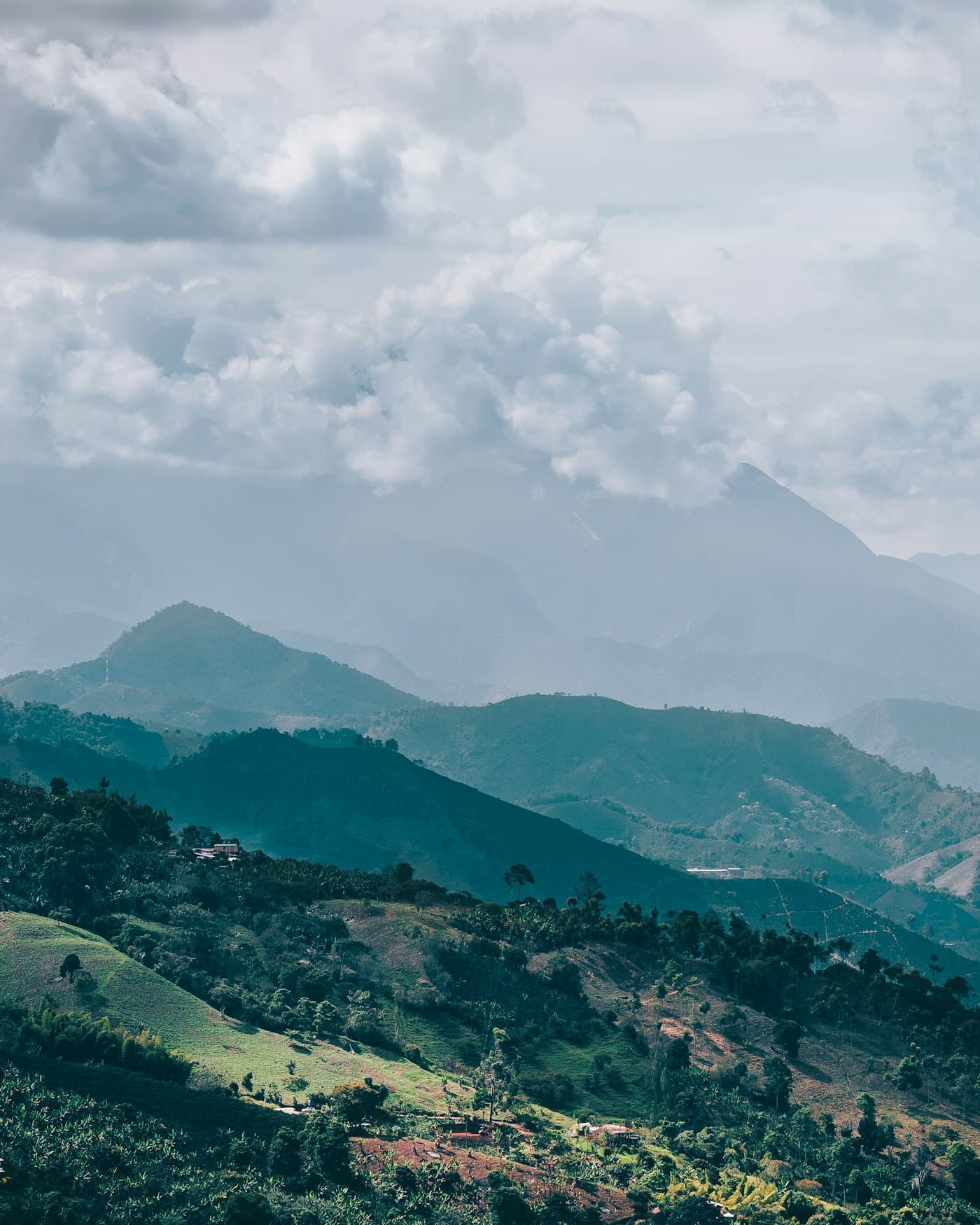
The topography creates depth. Jardín sits in a bowl-shaped valley surrounded by steep green mountains. This means almost every shot has natural layering — foreground streets, midground rooftops, background peaks disappearing into cloud. That sense of depth is what separates a snapshot from a photograph.
The light is spectacular. At 1,750 meters, you're above much of the atmospheric haze that flattens lowland light. Mornings break clean and golden. Afternoons build dramatic cumulus towers. The post-rain light, when the sun cuts through breaking clouds and hits wet cobblestones, is the kind of thing that makes you stop mid-sentence.
The human element is ever-present. Jardín hasn't been hollowed out by tourism. Real life happens on the plaza and in the streets — farmers in ruanas, kids chasing each other around the fountain, old men locked in intense games of tute at the card tables. These are not staged scenes. They're the daily rhythm of a living town, and they give your images soul.
The Best Viewpoints
1. Cristo Rey — The Panoramic Crown
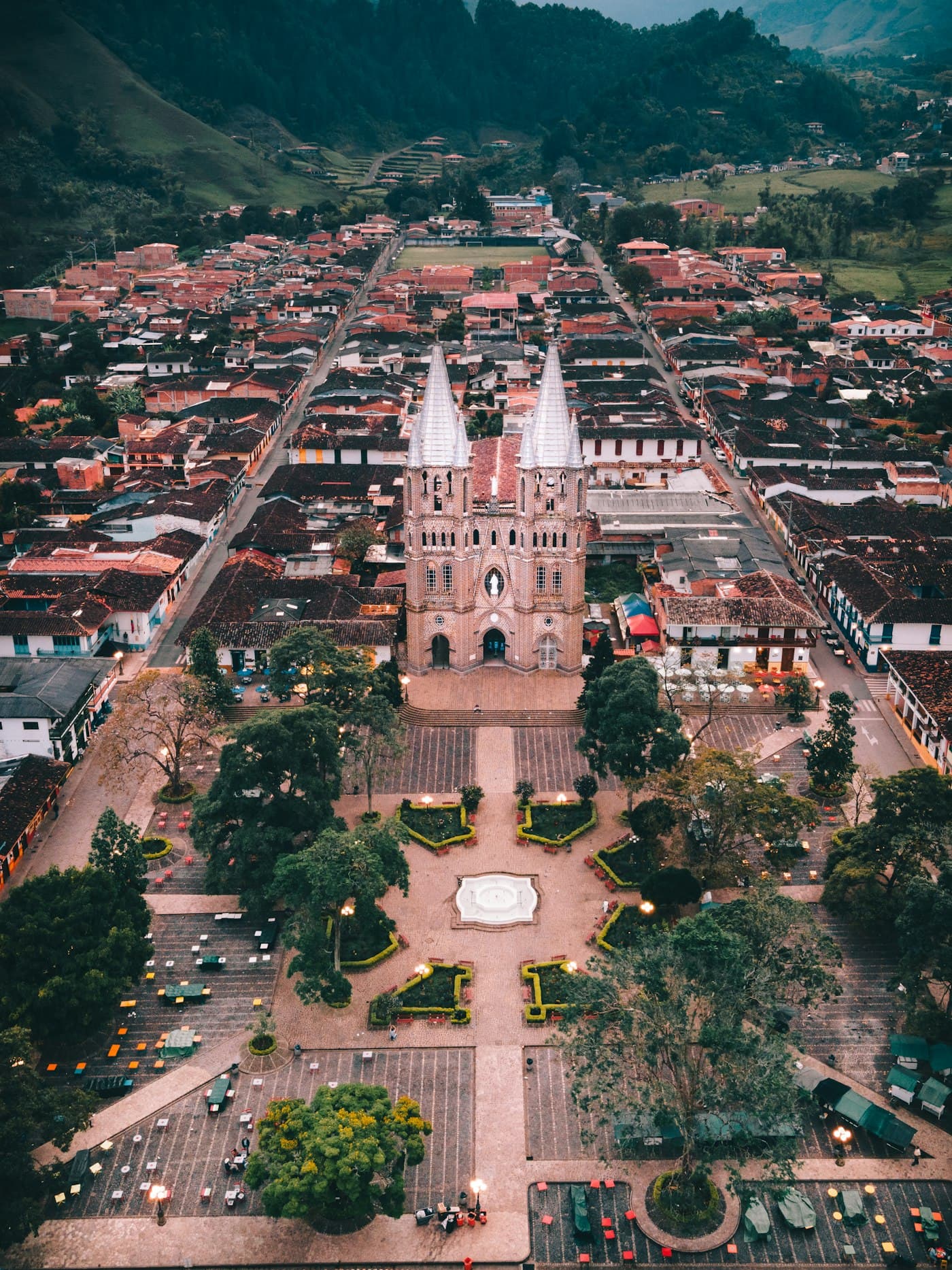
Cristo Rey is the single most important photography location in Jardín. Period. This hilltop mirador on the eastern edge of town gives you a sweeping 360-degree panorama: the entire town laid out below, the Basilica rising from the center, coffee farms cascading down surrounding hillsides, and the Andes stretching to the horizon.
Best time to shoot: Sunrise. Get there 20 minutes before the sun crests the eastern ridge. The light will sweep across the valley from left to right, illuminating the town in warm gold while the western mountains remain in cool shadow. The contrast is breathtaking.
Lens recommendation: Bring both wide and telephoto. A 24mm captures the full panorama, but a 70–200mm lets you isolate the Basilica, pick out individual streets, and compress the layers of farms and mountains behind the town.
Pro tip: Don't just shoot from the statue platform. Walk 50 meters along the ridge to the south for a slightly different angle that places the Basilica dead center with the valley opening behind it. This is the composition that gets the most engagement if you're posting to social media, and it's the angle that most visitors miss entirely.
The hike takes 30–45 minutes from town. Bring a headlamp if you're going for sunrise — the trail is safe but unlit.
2. La Garrucha Cable Car — The Aerial Perspective
La Garrucha is Jardín's century-old cable car, originally built to transport goods across the valley. Today it carries visitors over a dramatic gorge to the hills on the western side of town. For photographers, it offers something rare: a moving aerial platform with constantly shifting perspectives.
Best time to shoot: Late morning (10–11 AM) when the sun is high enough to illuminate the valley floor and the shadows in the gorge below add drama. Alternatively, the last ride before closing in the late afternoon gives you warm side-light on the town.
What to shoot: The town receding below as you ascend. The river cutting through the gorge. The lush vegetation pressing in on both sides. Other passengers gripping the cable car with white knuckles — genuine human emotion makes great photography.
Technical note: The cable car sways and vibrates. Use a fast shutter speed (1/500 or faster) to avoid motion blur. If you're on a phone, tap to lock focus and exposure before the car starts moving. Burst mode is your friend here.
3. Mirador Alto de las Flores
Less visited than Cristo Rey, Alto de las Flores is a viewpoint on the western hills that gives you a completely different perspective on Jardín. From here, you're looking east toward the morning sun, which means this spot is at its best during golden hour in the late afternoon, when the light warms the town's facades and the Basilica glows amber.
Best time to shoot: 4:30–5:30 PM in dry season. The sun drops behind you, front-lighting the entire town. The effect is like a spotlight on a stage.
How to get there: A 40-minute walk or a short ride on a moto-taxi. Ask locals for "el mirador de las flores" — it's known but not heavily touristed.
4. The Basilica Bell Tower
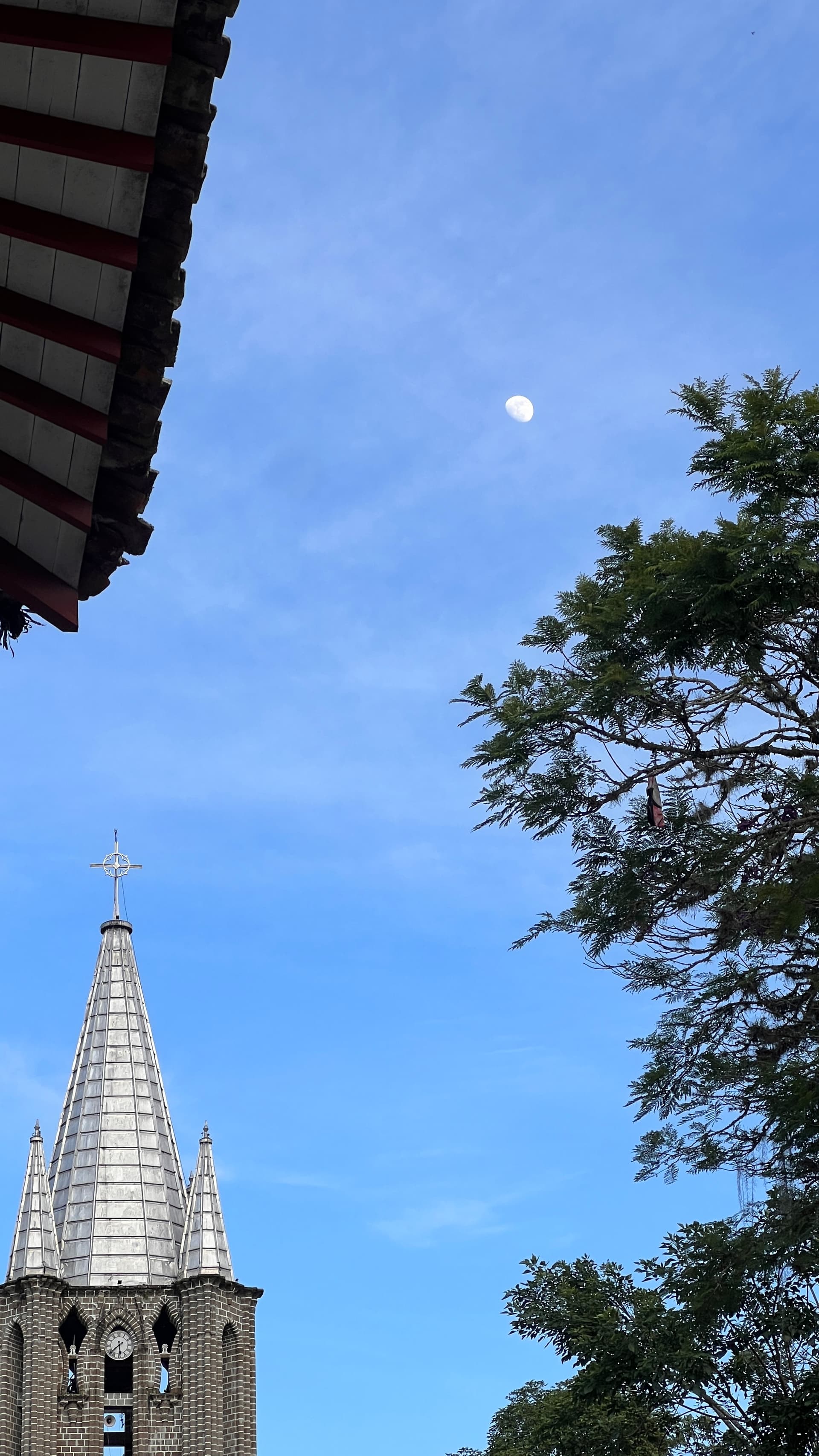
When the Basilica of the Immaculate Conception opens its bell tower to visitors (check locally, as access varies), it provides a unique elevated view straight down into the plaza and along the principal streets. The geometry of the rooftops from this angle is remarkable — terracotta tiles radiating outward in every direction, broken by courtyards, trees, and the occasional person crossing the street far below.
What to shoot: Directly downward for abstract rooftop patterns. Outward toward the mountains for layered depth. Along the street corridors for leading-line compositions.
Golden Hour: Where to Be and When
Jardín sits in a valley that runs roughly north-south, with mountains rising steeply on both east and west sides. This topography compresses golden hour — the sun disappears behind the western ridge earlier than you'd expect, and it rises later from behind the eastern ridge. Plan accordingly.
Sunrise (approximately 5:50–6:20 AM): The best sunrise position is Cristo Rey or anywhere on the eastern hills. You'll be lit from behind, but you'll watch the golden light sweep across the town below like a slow wave. The Basilica catches the first light, then the plaza, then the residential streets.
Sunset (approximately 5:45–6:15 PM): For sunset shooting, you want to be on the western side — Alto de las Flores, the far side of La Garrucha, or even just the western edge of town where you can look back toward the Basilica with warm backlight. The mountains behind Cristo Rey turn purple and blue as the sun drops.
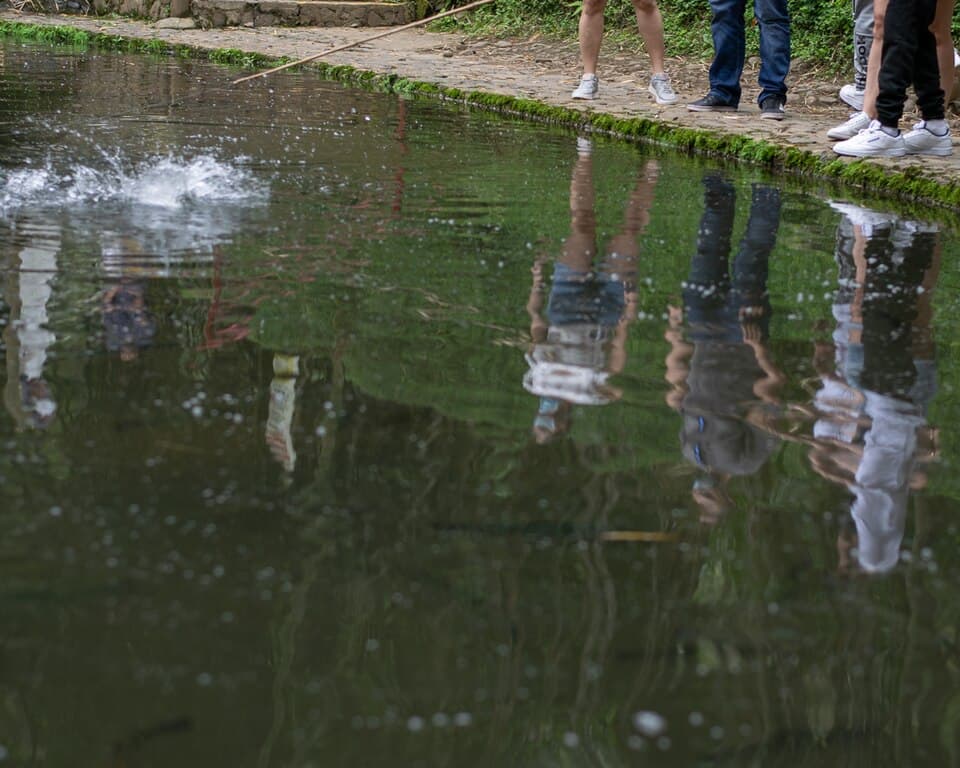
The secret hour: The 20 minutes immediately after a mid-afternoon rain, when the sun breaks through. Wet streets become mirrors. Colors intensify by a full stop. Steam rises from warm cobblestones. This is my single favorite light condition in Jardín, and it happens several times a week. Keep your camera ready.
Street Photography in Jardín
Street photography here is rewarding because the town hasn't been sanitized for tourists. Life is lived publicly, and the visual material is extraordinary.
The Colorful Doors and Facades
Every street in Jardín's center is a wall of color. The painted wooden doors, in particular, are iconic — many are over a century old, with carved details, brass knockers, and paint layered so thickly you can see the history in the chips and cracks.
Composition tip: Don't just shoot the door straight-on. Include a person walking past for scale and narrative. Or shoot down the street at an angle so multiple facades compress together in a cascade of color. Look for contrasts — a blue door next to an orange wall, a potted plant adding green against terracotta.
Plaza Life
The main plaza is the heartbeat of Jardín and the richest single location for street photography in town. On any given day you'll find:
- Old men playing cards and dominoes at the permanent tables under the trees. They've been coming to these same tables for decades. Their faces tell stories.
- Shoe shiners working their craft with practiced hands. The low angle from their perspective — looking up at the client — makes for powerful compositions.
- Fruit vendors with carts piled high with tropical color — mangoes, guanábanas, lulos, maracuyá. The produce itself is a still life.
- Children playing around the fountain, especially after school lets out around 3 PM.
Timing: The plaza is most active between 8–11 AM and again from 4–6 PM. Midday empties it out as people retreat from the sun.
The Painted Chairs — Sillas de Jardín
The sillas de Jardín are perhaps the town's most recognizable symbol. These handmade wooden rocking chairs, painted in vivid primary colors, sit outside nearly every home and business. They're functional furniture, but they're also art.
How to shoot them: Rows of empty chairs against a painted wall make beautiful minimalist compositions. Better still, photograph someone sitting in one — an abuela knitting, a man reading El Colombiano, a cat sleeping in the seat. The chair becomes a frame within a frame, and the subject becomes part of the town's visual identity.
Market Scenes
Jardín's market area, a few blocks from the main plaza, is sensory overload in the best possible way. Stalls overflow with produce, herbs, flowers, fresh-killed chickens, panela blocks, and handmade baskets. The light inside is mixed — fluorescent tubes competing with shafts of daylight through gaps in the roof — which creates moody, atmospheric conditions.
What to focus on: Hands. The way a vendor stacks avocados. The way a butcher wraps meat in paper. The way a woman counts coins. Hands doing work tell stories that faces sometimes don't.
Nature Photography Around Jardín
The town is surrounded by some of the most biodiverse cloud forest in the Colombian Andes. Within a 30-minute radius you have world-class wildlife and landscape subjects.
Gallito de Roca (Andean Cock-of-the-Rock)
The Gallito de Roca is Jardín's most famous avian resident — a brilliantly scarlet bird that looks almost artificially colored. Several bird reserves near town (Reserva de Aves Gallito de Roca, La Casa de las Aves) maintain viewing platforms where these birds display during their dawn courtship rituals.
Photography conditions: Low light. These birds display in dense forest understory at dawn. You'll need ISO 3200+ and a fast lens (f/2.8 or wider). A 200–400mm focal length is ideal. On a phone, you'll struggle here — this is one situation where dedicated camera gear makes a significant difference.
Best time: 6:00–7:00 AM. Arrive before dawn and wait in silence. The males gather at their lek (display ground) and perform for the females. The red against the green forest is one of the most visually striking scenes in South American birding.
Hummingbirds
Several locations around Jardín maintain sugar-water feeders that attract dozens of hummingbird species. For photographers, these feeders are a gift — the birds come close, they hover predictably, and the variety is staggering.
Technical approach: Fast shutter speed (1/2000 or faster) to freeze wings. Use natural light when possible — flash can stress the birds and produces unnatural results. A macro or medium telephoto lens works well. On a phone, use burst mode and accept that most frames will be blurry — the few sharp ones will be worth it.
Cloud Forest Landscapes
The cloud forest surrounding Jardín is a world of moss-covered trees, hanging bromeliads, drifting mist, and shafts of light breaking through the canopy. It's moody, atmospheric, and incredibly photogenic — but technically challenging.
Key tip: Embrace the mist. Don't wait for it to clear. The fog is the subject. Shoot silhouettes of trees against white mist. Look for light rays penetrating the canopy. Use the moisture on leaves and spider webs as foreground detail.
White balance: Auto white balance often goes too blue in cloud forest conditions. Shift it slightly warm (5500–6000K) to preserve the natural green tones.
Waterfalls
Several waterfalls are accessible from Jardín, with the Cueva del Esplendor being the most spectacular (a waterfall plunging through a hole in a cave ceiling). For photography, the key is controlling shutter speed.
Silky water effect: Use a slow shutter speed (1/4 to 2 seconds). You'll need a tripod or a very stable surface. A phone can achieve this with "long exposure" or "waterfall" mode, which many modern cameras now include.
Frozen droplets: Use 1/1000 or faster for a more dynamic, frozen-in-time look. Both approaches work — it's a creative choice.
Coffee Farm Photography
Jardín is in the heart of Colombia's coffee country, and several farms offer tours that are goldmines for photography.
The red cherries: Ripe coffee cherries on the branch, backlit by morning sun, are one of the most iconic images of Colombian agriculture. Get close. Fill the frame. The red against green is irresistible.
Drying beds: The geometric patterns of coffee beans drying on raised beds or patios make excellent graphic compositions. Shoot from above if you can access an elevated angle.
Processing: The wet processing stages — pulping, fermenting, washing — involve water, motion, and texture. Look for the moment when someone rakes the beans on the drying patio or pours cherries into the depulper.
Portraits: Coffee farmers are proud of their work and often happy to be photographed (with permission). Hands stained from picking, faces weathered by mountain sun, traditional hats and ruanas — these are portraits that communicate place and livelihood.
Rainy Season vs. Dry Season Light
Jardín's wet season runs roughly from April to November, with the heaviest rains in October and November. The dry season spans December to March, with a secondary dry period sometimes appearing in July and August.
Dry season: Clearer skies, harder light, more reliable golden hours. Best for viewpoint panoramas and sunrise/sunset shoots. The downside is that the light can be harsh between 10 AM and 3 PM, with strong shadows that blow out highlights.
Rainy season: Softer, more diffused light throughout the day. Greener landscape. More dramatic cloud formations. The trade-off is unpredictable rain — but remember, the post-rain light is often the best light of all. Rainy season also means more waterfalls and flowing rivers.
My recommendation: If photography is your primary goal, come in early March or early December — the tail end or start of dry season, when you get clear mornings but still have enough moisture in the air for dramatic clouds and occasional afternoon rain for that magical wet-street light.
Phone vs. Camera: Tips Specific to Jardín
When your phone is enough:
- Street photography (discretion matters, and phones are less intimidating)
- The colorful facades (modern phone cameras handle color brilliantly)
- Food shots at restaurants and cafés
- Quick panoramas from viewpoints
- Social media content where immediacy beats resolution
When a dedicated camera matters:
- Gallito de Roca and bird photography (you need reach and low-light performance)
- Sunrise and sunset from Cristo Rey (dynamic range is critical when shooting into mixed light)
- Interior Basilica shots (low light, high ceilings, fine architectural detail)
- Any situation where you want to print large
Phone-specific tips for Jardín:
- Clean your lens. Mountain humidity and coffee country dust coat it constantly.
- Use portrait mode on the painted chairs and plaza subjects — the simulated depth-of-field works surprisingly well.
- Turn on the grid overlay to nail your horizon lines. Jardín's streets slope, and a crooked horizon kills an otherwise strong image.
- If your phone has a 0.5x ultrawide lens, use it inside the Basilica and for street scenes. The distortion adds drama when used intentionally.
Best Times of Day — A Quick Reference
5:30–6:30 AM: Sunrise from Cristo Rey or eastern hills. Bird photography at reserves. Empty streets with beautiful light.
7:00–9:00 AM: Morning plaza activity begins. Best light on western-facing facades. Coffee farm visits for early processing activity.
10:00 AM–2:00 PM: Harsh overhead light. Good time for interiors (Basilica, market, cafés), overhead food shots, or exploring waterfalls where canopy shade softens the light.
3:00–4:00 PM: Post-school plaza energy. Cloud formations building over the mountains. Afternoon rain may arrive — keep gear protected but stay ready for the light after.
4:30–6:00 PM: Golden hour. Best on western viewpoints looking back at town. Street-level shooting on east-facing facades catching warm light. Last La Garrucha rides.
6:00–7:00 PM: Blue hour. The Basilica illuminated against a deep blue sky. Plaza lights coming on. Magical, short-lived, and worth staking out your position early.
Respecting Your Subjects
This is the most important section in this guide. Jardín is a real town with real people, not a theme park. Photography ethics matter here, and getting it right will make your images better while honoring the community.
Always ask permission for portraits. A simple "¿Le puedo tomar una foto?" goes a long way. Most people will say yes, and many will be flattered. Some will say no — respect that immediately and without argument.
Don't photograph children without parental permission. This is a universal rule that applies everywhere, including Jardín.
The card players on the plaza are accustomed to being photographed but appreciate being asked. Some will wave you off, others will ham it up. Either response gives you a genuine moment.
Buy something. If you photograph a vendor's stall or a shop owner's facade, buy a fruit, a coffee, a small souvenir. It's a simple exchange that transforms you from a taker to a participant.
Share your images. If you take a portrait that you love, offer to show it to the subject. If you can print it or send it digitally, even better. In a town this size, people remember being seen with respect.
Be present before being a photographer. The best images come after you've sat in the plaza for an hour with a tinto, watched the rhythms, and become part of the scenery rather than an interruption. Jardín rewards patience. Your camera should be the last thing you pick up, not the first.
Final Thoughts
Jardín is the kind of place where your camera roll fills up without you trying. The town gives you everything — light, color, depth, humanity, nature — and asks only that you pay attention. Whether you're building a professional portfolio or just capturing memories for yourself, you'll leave with images that stop people mid-scroll.
Come early. Stay late. Shoot in the rain. Talk to people before you photograph them. And when the golden light hits the Basilica and the whole plaza goes quiet for a moment — that's when you press the shutter.
Jardín doesn't just photograph well. It photographs like nowhere else on earth.