Written by Kate O'Brien — Ireland
Stay: August 2025, 6 nights
An Irish Woman Walks Into the Rain
There's a particular kind of irony in traveling halfway across the world and ending up somewhere that rains as much as home. My friends in Dublin thought I was mad. "You've gone to Colombia for the summer holidays and it's lashing rain?" they asked over WhatsApp, sending me photos of the one sunny afternoon Dublin had managed in July.
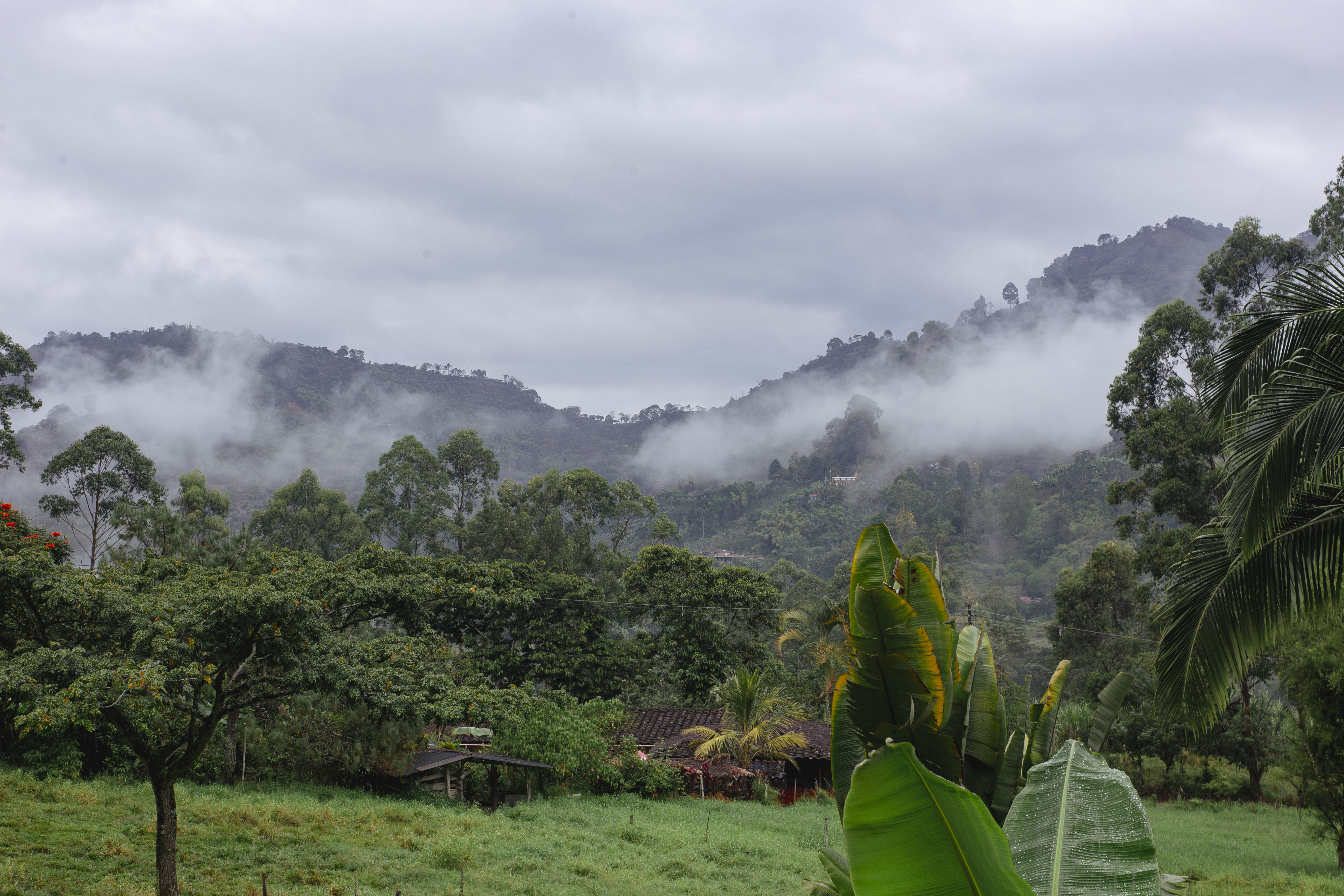
But here's what they don't understand, and what I didn't understand until I arrived: rain in Jardín is not rain in Dublin. Dublin rain is grey, horizontal, and smells vaguely of diesel. It makes you pull your coat tighter and walk faster and think about emigration. Jardín rain is warm, vertical, dramatic, and it makes the mountains come alive. The green deepens. The mist rolls through the valleys like something from a Brontë novel. The air smells of earth and coffee flowers and something sweet I could never quite identify.
I am Kate. I teach English literature at a secondary school in Dublin. I am thirty-five. I came to Colombia because I needed to remember what it felt like to read a book without grading it, to have a thought without turning it into a lesson plan, to sit still without feeling guilty about all the things I should be doing instead.
I chose Jardín specifically because someone on a travel forum described it as "the kind of place where you can spend an entire afternoon doing nothing and feel like you've spent it well." That sentence spoke directly to my exhausted teacher's soul.
The Rhythm of Rain
The weather in Jardín during August follows a pattern I came to love. Mornings are clear — bright, warm, with that crystalline mountain light that makes everything look sharp-edged and hyper-real. By early afternoon, clouds gather over the mountains. By two or three o'clock, the rain arrives. Sometimes gentle, sometimes theatrical — great curtains of water pouring from a sky that was blue an hour ago.
The rain usually lasts two or three hours. Then it stops, the clouds pull back, and the evening light is extraordinary — golden and soft, with mist still clinging to the highest peaks. The sunsets during rainy season are the best, they told me, because the moisture in the air scatters the light into colours that clear skies can't produce.
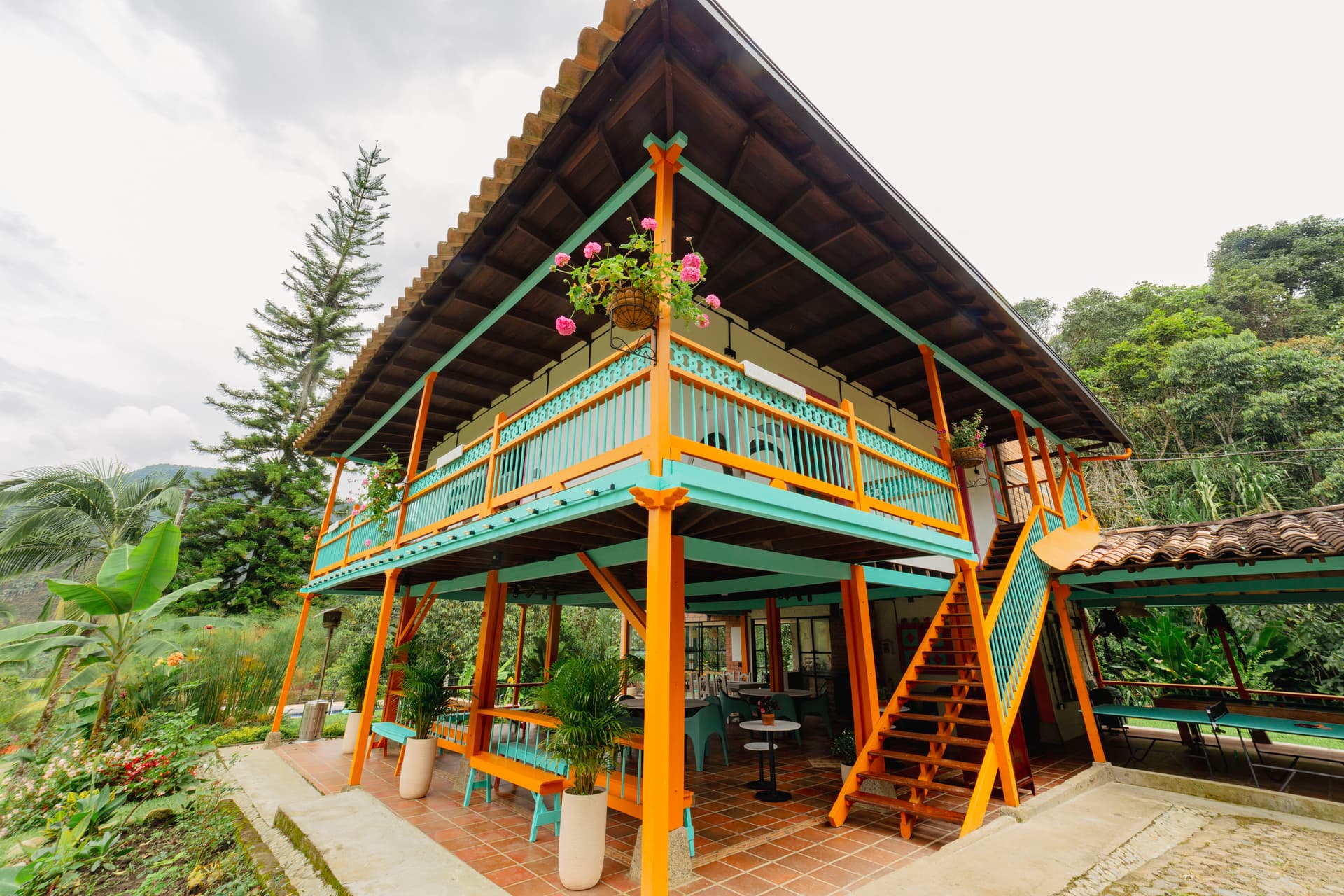
I built my days around this rhythm. Mornings for walking. Afternoons for reading. Evenings for writing in my journal, drinking coffee on the hostel terrace, and watching the mountains change colour as the sun went down.
The Basilica, Twice
I visited the Basilica of the Immaculate Conception twice, and I would have gone a third time if I'd had another day.
The first visit was on a sunny morning. The church is magnificent — neo-Gothic, with soaring arches, stained glass windows that throw coloured light across the stone floor, and an altar that glitters with gold leaf. It's absurdly beautiful for a town of this size. I stood in the centre aisle for ten minutes, just looking up, trying to comprehend how a community this small built something this ambitious.
The history of the Basilica is fascinating. It took decades to build, funded by the community itself — farmers, tradespeople, ordinary people contributing what they could because they believed their town deserved a cathedral. There's something deeply moving about that. Not a king commissioning a monument to his own glory, but a village building a church because beauty mattered to them.
My second visit was during the rain. I ducked inside to escape a particularly dramatic downpour, and the experience was entirely different. The church was nearly empty. The rain drummed on the roof. The stained glass windows glowed with a subdued, silvery light instead of the bright colours of the morning. It felt intimate, contemplative, like the building itself was breathing more slowly.
I'm not particularly religious, but I sat in a pew for forty-five minutes and felt something close to peace. The kind of peace that comes from being in a beautiful space with no agenda and no one expecting anything from you. Teachers rarely experience that during the school year.
Reading in the Common Area
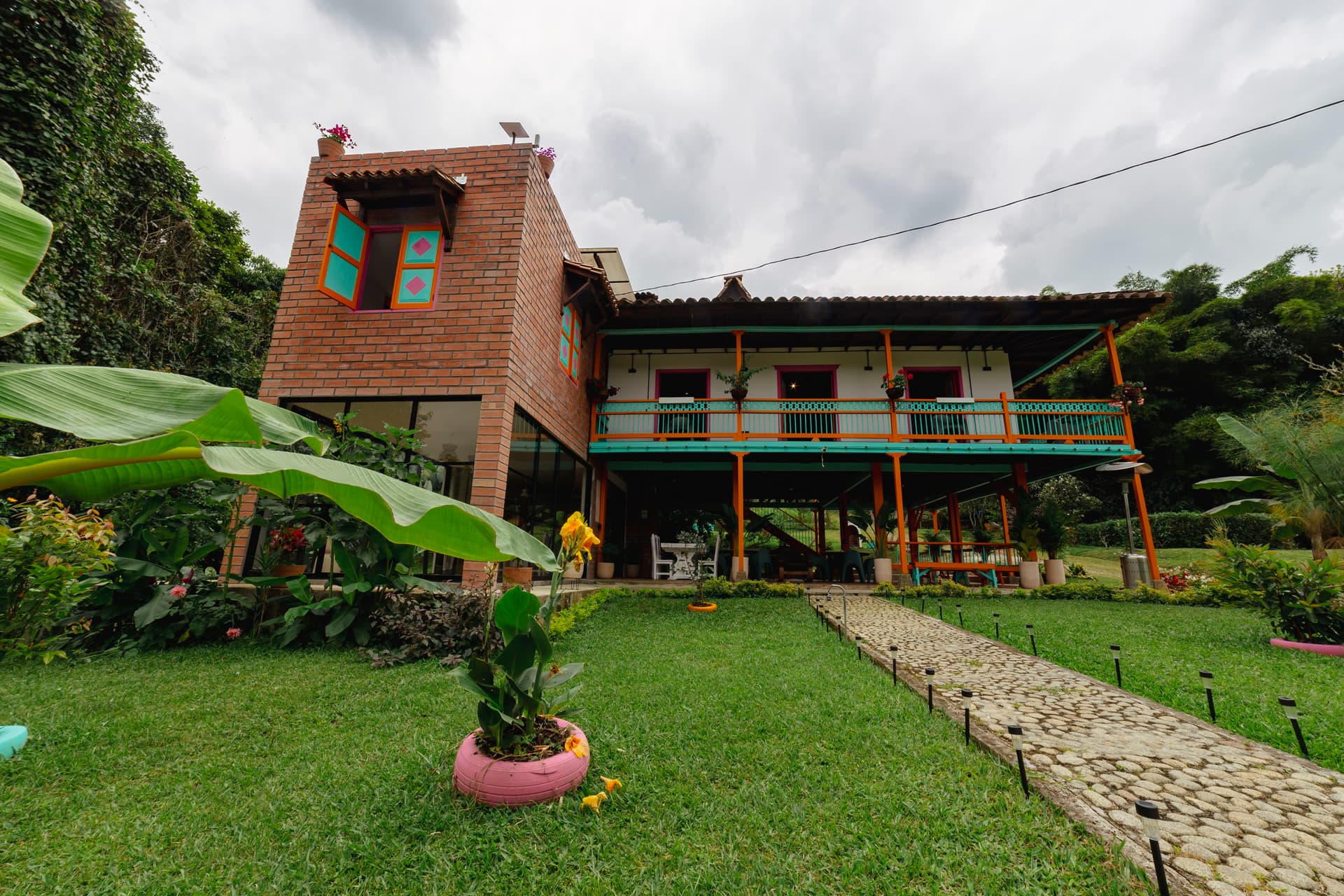
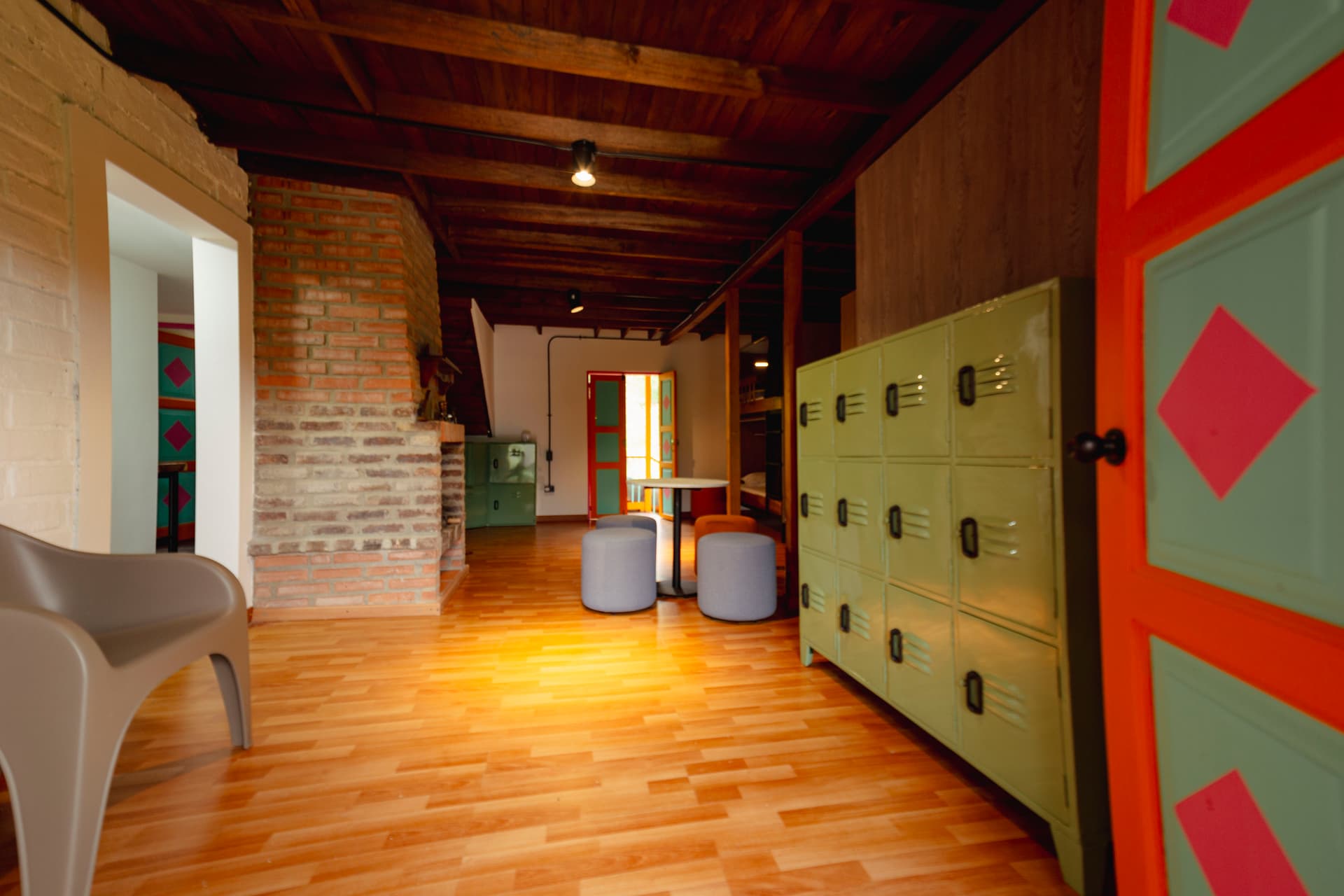
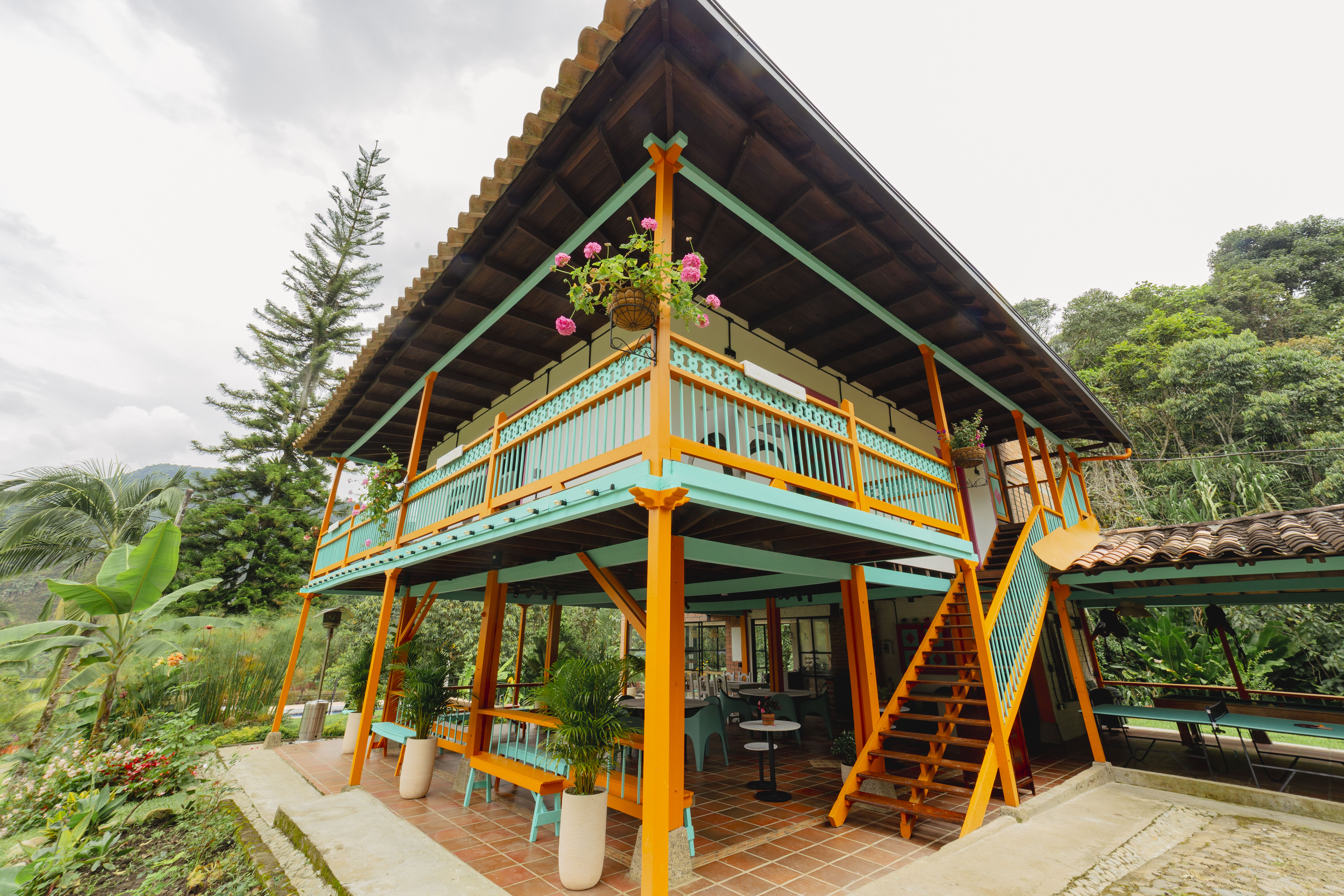
The common area at Isla de Pascua became my living room. Every afternoon, when the rain started, I'd settle into one of the sofas with my book and a cup of local coffee, and read.
I brought four books with me and finished all of them. García Márquez's Love in the Time of Cholera felt appropriate — the Colombian setting, the magical realism, the unhurried pace that mirrors Jardín's own rhythm. I read Heaney's North because I always bring Heaney when I travel, and his poems about landscape and memory felt oddly resonant in these Colombian mountains. I read a thriller I won't name because it was terrible, and I read One Hundred Years of Solitude because I was in Colombia and it seemed compulsory.
The common area was perfect for reading. Quiet enough to concentrate, social enough that you didn't feel isolated. Other guests would come and go — someone making coffee, someone writing in a journal, someone gazing at the rain — and there was an unspoken understanding that this was a space for gentle activities. No one played loud music. No one tried to start a conversation when you were clearly mid-paragraph. It was civilised.
The Art of Slow
I want to talk about slowness, because Jardín taught me something about it that I'd forgotten.
In Dublin, slowness is a luxury I can't afford. The school year is relentless — lesson plans, marking, parent meetings, staff meetings, extracurricular activities, exam preparation, pastoral care, report cards. My days are measured in forty-minute periods, and there's always something that needs to be done next. Even my summer holidays are structured: courses, planning for September, a book list I "should" get through.
In Jardín, I experienced genuine slowness for the first time in years. Not boredom — that's different. Not laziness. A deliberate, chosen slowness. The kind where you notice things because you're not rushing past them.
I noticed that the light changes colour seven times between sunrise and sunset. I noticed that the old men in the plaza have a specific bench hierarchy — the same men sit in the same spots every day, and the arrangement seems to reflect decades of friendship and habit. I noticed that the woman who sells empanadas near the Basilica sings quietly to herself while she works, and her song changes with her mood.
These are the kinds of things you see when you stop trying to see everything.
Walking the Streets
My morning walks became meditative. Jardín is small enough to walk end to end in twenty minutes, but I spent hours wandering because every street offered something worth pausing for.
The colonial architecture is exquisite — bright painted facades with wooden balconies, heavy wooden doors with iron knockers, tile roofs that glow orange in the morning light. Each building tells a story. Some are immaculately maintained, freshly painted in vivid blues and greens and yellows. Others are fading, their paint peeling to reveal previous layers — a palimpsest of colour choices made across decades.
I was particularly drawn to the doors. Jardín's doors are enormous — twice the height of a person, made of dark wood, often with carved details or iron studs. They speak of a time when doors were not just functional but ceremonial, marking the threshold between public life and private sanctuary. As an English teacher who spends far too much time thinking about symbols, I found them irresistible.
One morning I counted the doors on a single street: fourteen, each different, each with its own character. I photographed them all. It's the kind of project that only makes sense when you've been slowed down enough to find fourteen doors interesting.
An Evening with Locals
On my fourth night, the hostel organised an informal gathering with some local residents. It wasn't a structured event — more like the staff inviting a few friends over, someone bringing a guitar, someone else bringing homemade food.
I sat with a woman named Doña Carmen, who must have been in her seventies. She spoke no English and I speak stumbling, dictionary-dependent Spanish. We communicated through patience, gestures, and a shared appreciation for the empanadas someone had brought.
She told me — as far as I could understand — about her life in Jardín. She'd never left. Born here, married here, raised her children here, buried her husband here. She'd watched the town change over decades — electricity arriving, then television, then the internet, then the tourists. She was not resentful of the changes, but she was observant of them. She noticed things, too.
She asked me about Ireland. I tried to explain rain, sheep, literature, and the colour green. She laughed and pointed out the window at Jardín's green mountains and said something I roughly translated as: "We have those too."
She was right. There's a kinship between the Irish countryside and these Colombian mountains that I felt but couldn't fully articulate. Something about the way communities form around landscape, the way weather shapes daily life, the way stories are told and retold until they become the fabric of a place.
What the Rain Taught Me
On my last morning, I woke early and sat on the hostel terrace with a coffee. The mountains were clear, the air was fresh, and for the first time in months, my mind was quiet.
Not empty — quiet. There's a difference. An empty mind has nothing in it. A quiet mind has everything in it, but nothing is shouting. My thoughts were there — about school, about my students, about the year ahead — but they were calm. Manageable. Arranged, like books on a shelf, rather than scattered across the floor.
Jardín didn't solve anything. I'm going back to Dublin, back to the classroom, back to the relentless schedule. But I'm going back with a reminder that slowness exists, that rain can be beautiful rather than merely inconvenient, that sitting in a church or reading on a sofa or watching mountains change colour is not wasted time — it's the most important time.
I'm going back with a full journal, a head full of doors, and the quiet confidence that comes from spending six days doing exactly what you need, even if what you need is nothing at all.
To the teachers reading this: go to Jardín during the rainy season. Bring a book. Bring a journal. Leave your lesson plans at home. The rain will welcome you, and the mountains will remind you that some things are bigger than a curriculum.
— Kate O'Brien, Dublin, Ireland. August 2025.
Ready to experience Jardín?
Book Now Isla de Pascua