Written by Alex Papadopoulos — Greece
Stay: November 2025, 4 nights
A Greek Architect Falls in Love With the Facades of Jardín
I have a confession to make. I carry a Moleskine sketchbook everywhere I travel, and I draw buildings the way other tourists take photographs — compulsively, obsessively, from every possible angle. My friends find it annoying. My colleagues find it endearing. I find it essential. A photograph captures what a building looks like. A sketch captures how it feels.
I came to Colombia because a professor from my university years, now retired in Athens, had once told me that the architecture of Antioquia was some of the most underrated in Latin America. "Everyone goes to Cartagena for the colonial city," he said, "but the pueblos in the mountains — that is where the real architectural story is." It took me fifteen years to follow his advice. I should not have waited so long.
Jardín, specifically, was not on my original itinerary. I was meant to spend the week in Jericó. But a traveler I met in Medellín said, "If you care about architecture, you need to see Jardín. The Basilica alone is worth the trip." That sentence rearranged my plans entirely.
The Plaza: A Masterclass in Public Space
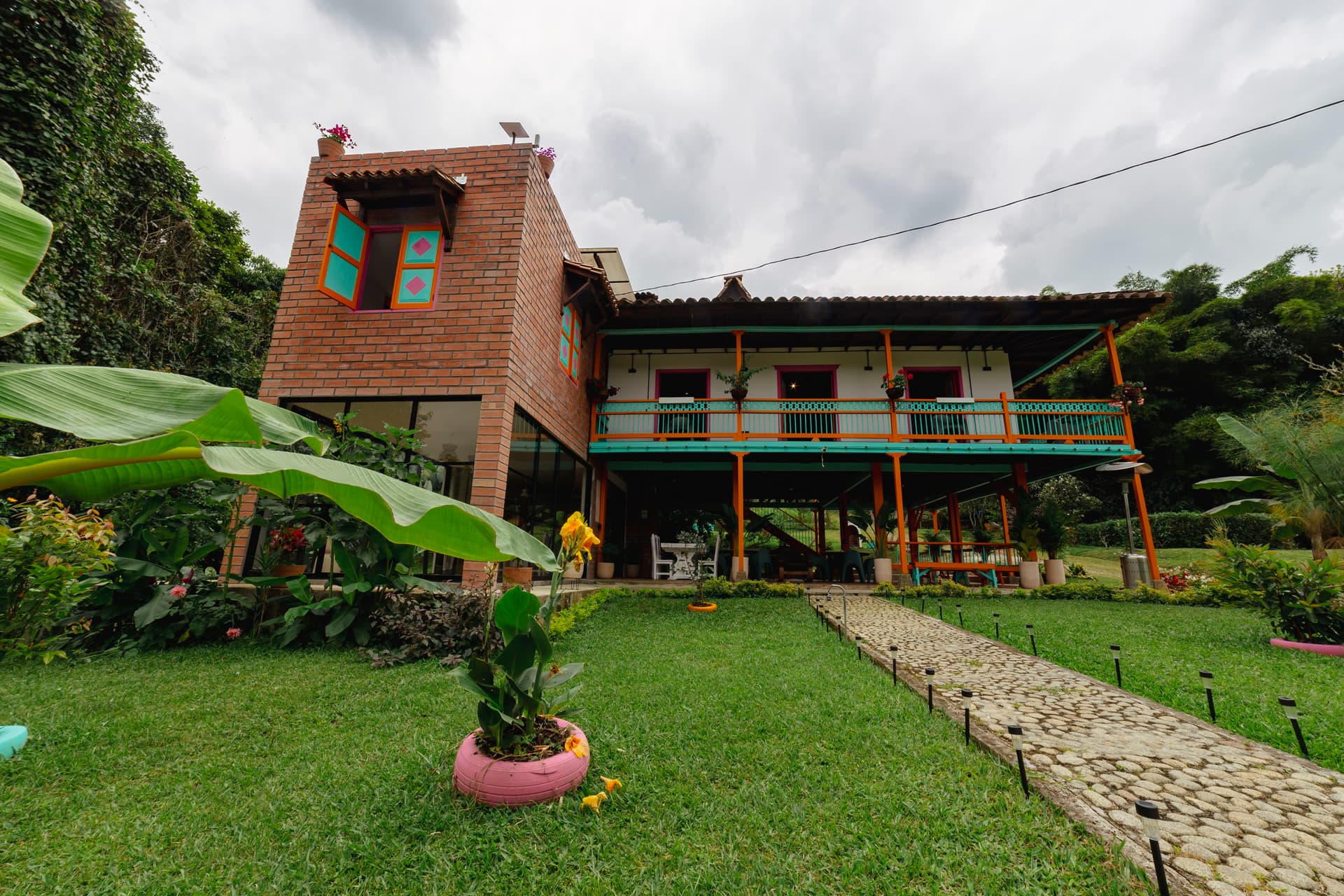
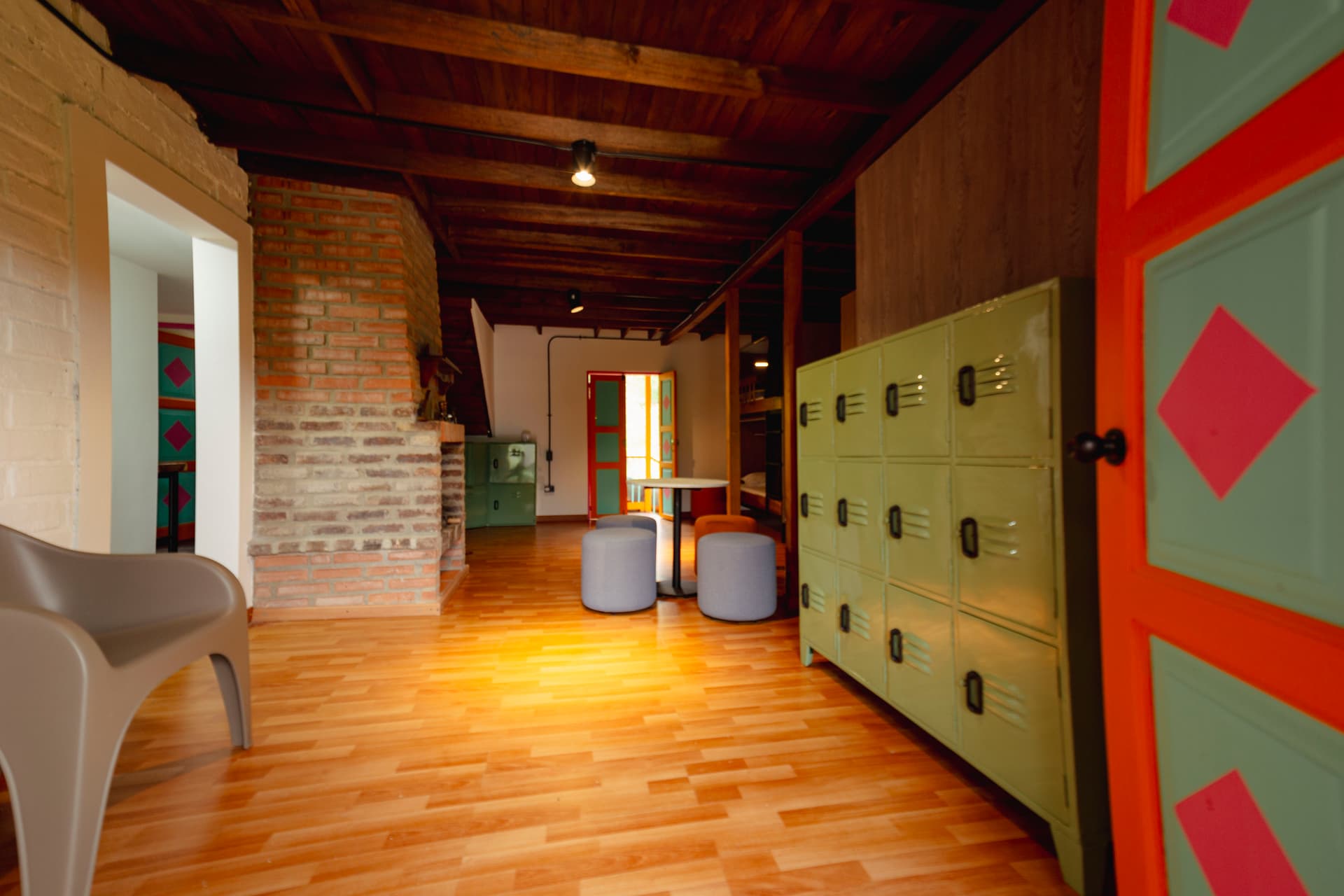
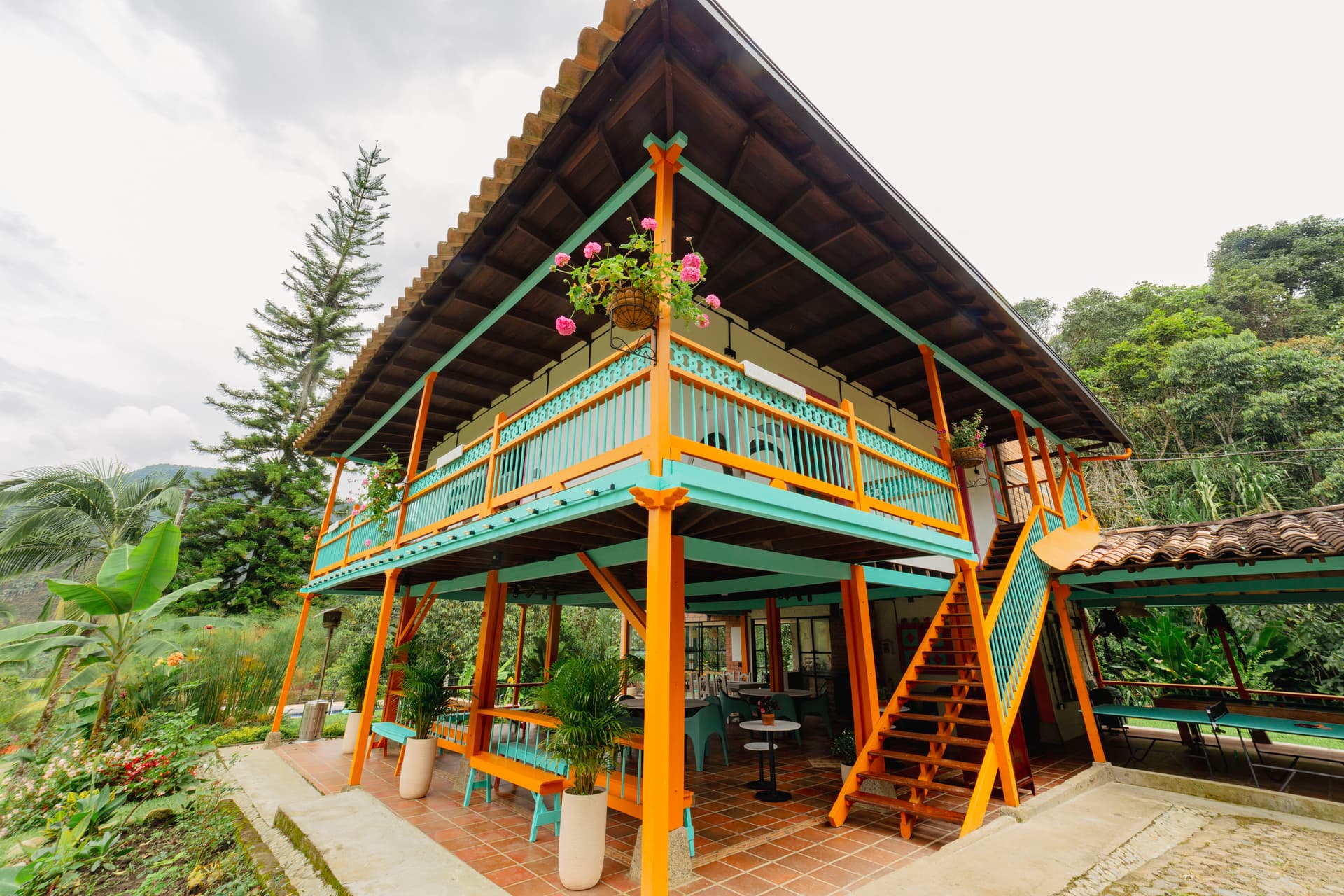
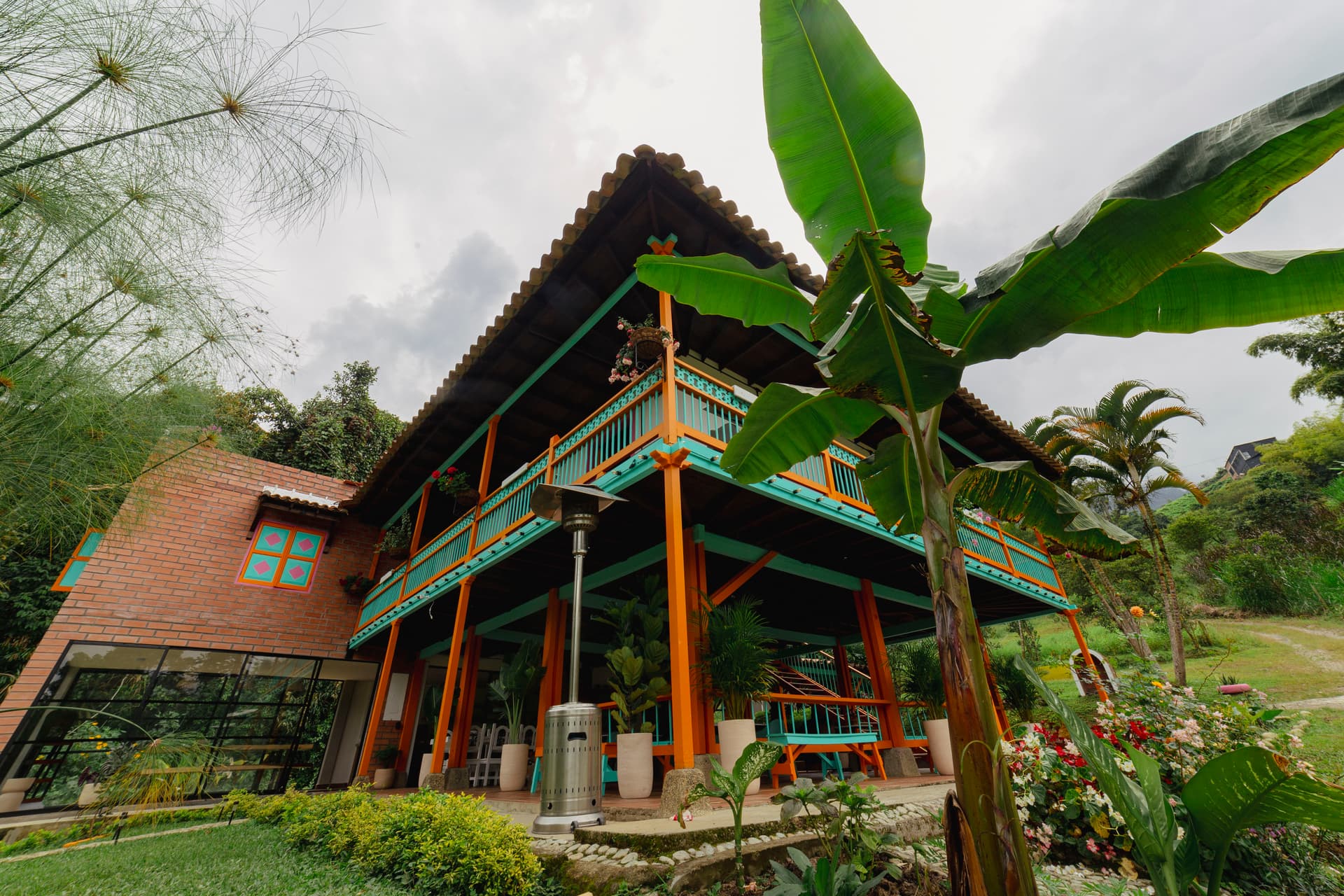
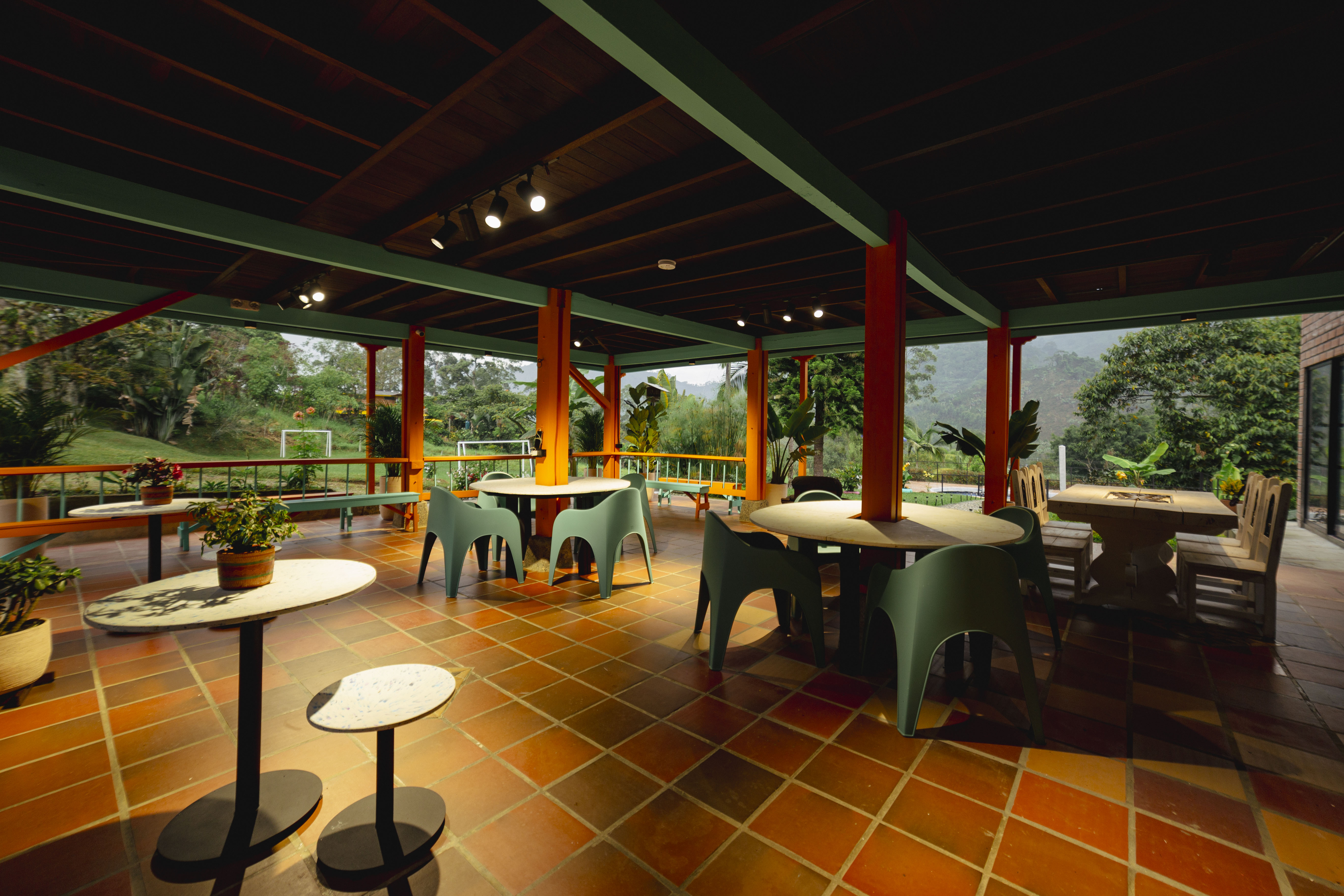
I arrived at Isla de Pascua on a Tuesday evening and dropped my bag in my room. Then I went straight to the main plaza.
As an architect, I evaluate public spaces the way a sommelier evaluates wine — by assessing proportion, materiality, sight lines, human behavior, and the invisible forces that make a space work or fail. Most plazas in the world fail. They are too large, too empty, too hostile to human activity. The plaza in Jardín is a masterpiece.
It succeeds because of proportion. The plaza is not vast — it is intimate, bounded on all four sides by two-story buildings whose facades create a continuous wall of color. The buildings are close enough that you feel enclosed without feeling trapped. You can read a facial expression from one side to the other. This is critical: a good plaza operates at the scale of human interaction, not at the scale of civic monument.
The painted chairs — the famous sillas de colores — scattered across the plaza serve an architectural function that most visitors do not consciously register. They are not just decorative. They provide fixed points of rest that create informal zones within the larger space. People cluster around them, forming temporary communities that dissolve and reform throughout the day. It is organic, spontaneous urban design that works better than anything I have ever drawn on a drafting table.
I spent my entire first evening sitting on one of those chairs, sketching the facades around the plaza and watching how people used the space. Children playing. Old men on benches. Couples sharing ice cream. Vendors selling dulces. Dogs claiming sunny patches. The plaza was not a monument to be observed — it was a living room to be inhabited.
The Basilica: Gothic Ambition in the Tropics
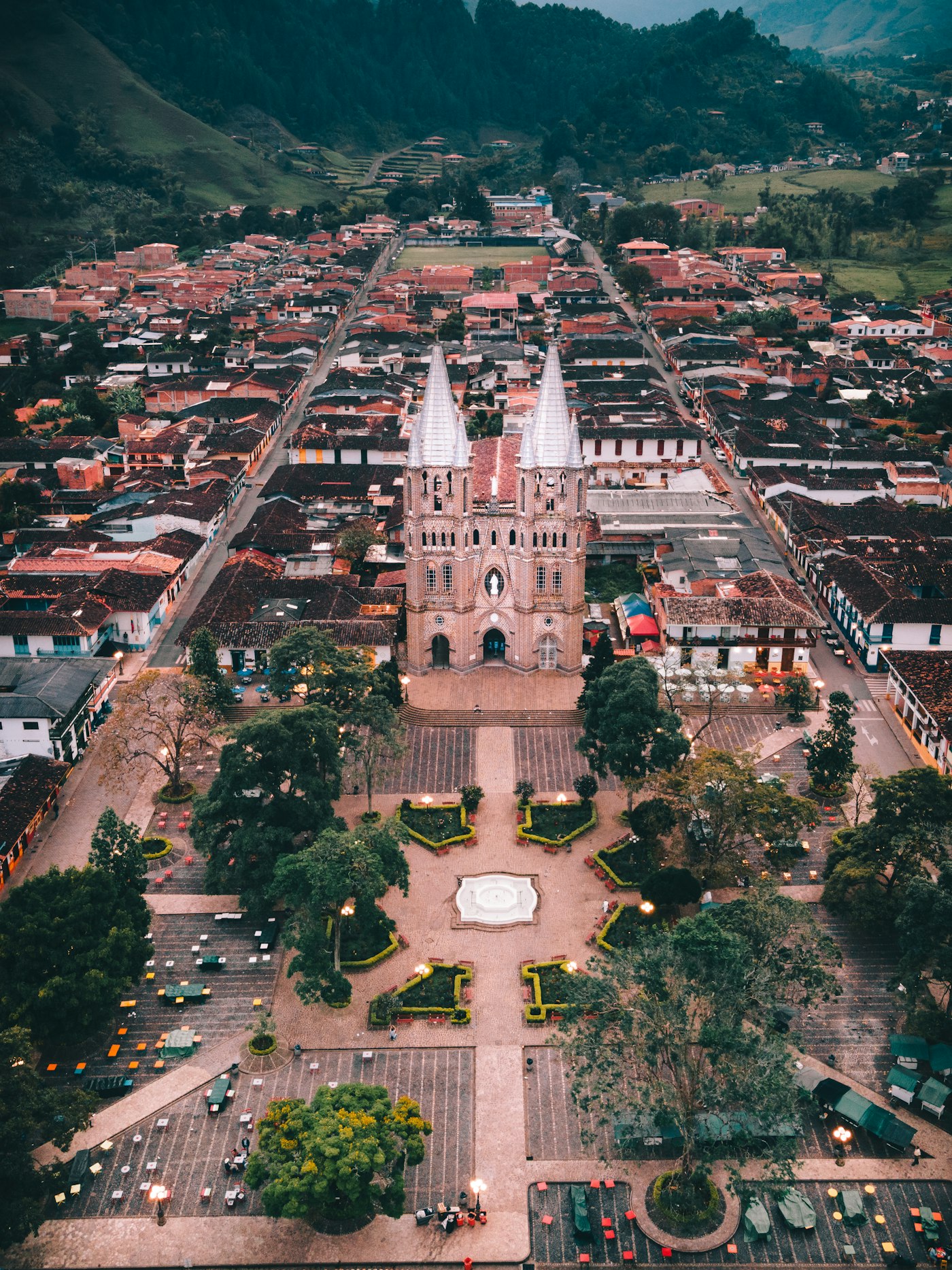
On my second morning, I turned my full attention to the Basílica Menor de la Inmaculada Concepción.
I have studied Gothic architecture across Europe — Chartres, Cologne, Milan, Burgos. I have stood inside Notre-Dame (before the fire) and felt the weight of eight hundred years of structural engineering above my head. I expected the Basilica in Jardín to be a provincial echo of those monuments — charming but architecturally modest.
I was wrong.
The Basilica is a genuinely ambitious building. Its neo-Gothic design, completed in the early 20th century using locally quarried stone, demonstrates a level of structural understanding that demands respect. The twin spires — visible from nearly every point in town — are proportionally sophisticated, tapering with a precision that suggests the builders understood not just the aesthetics of Gothic verticality but the engineering principles behind it.
I spent three hours inside, sketching the nave, the vaulted ceiling, the carved stone columns, and the stained glass windows that filter the Antioquian light into pools of color on the stone floor. The nave is narrower than a European cathedral, which creates an intensified sense of vertical compression — your eye is pulled upward more forcefully than in a wider space. Whether this was an intentional design decision or a consequence of the available building footprint, the effect is powerful.
What impressed me most was the stone itself. In Europe, Gothic cathedrals are typically built from limestone or sandstone — pale, cool-toned stones that complement the grey northern light. The Basilica in Jardín uses a darker, warmer stone that absorbs the tropical light differently, creating interior shadows that have a depth and richness I have never seen in Gothic architecture. It is as if someone translated a northern European architectural language into a tropical dialect, and the translation produced something genuinely new.
The Facades: Color as Structural Language
The colorful facades of Jardín are not merely decorative — they are communicative. In the history of the town, color has served as a way to distinguish one building from another in a dense urban fabric where the underlying architecture is remarkably uniform.
Walk along any street in Jardín and you will notice that the buildings share a common structural vocabulary: two stories, balconied upper floors, wooden doors and window frames, clay tile roofs. The architecture is essentially Antioquian vernacular — a regional style developed over centuries in response to the climate, available materials, and cultural preferences of the Paisa people.
What differentiates the buildings is color. Blues, greens, yellows, reds, oranges, pinks — applied not randomly but with an intuitive understanding of how adjacent colors relate to each other. I noticed that most buildings use a primary color for the facade wall, a contrasting color for the window frames and balcony railings, and often a third color for the doors. This three-color system creates visual complexity without chaos.
I filled twenty-three pages of my sketchbook with facade studies. I documented color combinations, window proportions, balcony railing patterns, and the way wooden shutters interact with the painted surfaces behind them. Each building tells a small story about its owner — conservative dark greens next to exuberant magentas, modest two-tone schemes next to bold three-color compositions.
Drawing in the Rain
On my third day, it rained. Not the gentle drizzle I am accustomed to in Athens, but proper Andean rain — thick, vertical, and committed. Most travelers retreated to cafes. I pulled on my rain jacket and went out with my sketchbook in a waterproof bag.
Rain transforms architecture. It darkens the facades, deepening their colors. It creates reflections on the wet cobblestones that double the visual complexity of the streetscape. It empties the streets of people, letting the buildings speak for themselves. Some of my best drawings from Jardín were made in the rain, standing under the overhang of a balcony, drawing fast before the moisture could reach my paper.
The weather in Jardín is part of its architectural character. The frequent afternoon rains have shaped the deep roof overhangs, the covered balconies, the interior courtyards that provide shelter without sacrificing light. This is architecture that has evolved in conversation with its climate — not imposed upon it.
What Jardín Teaches About Architectural Harmony
In architecture school, we spend years studying proportion, materials, and spatial design. But we rarely study the thing that Jardín does better than almost any place I have visited: harmony.
Jardín is harmonious not because its buildings are identical — they are not — but because they share a common language. The scale is consistent. The materials are local. The forms respond to the same climate and topography. And the color, while wildly varied, operates within an unspoken set of rules that prevents discord.
Modern architecture has largely abandoned this kind of contextual harmony in favor of individual expression. We build towers that scream "look at me" next to buildings that whisper "I was here first." The result, in most cities, is visual noise. Jardín reminds us that variety and harmony are not opposites — that a town can be colorful, diverse, and individually expressive while still feeling like a coherent whole.
I will bring this lesson back to my practice in Thessaloniki. Not the specific forms or colors of Jardín — those belong here, in these mountains — but the principle that good architecture is a conversation, not a monologue.
My sketchbook from Jardín is now my favorite of the forty-seven I have filled across twenty-two countries. Not because the drawings are my best, but because the subject is.
— Alex, back at his drafting table in Thessaloniki, pinning a sketch of the Basilica above his desk
Ready to experience Jardín?
Book Now Isla de Pascua