Written by Roberto Conti — Italy
Stay: August 2025, 4 nights
A Confession from an Italian Kitchen
I must begin with a confession that would get me excommunicated from every kitchen in Bologna: Colombian food surprised me. Not in the way cheap food surprises you when it doesn't make you sick. In the way that a dish prepared with genuine love and ancient knowledge surprises you — the way my nonna's ragù surprised me every Sunday, even though she'd been making it the same way for sixty years.
I am Roberto. I am forty-two years old. I have cooked professionally for eighteen years in restaurants across Italy, Spain, and briefly in New York (briefly because New York is a beautiful, terrible, exhausting place that charges you seventeen dollars for a salad). I came to South America on what my wife diplomatically calls a "sabbatical" and what I call "running away from restaurant burnout before I throw a saucepan at someone."
Colombia was not originally on my list. I was going to Argentina for the beef, Peru for the ceviche, Mexico for the mole. But a chef friend in Bogotá insisted I visit Jardín. "The trucha," he said. "You must taste the trucha." He said it the way Italians say "you must taste this burrata" — with an intensity that leaves no room for argument.
So I went to Jardín. And the trucha was extraordinary. But that's getting ahead of the story.
First Bite: The Market
I arrived on a Tuesday and went straight to the market. This is what chefs do. You can learn everything about a town's food culture in its market. The quality of the produce, the relationship between vendors and customers, the things that are displayed with pride versus the things that are just there — these tell you a story.
Jardín's market told me a beautiful story. The fruits were absurd — lulos, guanábanas, maracuyás, tree tomatoes, things I had no name for in any language. The vendors let me taste everything. One woman, who must have been seventy, watched me bite into a lulo for the first time and laughed at the face I made. It was sour and sweet and citrusy and tropical and entirely unlike anything I'd tasted in Europe.
The vegetables were simple but perfect. Potatoes, yuca, plantains — the foundation of a cuisine that doesn't try to be clever, it tries to be honest. I respect this deeply. Too many modern kitchens forget that great food starts with great ingredients treated simply.
And the herbs. Fresh cilantro in bundles the size of bouquets. Long green onions. Something called cimarrón that smelled like cilantro's wilder cousin. I bought everything I could carry and brought it back to the hostel.
The Trucha Revelation
My chef friend was right. The trucha in Jardín is exceptional.
These rainbow trout are raised in the cold mountain streams above town, fed by glacial water that runs clean and mineral-rich through volcanic rock. The flesh is firm, pink, and tastes of the mountain itself — clean, fresh, with a sweetness that farmed fish in Europe simply cannot achieve.
I ate trucha at three different restaurants during my four nights. Each preparation was different. One served it simply grilled with lime and salt — the Italian in me approved deeply. Another fried it whole, crispy-skinned, with patacones (fried green plantains that are essentially the Colombian equivalent of good bread). The third bathed it in a creole sauce with tomatoes, onions, and peppers that reminded me, heretically, of a Neapolitan preparation.
The best meal, however, happened at the most unexpected place: the hostel.
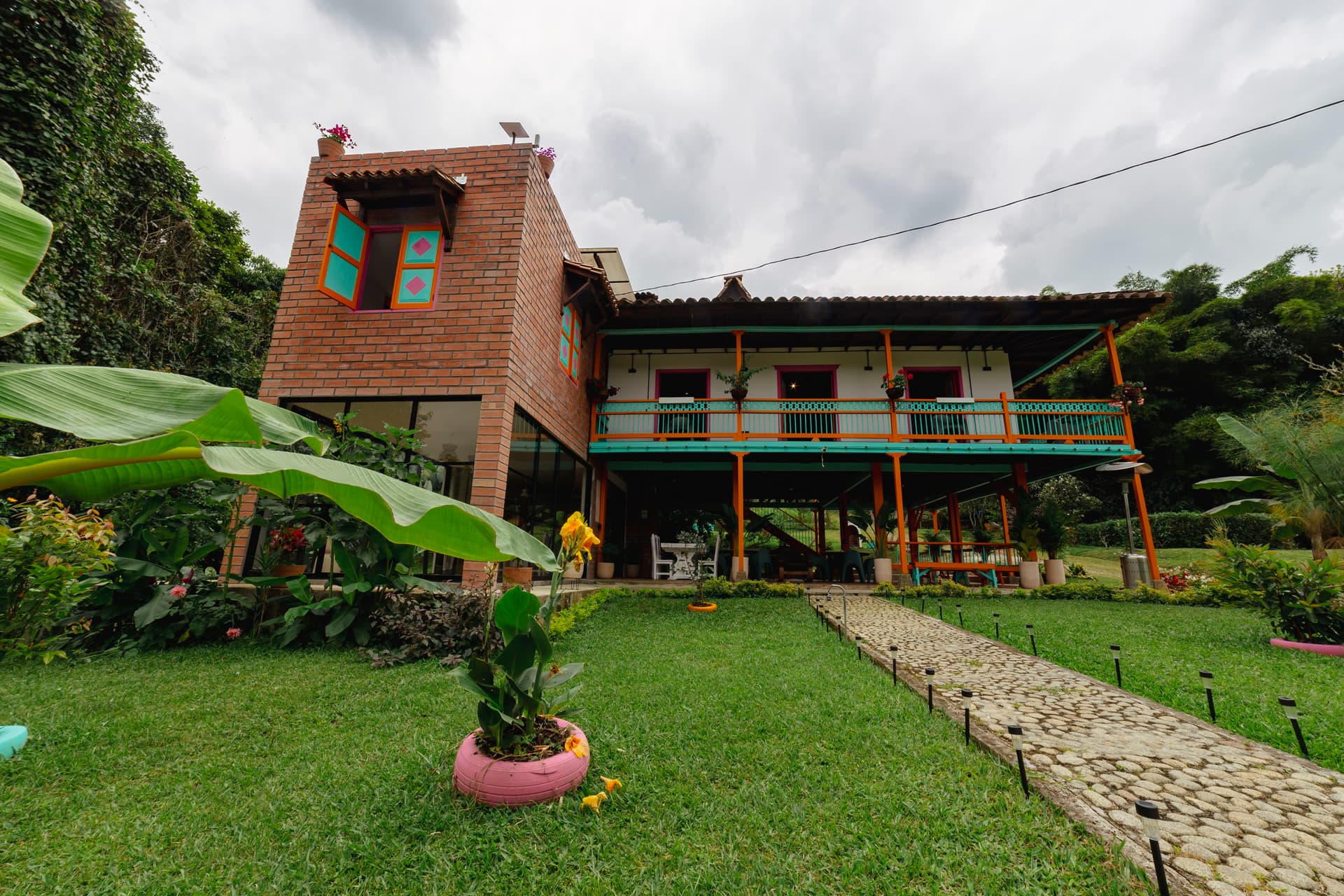
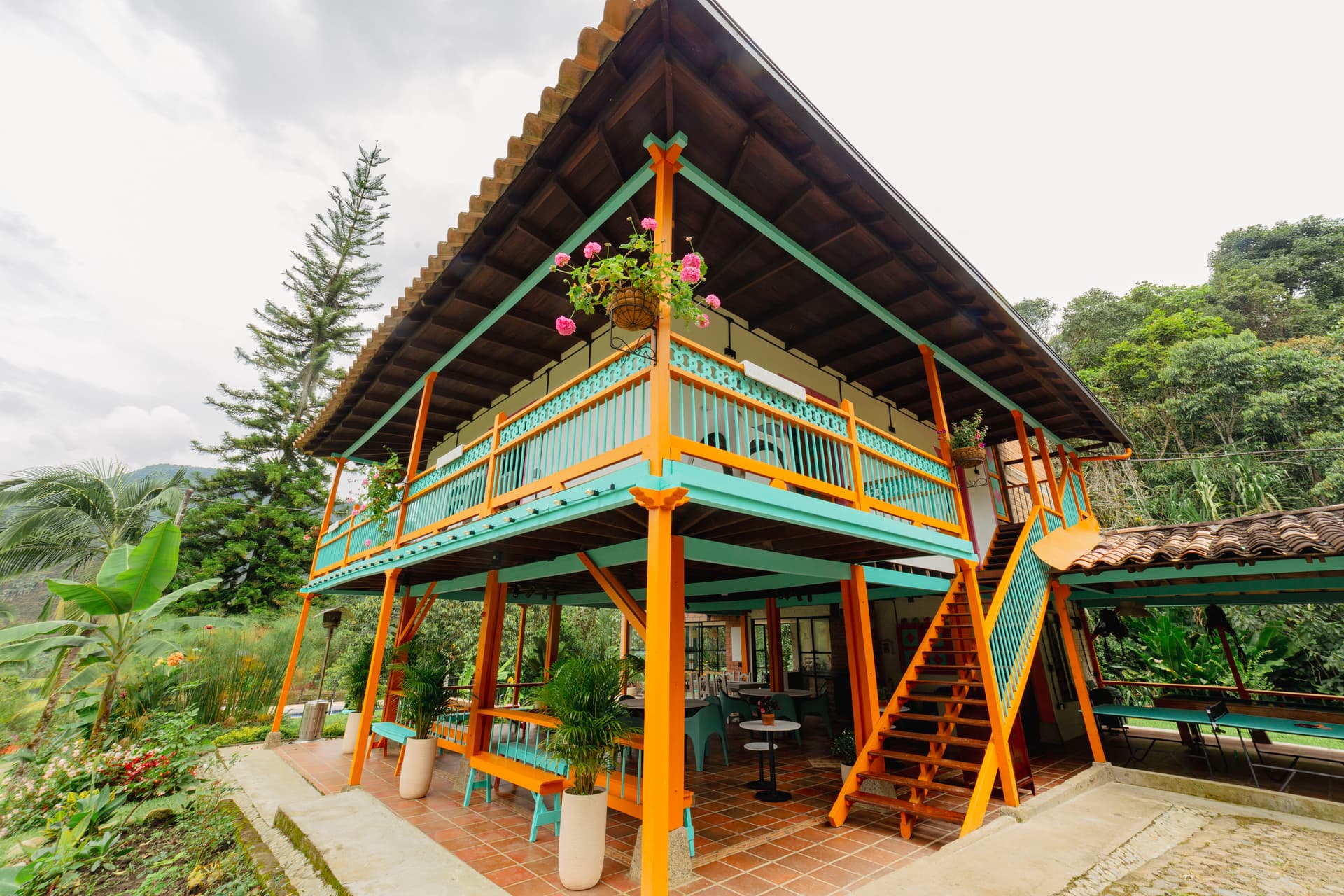
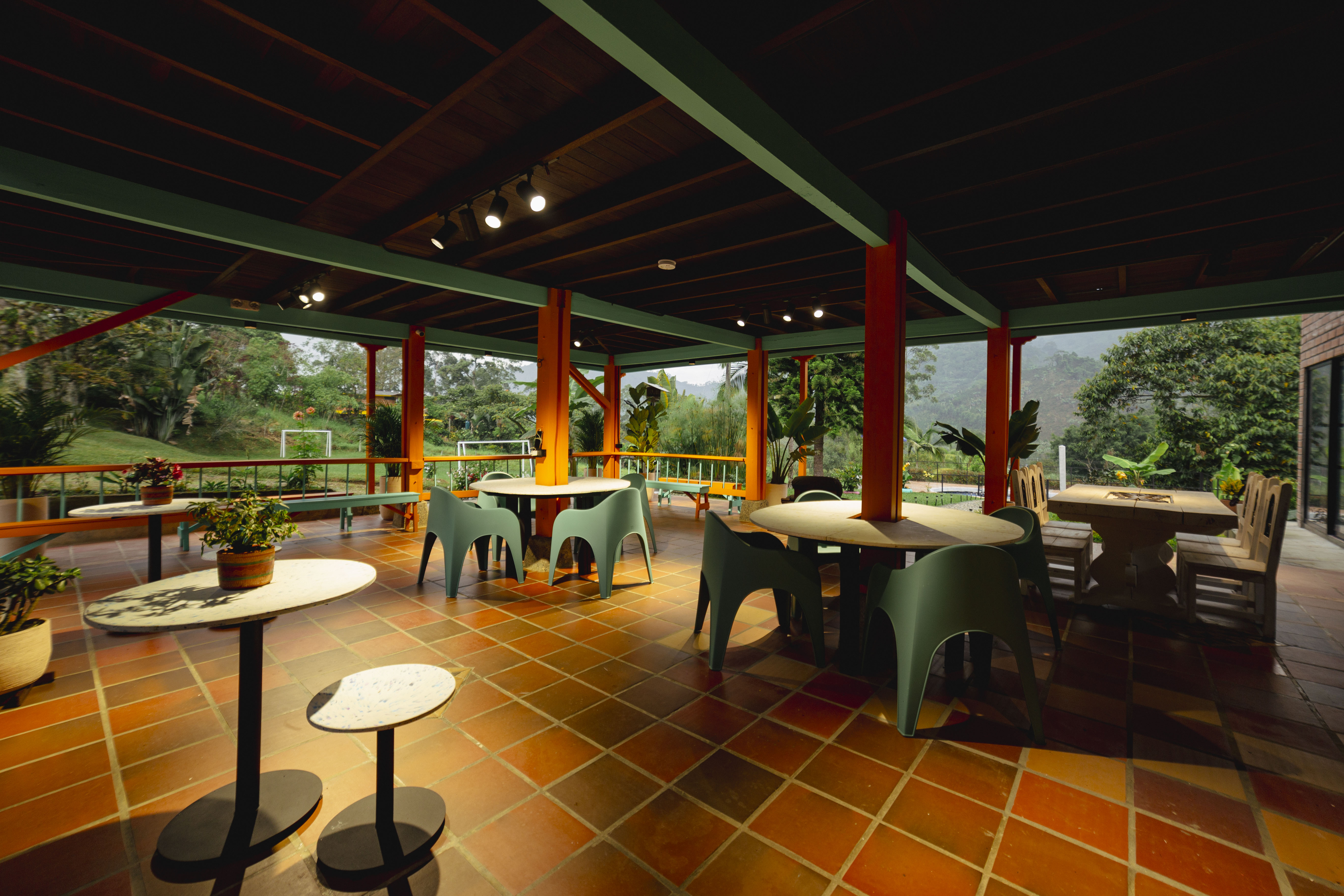
Cooking at Isla de Pascua
On my second night at Isla de Pascua, I made the mistake — or the best decision — of offering to cook for a few people. "I'm a chef," I said casually, as if this were normal hostel behavior.
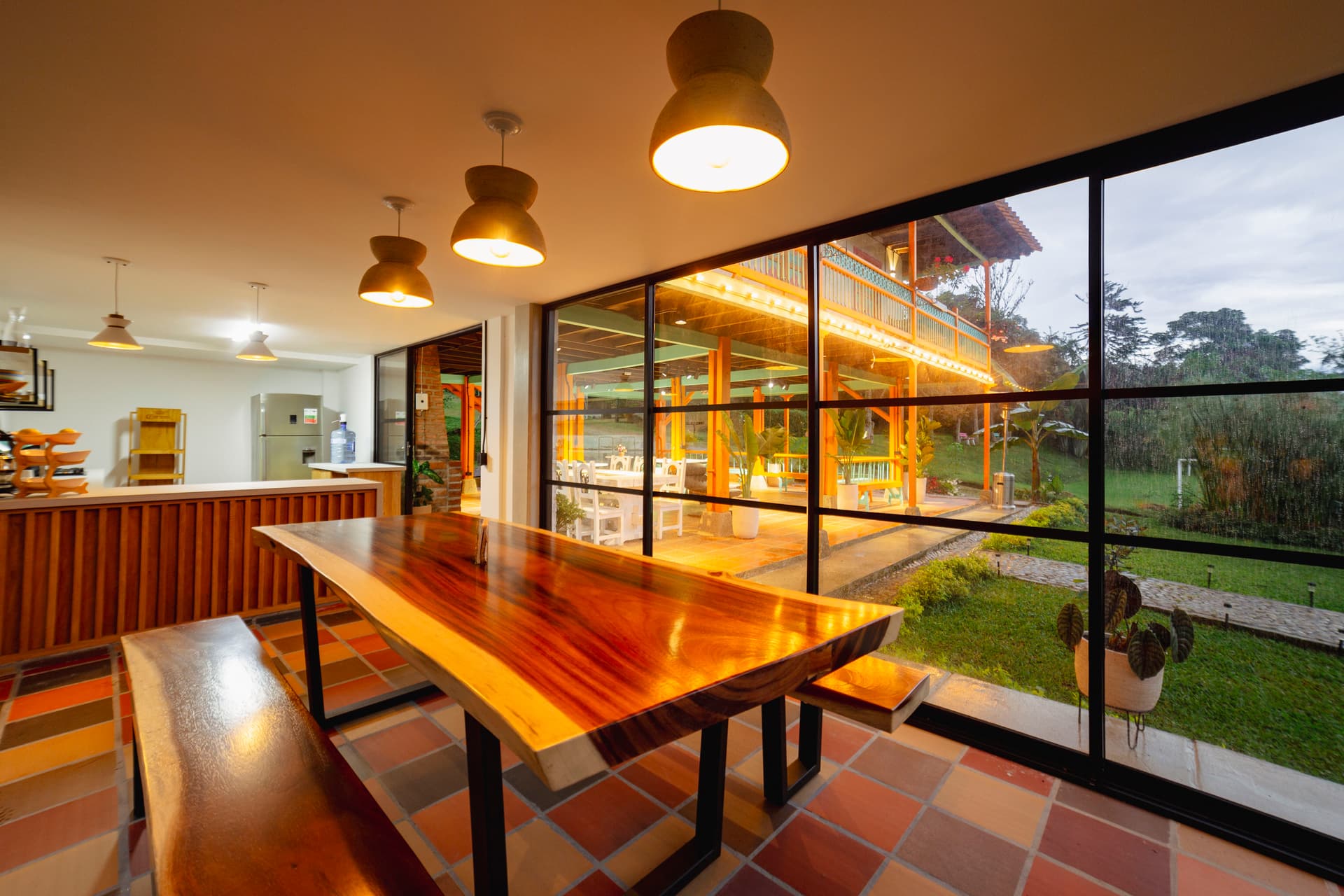
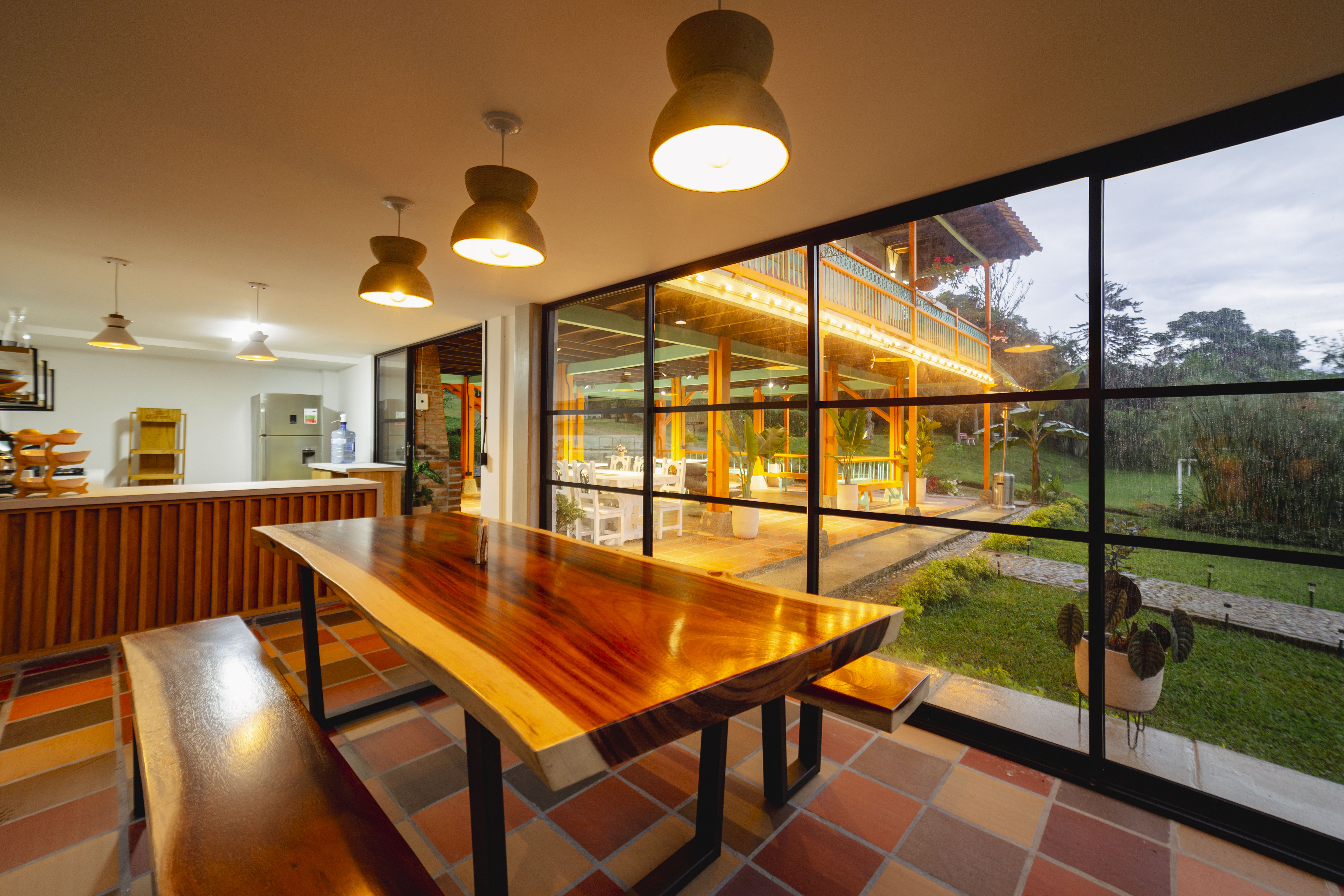
Within thirty minutes, I had twelve people sitting around the common area expecting dinner, the hostel kitchen at my disposal, and a bag full of market ingredients. The pressure was on. This is exactly the kind of situation I live for.
I made a pasta. Not because I'm predictable (I am predictable), but because I'd found beautiful tomatoes at the market and the hostel had olive oil. I made a simple aglio e olio with chili, garlic, and those gorgeous long green onions, and alongside it, a quick trucha crudo — thin slices of raw trout dressed with lime juice, olive oil, a pinch of salt, and torn cilantro leaves.
Madonna. The trout was so fresh that the crudo practically made itself. The flesh melted on the tongue. The lime did the work of cooking without heat, and the cilantro — which I normally have mixed feelings about — was perfect. A Colombian-Italian fusion that I hadn't planned but that felt absolutely right.
The twelve strangers cleaned their plates. A Colombian girl named Valentina told me it was the best pasta she'd ever had. I told her not to be ridiculous. Then I went to the terrace and cried a little, because cooking for people who are genuinely happy to eat your food is the entire reason I became a chef, and I'd forgotten that somewhere between Michelin stars and investor meetings.
Coffee: A Serious Matter
Now we must talk about coffee, and I must be serious, because coffee is a serious matter.
In Italy, we believe we understand coffee. Espresso is our religion. We have rules: never cappuccino after 11 AM, never instant coffee ever, never more than thirty seconds of extraction time. These rules are sacred.
I went on a coffee farm tour in Jardín expecting to be mildly interested. What I experienced was a revelation.
The farmer — a man named Don Carlos with hands like leather and eyes that had been looking at coffee plants for forty years — showed me the entire process. From cherry to cup. Every step done with a precision and care that I recognized immediately, because it's the same precision I apply to building a stock or tempering chocolate.
When I tasted the freshly roasted coffee — roasted literally fifteen minutes before, ground by hand, brewed in a simple cloth filter — I understood something that changed me. Italian espresso is magnificent, but it is a transformation. It takes the coffee bean and turns it into something else — something intense, concentrated, powerful. What Don Carlos gave me was the opposite: coffee as itself. Light, complex, fruity, sweet without sugar, with a finish that lasted minutes.
I sat there holding this ceramic cup of filter coffee, and I felt like a man who has spent his life studying portraits suddenly seeing a landscape for the first time. Both are art. Both are valid. But the landscape shows you something the portrait cannot.
The Comparison I Cannot Help Making
Forgive me. I am Italian. I compare everything to Italy. It's a disease.
But Jardín reminded me of the Italian countryside in ways I did not expect. Not visually — the mountains here are greener, wilder, more dramatic than Tuscany or Umbria. But in feeling. The pace of life. The way food is central to every social interaction. The way an old man in the plaza will spend forty-five minutes drinking a single coffee because the coffee is not the point — the sitting is the point.
The plaza life in Jardín is remarkably similar to the piazza culture I grew up with. People gather. They talk. They watch each other. Children run. Dogs sleep in the sun. Time passes and nobody minds. In Italy, we call this la dolce far niente — the sweetness of doing nothing. I don't know what Colombians call it, but they practice it with as much devotion as any Italian village.
The Basilica even looks like it could belong in a small Italian city. Gothic, dramatic, impossibly detailed for a town this size. Someone built this church with the same passionate excess that Italians bring to everything — the belief that beauty is never a waste, even in a place that the world might overlook.
What I Learned in Four Nights
I came to Jardín for the trucha. I stayed for everything else.
I learned that cilantro, which I have dismissed for twenty years, is magnificent when it's fresh enough. I learned that coffee can be a contemplative experience, not just a caffeine delivery system. I learned that the best meals happen not in restaurants with white tablecloths but in hostel kitchens where twelve strangers become friends over a shared plate.
I learned that food culture is not the exclusive domain of countries with famous cuisines. Colombia's food traditions are deep, connected to the land, passed from generation to generation with the same reverence that my nonna passed her ragù recipe to my mother.
And I learned — or rather, I was reminded — why I cook. Not for reviews, not for stars, not for investors. For the look on a stranger's face when they take the first bite and close their eyes. That look is universal. I saw it in Jardín, on the faces of backpackers and farmers alike, and it brought me back to myself.
A Final Recipe (and a Promise)
Before I left, Valentina — the Colombian girl who'd praised my pasta — taught me her grandmother's recipe for hogao, the tomato-and-onion base that underlies much of Colombian cooking. It's simple: ripe tomatoes, white onion, garlic, cumin, and time. You cook it low and slow until everything melds into a sauce that tastes like home, even if you've never been to Colombia before.
I wrote it in my notebook next to my nonna's ragù recipe. They belong together.
I will come back to Jardín. I will cook in that hostel kitchen again. I will eat trucha until the rivers run dry. I will drink Don Carlos's coffee and argue with him about whether Italian espresso or Colombian filter is superior (we will both be right).
And I will bring my wife, because she deserves to see this place. She has spent eighteen years eating my Italian cooking. It's time she tasted the food that made an Italian chef humble.
— Roberto Conti, Bologna, Italy. August 2025.
Ready to experience Jardín?
Book Now Isla de Pascua