Written by Miguel Ángel Torres — Spain
Stay: June 2025, 6 nights
Chronicles of Jardín: Miguel Ángel's Story from Spain
There are towns that reveal themselves in a single afternoon — a walk through the center, a meal at the plaza, a photograph, and you have understood the place. Then there are towns that unfold slowly, like a book whose meaning deepens with each reading, whose chapters contain footnotes that contain entire histories. Jardín is the second kind of town. I came for six nights, and on the sixth morning I sat in the common area of Isla de Pascua hostel with my notebook, writing furiously, aware that I was only beginning to understand what this place is.
I write for a living. I have spent twenty years documenting towns, cities, and landscapes across Latin America and the Mediterranean — the places where Spanish colonial architecture met indigenous traditions and created something entirely new. I have written about Antigua Guatemala, about Oaxaca, about Cusco and Cartagena and Trinidad. But Jardín surprised me. It surprised me because it is not a museum town, not a preserved artifact, not a place that exists primarily for the gaze of visitors. It is a living place that happens to be extraordinarily beautiful, and that distinction makes all the difference.
The weight of stones
I arrived on a Monday, which is the quietest day in most Colombian towns. The bus from Medellín deposited me at the terminal in late afternoon, and I walked to the plaza with my suitcase rolling over cobblestones that were older than my grandparents. The Basilica of the Immaculate Conception was the first thing I saw, rising above the colored rooftops with a gravity that stopped me in the street.
I have seen hundreds of churches. I have catalogued their styles, dated their construction, analyzed their proportions. But standing before the Basilica of Jardín, I was not an architectural critic — I was simply a person in the presence of something built with profound conviction. The stone is local, quarried from the mountains that surround the valley. The neo-Gothic style speaks of European aspiration, but the execution is entirely Antioqueño — pragmatic, sturdy, adapted to earthquakes and mountain weather, carved by hands that knew this stone intimately.
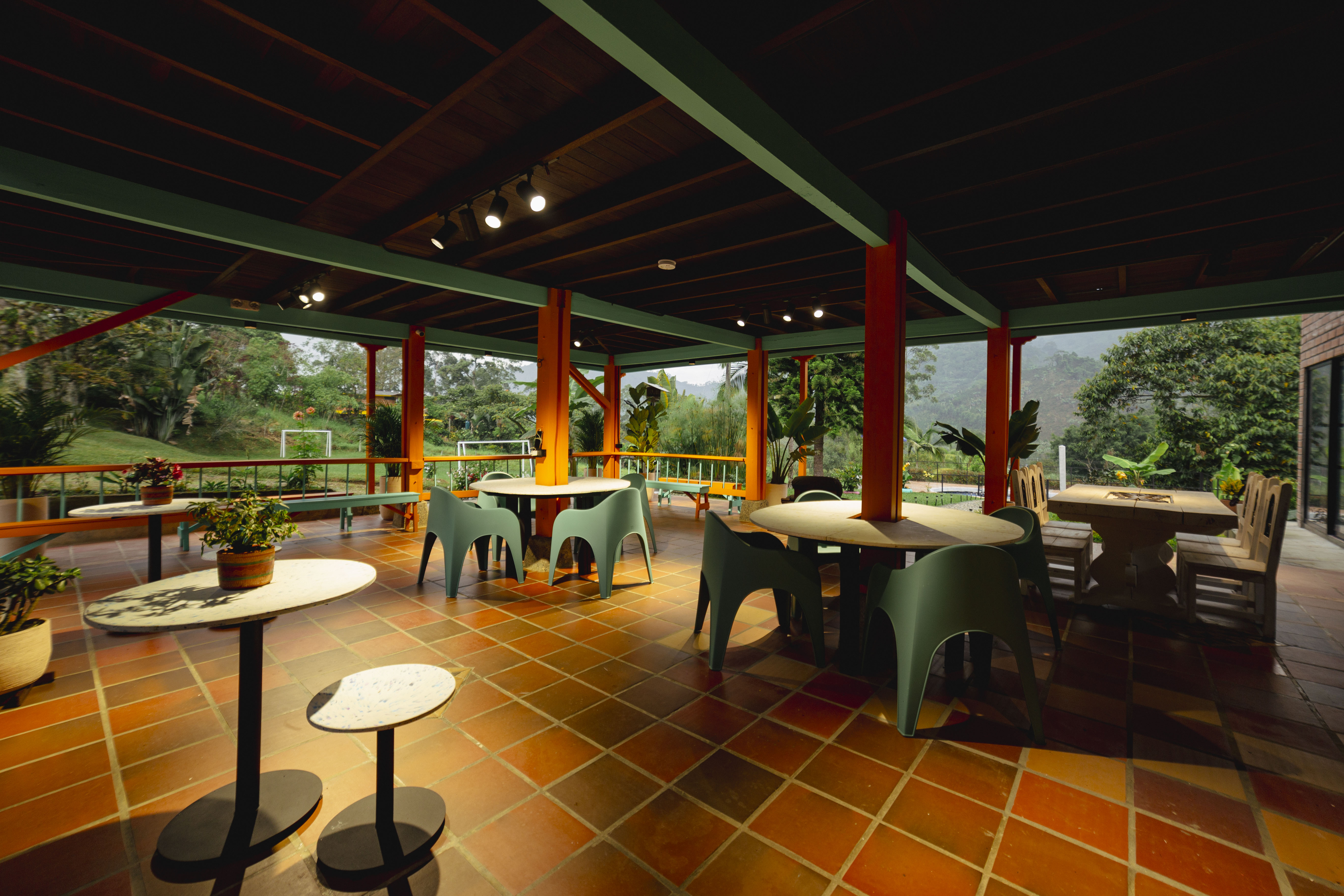
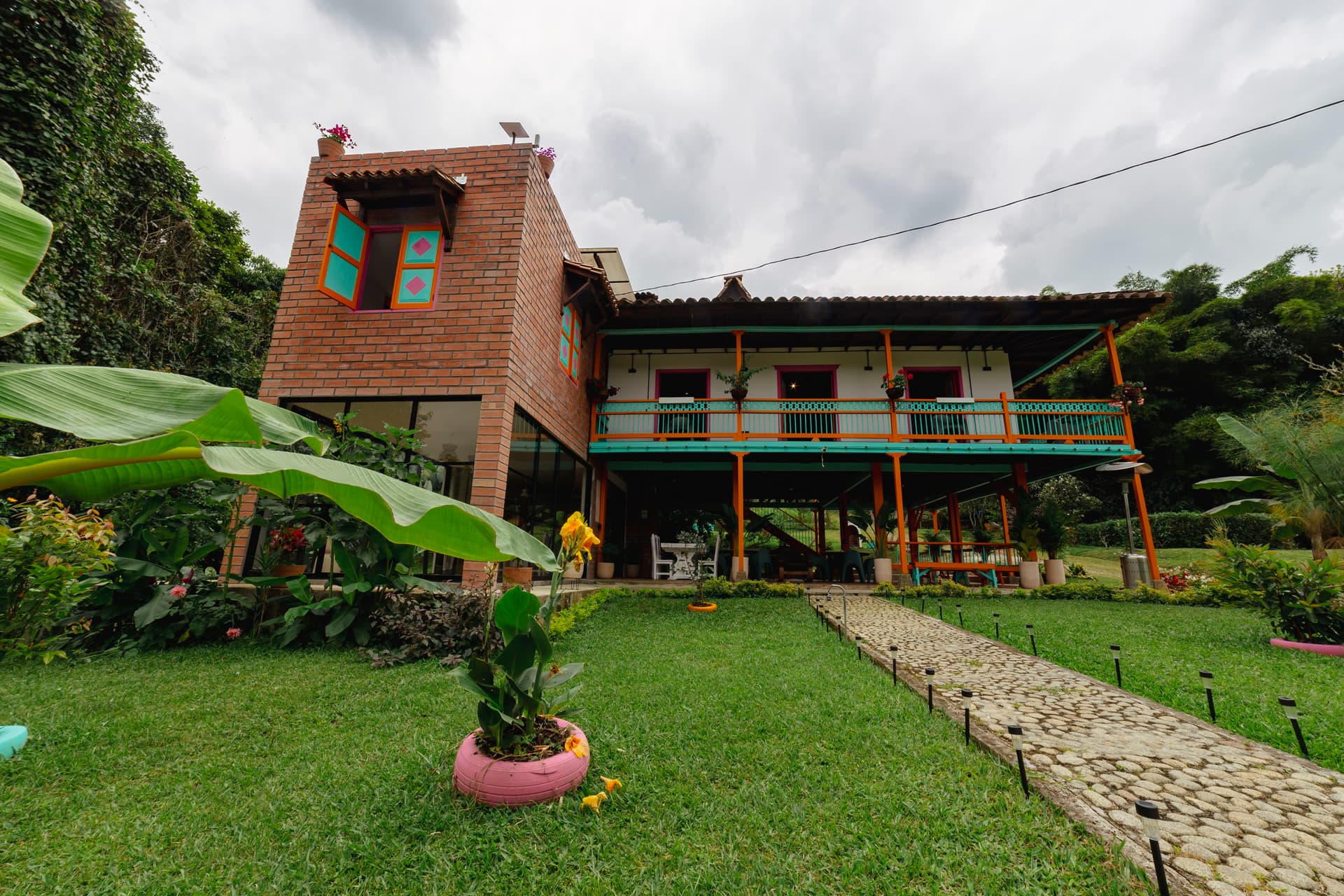
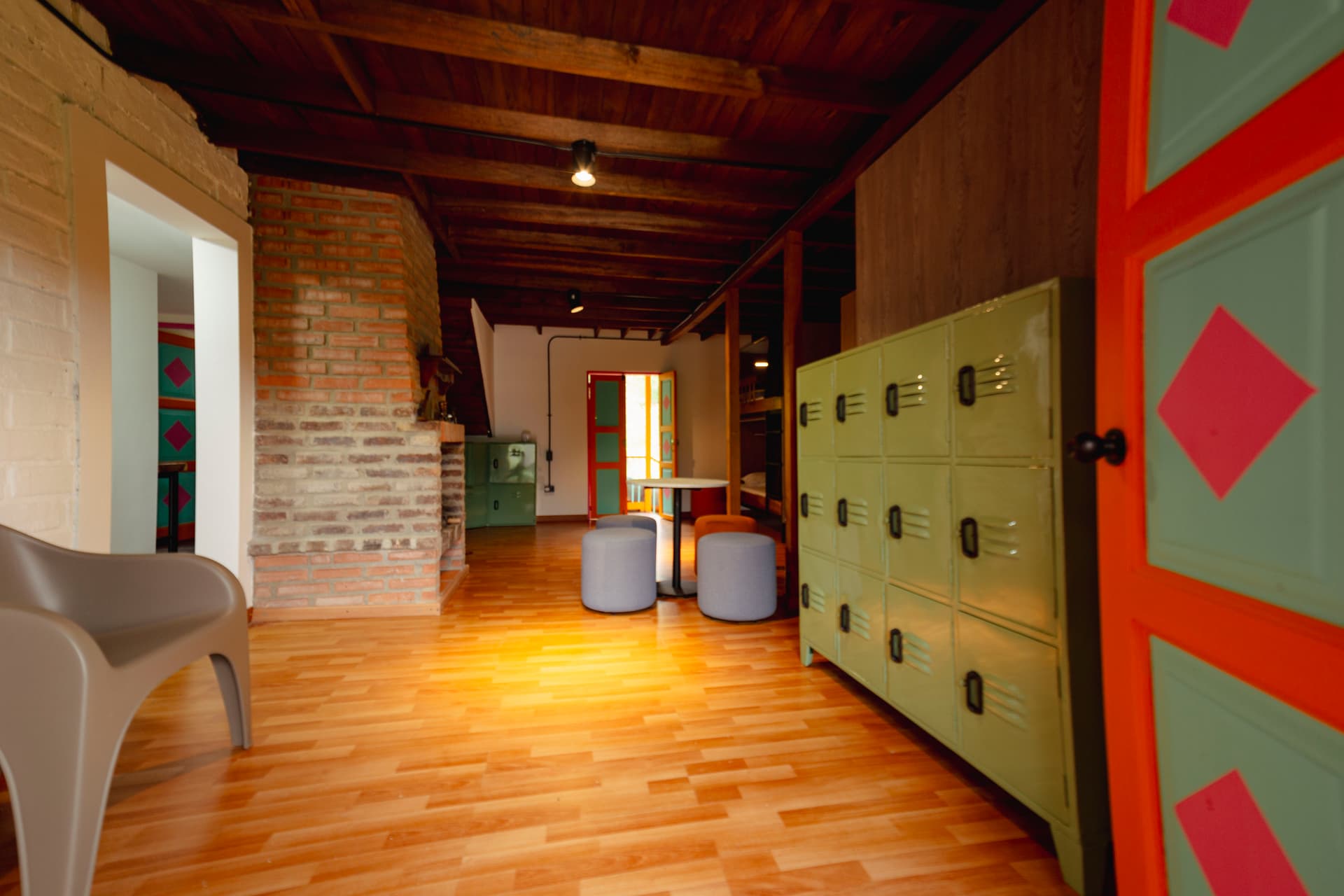
I spent my first evening at the hostel reading about the history of Jardín and making notes. The common area at Isla de Pascua turned out to be an ideal workspace — comfortable, quiet in the evenings, with a view of the mountains that provided the perfect backdrop for reflection. The WiFi was reliable, which matters when you are filing stories to editors in Madrid, and the coffee was excellent, which matters more.
The plaza as living text
Every morning for six days, I walked down to Parque El Libertador and sat on one of the painted sillas. I ordered a tinto from the same vendor each day — a woman named Doña Carmen who recognized me by the third morning and began preparing my coffee without being asked. These small rituals are how you begin to read a place.
The plaza of Jardín is remarkable not for what it contains but for what it sustains. The colored chairs, the gardens, the Basilica, the surrounding buildings with their painted facades — all of this is maintained not by a tourism board but by the community itself. Jardín was declared a Pueblo Patrimonio, a Heritage Town, and the regulations that protect its architecture are enforced with genuine civic pride. Buildings in the center must maintain the traditional Antioqueño style: white walls, colored wooden trim, clay tile roofs, wooden balconies. The result is a visual coherence that most European historic centers have lost to modernization.
Pro tip: Base yourself at Isla de Pascua — To understand Jardín's architectural heritage, walk the streets behind the Basilica in the early morning. The residential blocks maintain original colonial details — carved wooden doors, iron balcony railings, and tile work — that are easy to miss on the busier commercial streets.
But visual coherence is only the surface. What makes the plaza a living text is the activity it contains. On a typical morning, I observed: elderly men playing tejo at the far end, schoolchildren in uniforms crossing the grass, a cestería vendor arranging her woven goods on a blanket, a group of farmers discussing the coffee harvest over aguapanela, tourists photographing the Basilica, and a young couple sharing an ice cream on a bench. Each of these activities has been happening in this plaza for decades — some for more than a century. The plaza is not a stage set. It is the actual living room of the community.
Architecture as autobiography
I spent two full days examining the built environment of Jardín, notebook in hand, and what emerged was a story of a community that has maintained its identity through architecture. The colonial buildings around the plaza date from the late 19th and early 20th centuries, built during the coffee boom that brought prosperity to southwestern Antioquia. They reflect the aesthetic values of their builders — the arrieros and cafeteros who transformed coffee wealth into civic beauty.
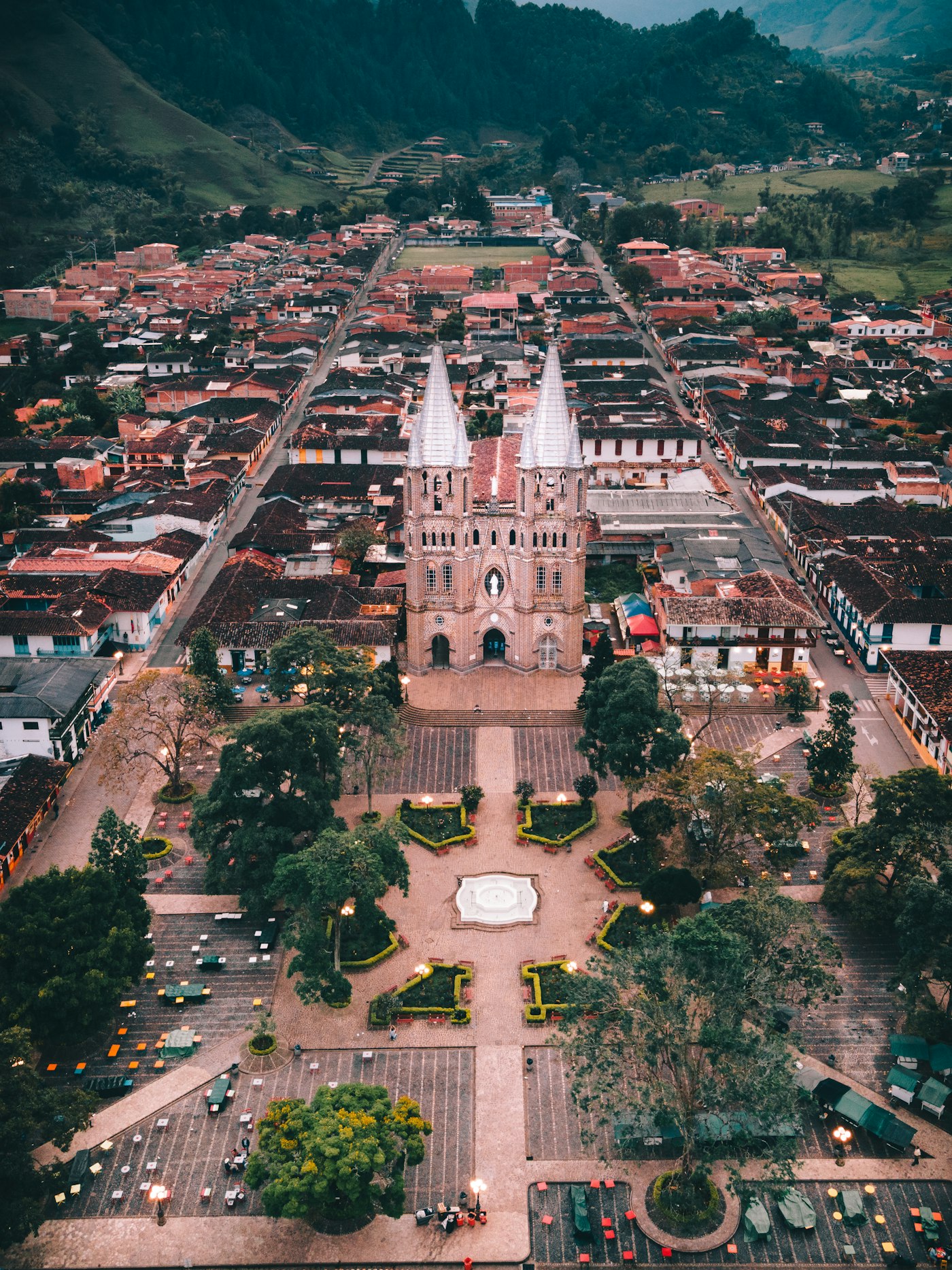
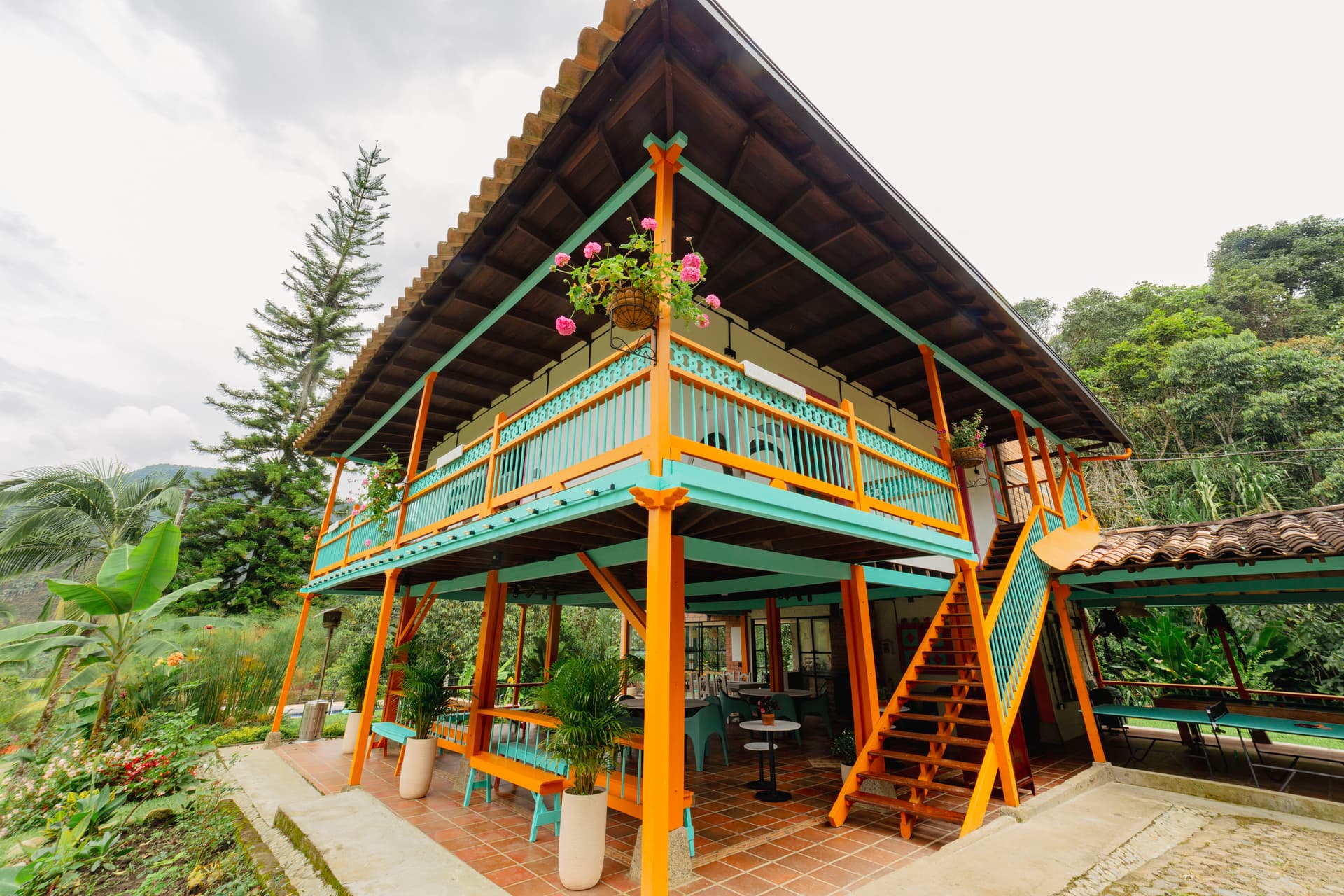
The details reward close attention. Wooden balconies are not merely decorative — they are functional extensions of the living space, designed for the climate of a mountain valley where evenings are cool and afternoon rain is common. The wide eaves protect the adobe walls from water damage. The interior courtyards, visible through open doorways, provide light and ventilation while maintaining privacy. Every element serves a purpose, and the aesthetic harmony emerges from that functionality.
This is what distinguishes Jardín from towns that have been renovated for tourism. In Cartagena or Villa de Leyva, much of the colonial architecture has been restored — sometimes beautifully, sometimes at the cost of authenticity. In Jardín, the architecture has not been restored because it never fell into disrepair. It has been continuously maintained by the families who live in these buildings, generation after generation, painting the trim, replacing damaged tiles, oiling the wooden doors. The beauty is not curated. It is inherited.
Writing from the mountains
I must say something about the experience of writing in this place, because it was unlike any writing residency or retreat I have attended. There was no program, no schedule, no other writers competing for attention. There was simply a comfortable chair in the common area of Isla de Pascua, a reliable supply of excellent coffee, a mountain view, and silence deep enough to hear my own thoughts.
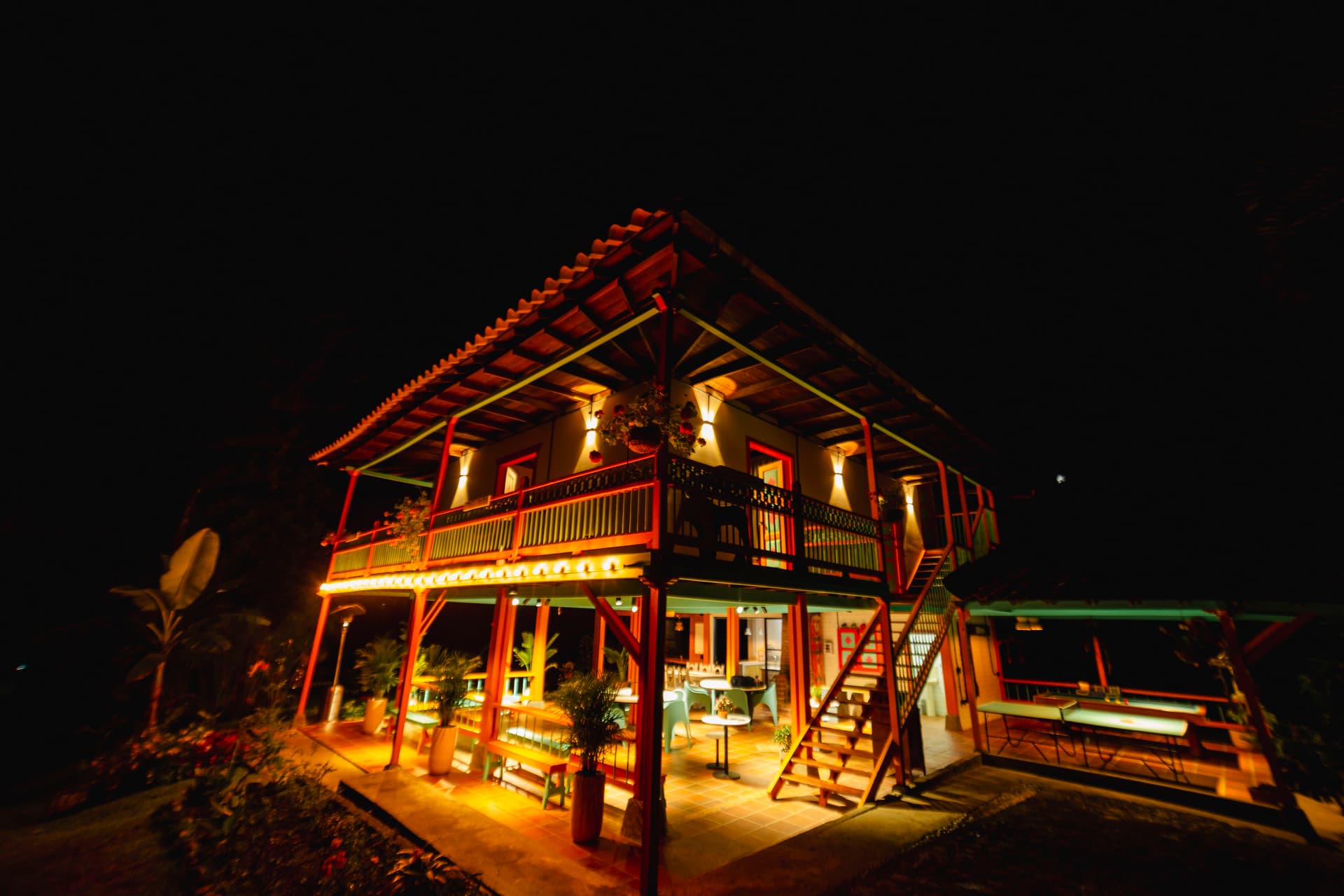
I wrote more in six days in Jardín than I typically write in two weeks at home in Barcelona. Something about the altitude, the clean air, the absence of urban noise, and the visual beauty of the surroundings seems to lubricate the creative process. I would write through the morning, walk into town for lunch, spend the afternoon exploring and taking notes, and return to the hostel in the evening to write again, often until the stars appeared above the mountains and the only sound was the wind through the garden.
The other guests were generous company — curious, well-traveled, interested in conversation but respectful of solitude. A Japanese photographer showed me views I would never have found alone. A Brazilian student reminded me what it feels like to experience a place for the first time, without the filter of professional analysis. A French couple argued about cassoulet with a passion that made me miss Spain.
The market and the memory of things
On my fourth day, I spent a morning at the market, which operates on weekends and brings together farmers, artisans, and food vendors from across the region. The colors were extraordinary — pyramids of tropical fruit in every shade of yellow, orange, red, and green; stacks of panela wrapped in dried leaves; bundles of herbs tied with string; and the woven work of the cestería artisans, whose craft represents one of Jardín's most important cultural traditions.
I spoke with an older artisan who had been weaving iraca palm for forty years. She told me that her mother had taught her, and her grandmother had taught her mother, and that the patterns she weaves today are the same patterns her grandmother wove. This is cultural continuity of the kind that we in Spain talk about preserving but rarely manage to sustain. In Jardín, it simply persists — not as a museum exhibit or a government program but as a living practice passed from hand to hand.
What Jardín teaches the traveler who writes
On my last morning, I sat on the hostel terrace and read through my notes. I had filled three notebooks — observations about architecture, conversations with locals, descriptions of light and landscape, reflections on cultural heritage and the meaning of place. But the sentence that most accurately captured my experience was the simplest one, written on my second day: "Jardín is a town that has not forgotten what it is."
In an age when globalization smooths the edges of every place, when historic centers become Airbnb backdrops and traditional crafts become souvenirs, Jardín remains stubbornly, beautifully itself. The Basilica is still a church where people pray, not just a photograph. The plaza is still where the community gathers, not just where tourists pose. The coffee is still grown on the hillsides by families who have been doing so for generations, not just a brand story on a label.
I came to Jardín as a professional observer. I left as something closer to a pilgrim — someone who has encountered a place that confirms what he has always hoped: that it is still possible for a town to be modern and connected and welcoming to visitors while remaining fundamentally, uncompromisingly itself.
I will write about Jardín for years to come. These six days gave me enough material for a book. But the most important thing I brought home cannot be written — it is the memory of sitting in a plaza in the mountains of Antioquia, drinking coffee that was grown on the hillside above me, watching a town live its life with the quiet dignity of a place that knows exactly what it is.
Miguel Ángel Torres is a travel writer and cultural journalist based in Barcelona, Spain. He stayed at Isla de Pascua hostel in June 2025. His feature on Jardín will appear in El País Semanal later this year.
Ready to experience Jardín?
Book Now Isla de Pascua