Written by Fatima El Amrani — Morocco
Stay: September 2025, 5 nights
The Journalist Who Stopped Taking Notes
I arrived in Jardín with a notebook, three pens, a voice recorder, and the professional habit of observing everything while participating in nothing. This is what journalism does to you. After eight years of writing features for magazines in Casablanca and Rabat, I had become excellent at watching life happen and terrible at actually living it.
My editor had given me two months to travel South America and pitch stories. "Find the unusual angle," she said. "Everyone writes about Medellín and Cartagena. Find me something nobody's covering." I had a list of twenty potential story ideas, each with a working headline and a projected word count.
Jardín was supposed to be story number fourteen: "A Colombian Mountain Town That Time Forgot." I estimated 2,000 words, three days of reporting, five interviews. Clean, efficient, professional.
I stayed five nights. I filed no story. I filled an entire notebook with observations that don't fit any format my editor would recognize. And for the first time in years, I think that's exactly right.
The First Parallel: Coffee and Tea
The moment I understood Jardín, I was sitting in a small café on the plaza at seven in the morning, watching a man prepare my coffee.
He was meticulous. He measured the grounds by instinct, not by scoop. He heated the water to a precise temperature — I could tell by the way he watched the kettle, pulling it from the heat at exactly the right moment. He poured in a slow, circular motion, letting the water saturate the grounds evenly. Then he waited. The coffee dripped through the cloth filter at its own pace, and the man didn't rush it. He stood with his hands behind his back, watching.
I recognized this ritual immediately, because I'd grown up watching its mirror image.
In Morocco, tea preparation is a ceremony. My grandmother would brew her mint tea with the same measured attention — the specific amount of gunpowder green tea, the precise handful of fresh mint, the sugar dissolved at exactly the right stage. The pouring is theatrical: the teapot held high, the stream of amber liquid falling into small glasses, the foam that forms on top as proof of proper technique. Rushing the tea is an insult to the tea, to the guest, and to the moment itself.
Here in Jardín, coffee holds the same sacred space. It is not caffeine delivery. It is not a grab-and-go transaction. It is a practice — a way of marking time, of creating pause, of honouring both the product and the person drinking it.
I sat in that café for two hours. I drank three cups. I watched the plaza wake up around me. And I thought about how two cultures separated by an ocean and a continent had independently arrived at the same truth: some things are worth doing slowly.
Plaza Life: A Universal Language
The main plaza in Jardín operates on principles I know intimately from the jemaa el-fna in Marrakech and the medina squares of Fez. Different continent, different architecture, different language — same human choreography.
The elderly men arrive first, taking their established positions on specific benches. Their arrangement is not random. It reflects decades of friendship, rivalry, and habit. They greet each other with the restrained warmth of people who have said good morning every day for thirty years — the greeting is not the point, the presence is.
Then the vendors set up. The empanada sellers, the fruit cart operators, the woman with the sweets. In Fez, it would be the orange juice sellers, the spice merchants, the bread vendors. Different goods, same rhythm. The setting up is a daily ritual that transforms a geometric space into a living room.
Then the families. Children running. Mothers talking. The particular sound of multiple conversations overlapping — a sound that is identical whether the language is Arabic, Spanish, French, or Darija. The universal frequency of community.
I watched the plaza for hours across multiple days. As a journalist, I was cataloguing details. As a Moroccan, I was feeling at home.
The Coffee Farm: From Cherry to Cup
I visited a coffee farm on my third day, and it deepened the parallel I'd been drawing between Colombian coffee culture and Moroccan tea culture.
The farmer, Don Carlos, walked me through his plantation with the quiet pride of a man who has spent decades perfecting a craft. He showed me the coffee cherries — small, red, unremarkable — and then guided me through the transformation: picking, depulping, fermenting, washing, drying, roasting, grinding, brewing. Each step is a decision. Each decision affects the final cup.
In Morocco, the tea merchant will tell you the same story about his craft. The quality of the gunpowder tea. The freshness of the mint. The temperature of the water. The duration of the steep. The height of the pour. Each element is a variable, and mastery lies in controlling all of them simultaneously.
What struck me most was Don Carlos's relationship with his product. He didn't talk about coffee as a commodity. He talked about it the way my grandmother talked about her tea — as a living thing with moods and preferences, something that must be understood rather than merely processed. When he described how altitude affects flavour, he touched the leaves of his coffee plants the way you'd touch the face of someone you love.
I wrote in my notebook: "The distance between a Moroccan tea ceremony and a Colombian coffee ritual is shorter than the distance between either and a Starbucks."
Writing in the Garden
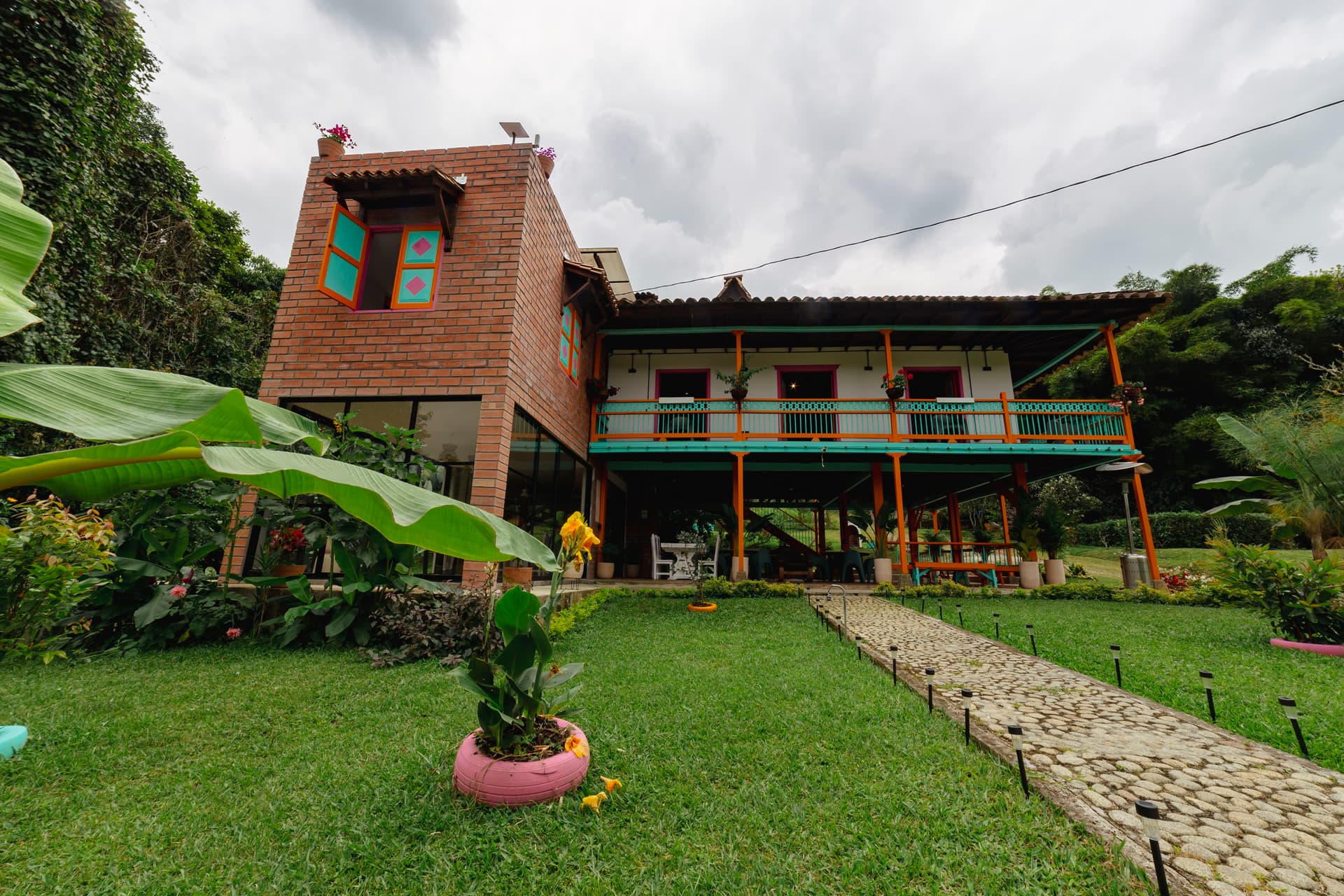
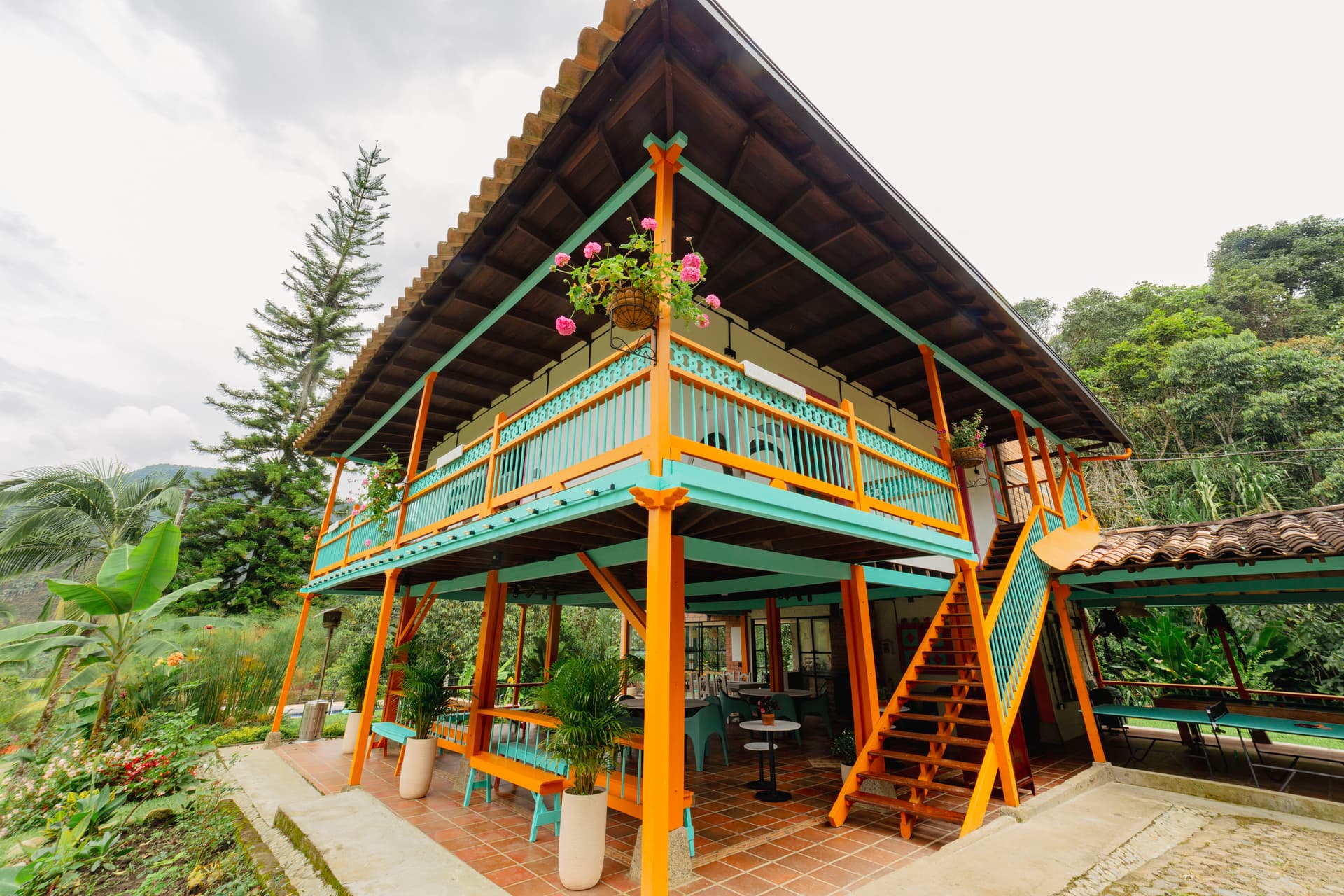
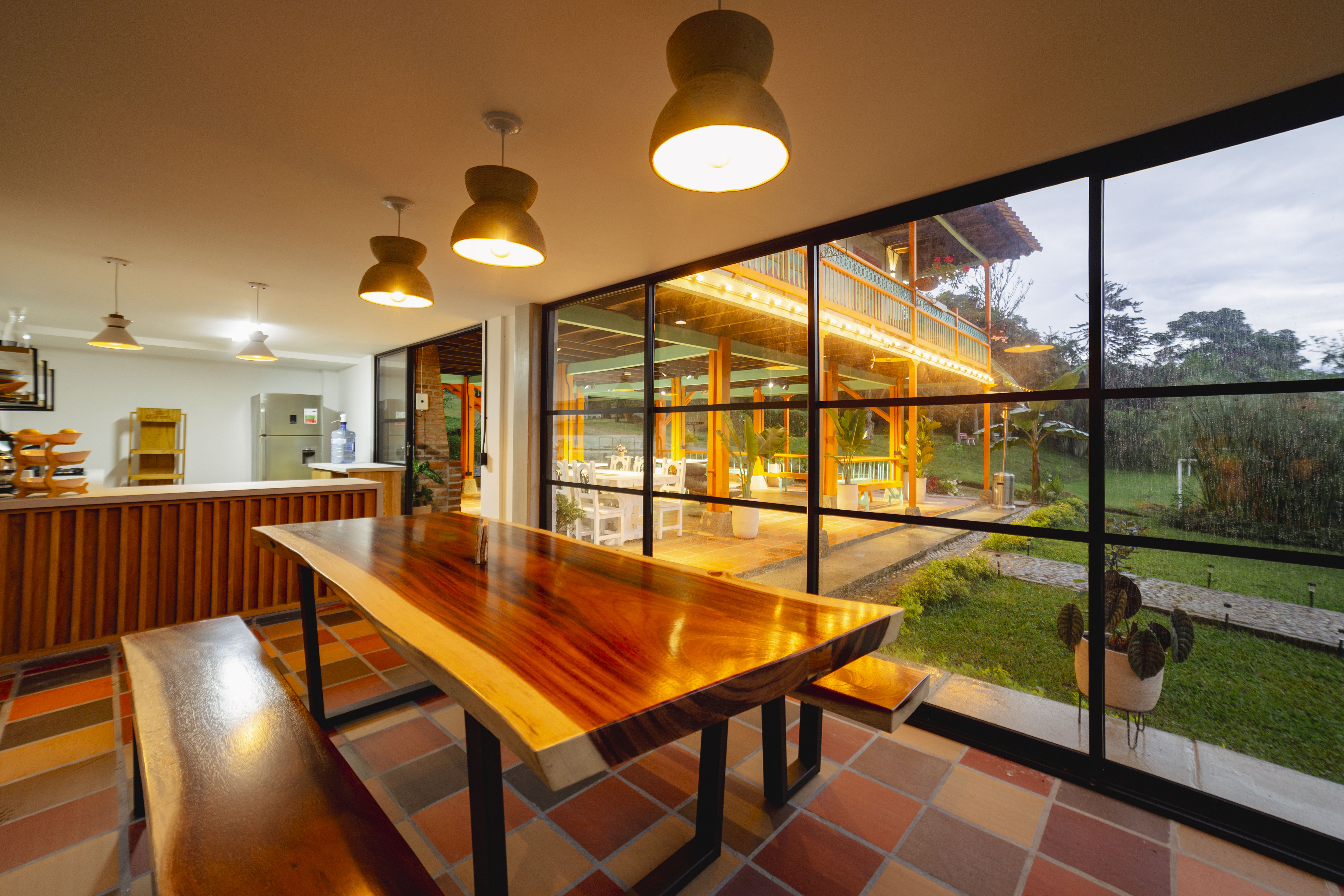
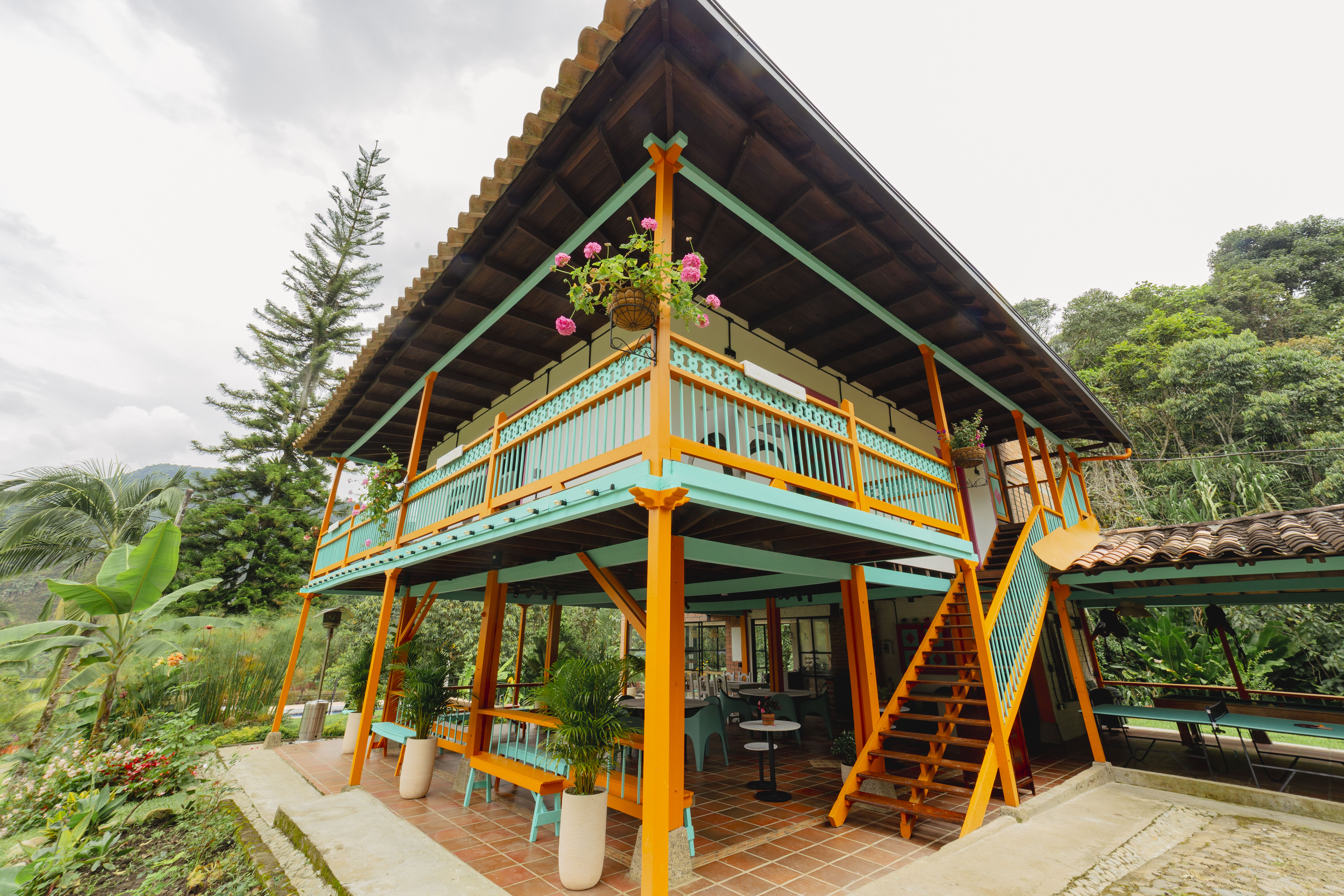
Isla de Pascua hostel has a garden area that became my office, my meditation space, and my confessional over five days.
Every morning, after my plaza coffee, I'd return to the hostel and sit in the garden with my notebook. I was supposed to be drafting story pitches. Instead, I found myself writing something else entirely — observations without structure, thoughts without conclusions, descriptions that served no editorial purpose except to capture what I was seeing and feeling.
I wrote about the way the light changes in Jardín. Morning light is sharp and clear, with hard shadows and vivid colours. Afternoon light, filtered through gathering clouds, is softer, more diffuse, gentler on the eyes and the soul. Evening light, after the rain, is golden and melancholy, the kind of light that makes you miss people you haven't thought about in years.
I wrote about the sounds. The church bells marking hours that nobody seems to count. The birds — so many birds, with calls I didn't recognize, a soundtrack entirely unlike the sparrows and swallows of Casablanca. The distant sound of someone playing guitar, always coming from a direction I could never quite identify.
I wrote about the people at the hostel. A German couple who held hands constantly, as if one of them might float away. A Chilean student who tracked his heart rate while hiking and seemed bewildered by his own obsessiveness. A group of Colombian friends who included every stranger in their conversations as naturally as breathing.
The Basilica and the Mosque
I visited the Basilica on a rainy afternoon, and the experience reminded me of entering the Hassan II Mosque in Casablanca — not architecturally, but emotionally.
Both are spaces built with an ambition that exceeds their context. The Hassan II Mosque is monumental, designed to awe. The Basilica in Jardín is more intimate, but shares the same essential quality: a community investing extraordinary effort and resources into creating beauty for its own sake.
The Gothic arches, the stained glass, the painted ceilings — these exist in a town of fewer than twenty thousand people, in the mountains of a country that most of the world overlooks. Someone decided that this town deserved a cathedral. And they built one. Not a functional box with a cross on top, but a genuine work of architectural art.
In the Islamic tradition, beauty in sacred spaces is considered a form of worship. The geometric patterns in mosques are not decoration — they are expressions of divine order, an attempt to mirror the perfection of creation. I wonder if the builders of Jardín's Basilica felt something similar: that the act of making something beautiful was itself a form of prayer.
The Connections We Make
On my fourth evening, I sat in the hostel common area and had a conversation that I will remember long after the professional stories I'm supposed to be writing are forgotten.
Her name was Doña Marta. She was a local woman who sometimes came to the hostel to sell homemade tamales. She was in her sixties, with weathered hands and clear, observant eyes. We spoke in Spanish — mine imperfect, hers patient.
She asked where I was from. I said Morocco. She said she didn't know where that was. I said Africa. She nodded and said, "Far."
Then she asked what Morocco was like. I described Casablanca — the ocean, the white buildings, the markets full of spices and leather and ceramics. I described the mountains — the Atlas, not as green as the Colombian Andes, more stone and dust, but equally magnificent. I described the food — tagines, couscous, pastilla, the same emphasis on slow cooking and communal meals that I'd found in Colombia.
She listened with the quality of attention that I, as a journalist, aspire to but rarely achieve. She wasn't waiting for her turn to speak. She wasn't formulating a response. She was simply receiving.
When I finished, she said: "It sounds like here, but different."
Five words. A better summary of cross-cultural understanding than anything I've managed in eight years of professional writing.
What I'm Not Filing
My editor is going to be disappointed. I'm not filing "A Colombian Mountain Town That Time Forgot." That headline implies Jardín is stuck in the past, and it's not. It's a place that has found its own pace — not frozen, not rushing, just moving at the speed of coffee dripping through a cloth filter.
I'm not filing "Hidden Gem in the Colombian Andes," because that implies Jardín is waiting to be discovered by the right tourist, and it's not. It's a complete place with or without visitors. Our presence adds to it but doesn't define it.
What I am bringing home is a notebook full of writing that reminds me why I became a journalist in the first place — not to produce content, but to witness life. To sit in a plaza and pay attention. To drink coffee slowly enough to taste all its layers. To listen to a woman describe her town with the same love my grandmother uses to describe Fez.
Jardín reminded me that the best stories are not the ones you go looking for. They're the ones that find you while you're sitting still.
And Isla de Pascua gave me the space to sit still long enough for them to arrive.
— Fatima El Amrani, Casablanca, Morocco. September 2025.
Ready to experience Jardín?
Book Now Isla de Pascua