Written by Nina Lindström — Sweden
Stay: July 2025, 5 nights
The Cloud Forest Called: Nina's Story from Sweden
I study ecosystems for a living. I have spent three years researching boreal forests in northern Sweden, two seasons studying marine biodiversity in the Galápagos, and six months cataloguing plant species in the Borneo rainforest. I am comfortable with data, with taxonomic classifications, with peer-reviewed methodology. I am not, generally speaking, the kind of scientist who uses words like "magical."
But Jardín's cloud forest is magical. I am sorry. There is no other word for it.
I came to southwestern Antioquia specifically for the birds. Colombia has more bird species than any other country on Earth — over 1,900 at last count — and the cloud forests of the Western Cordillera are among the most biodiverse habitats on the planet. The area around Jardín is home to species that exist nowhere else, including the critically endangered yellow-eared parrot, which I had been dreaming of seeing since I read about it during my undergraduate studies in Uppsala.
The data on Jardín's biodiversity
Let me start with the numbers, because they are staggering. The cloud forests around Jardín host an estimated 350 to 400 bird species within a relatively small geographic area. For context, all of Sweden — a country that spans 1,572 kilometers from north to south — has approximately 530 recorded bird species. This valley in Antioquia, which you can walk across in a few hours, contains roughly three-quarters of that diversity.
The reasons are geological and climatic. Jardín sits at the convergence of several elevation gradients in the Western Cordillera, ranging from the valley floor at around 1,750 meters to cloud forest peaks above 3,000 meters. Each elevation band supports a distinct ecological community, and the transitions between them create edge habitats — zones of overlap where species diversity peaks. Add the moisture-laden air from the Pacific slope, the nutrient-rich volcanic soils, and the relative absence of large-scale deforestation, and you have conditions for extraordinary biological richness.
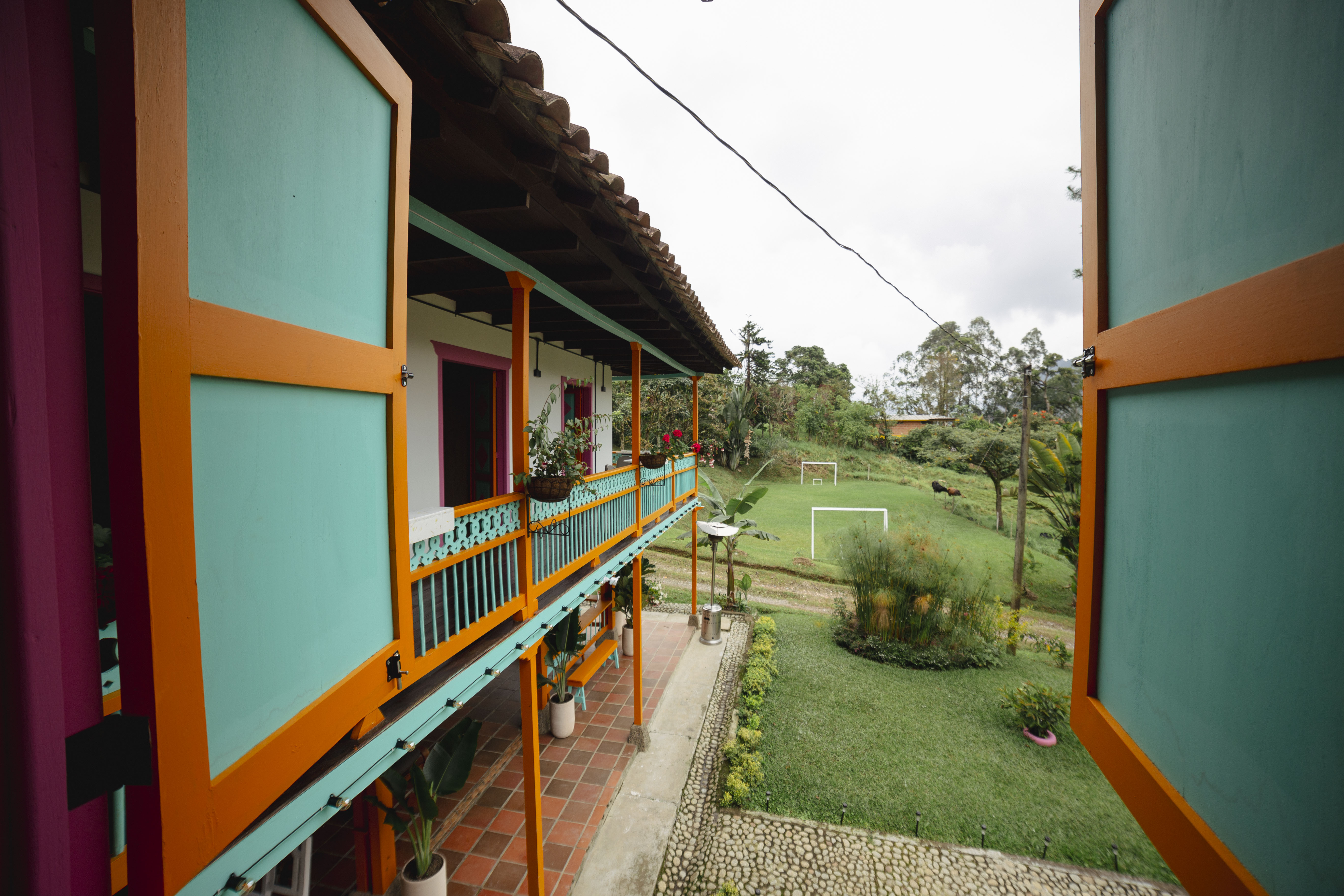
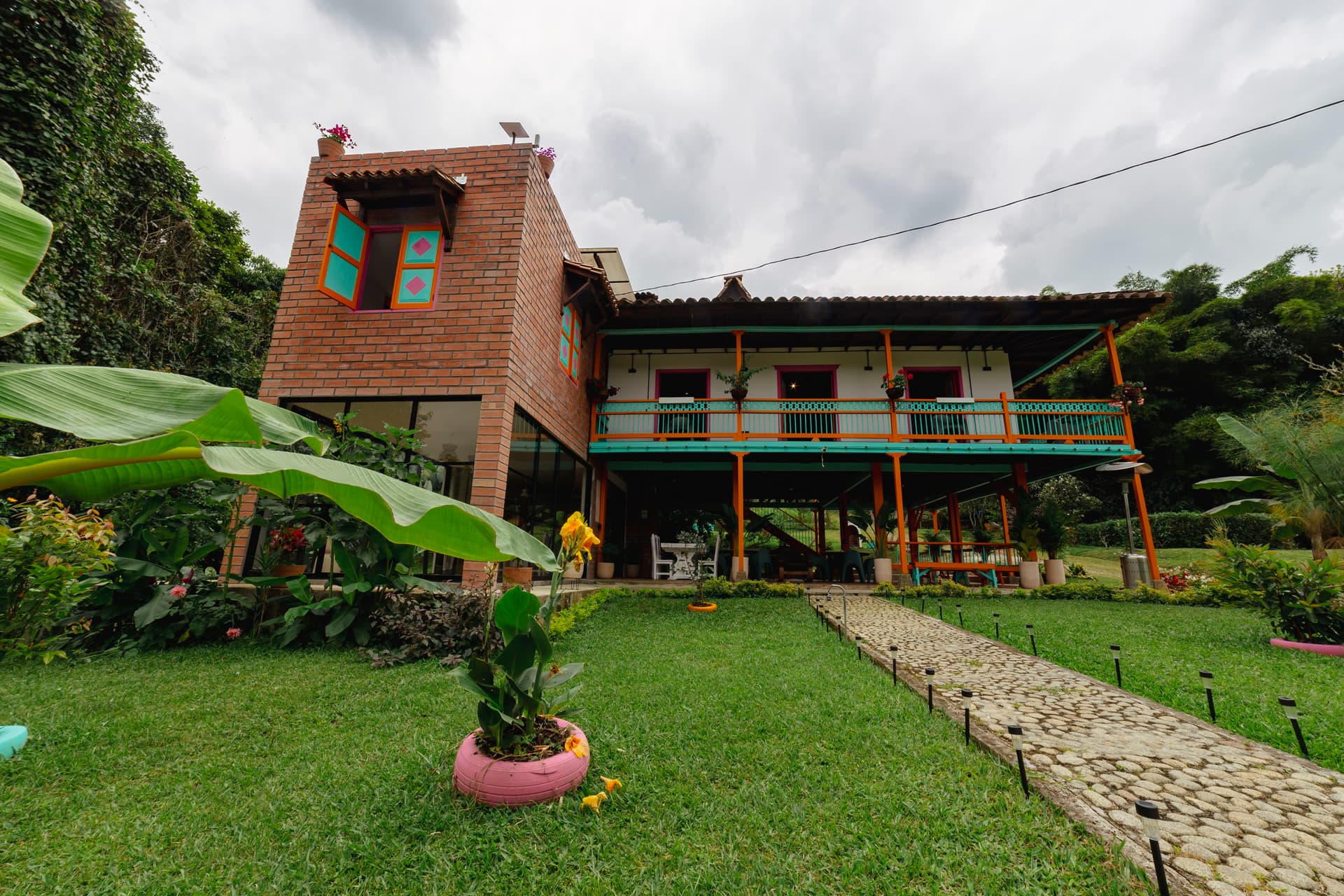
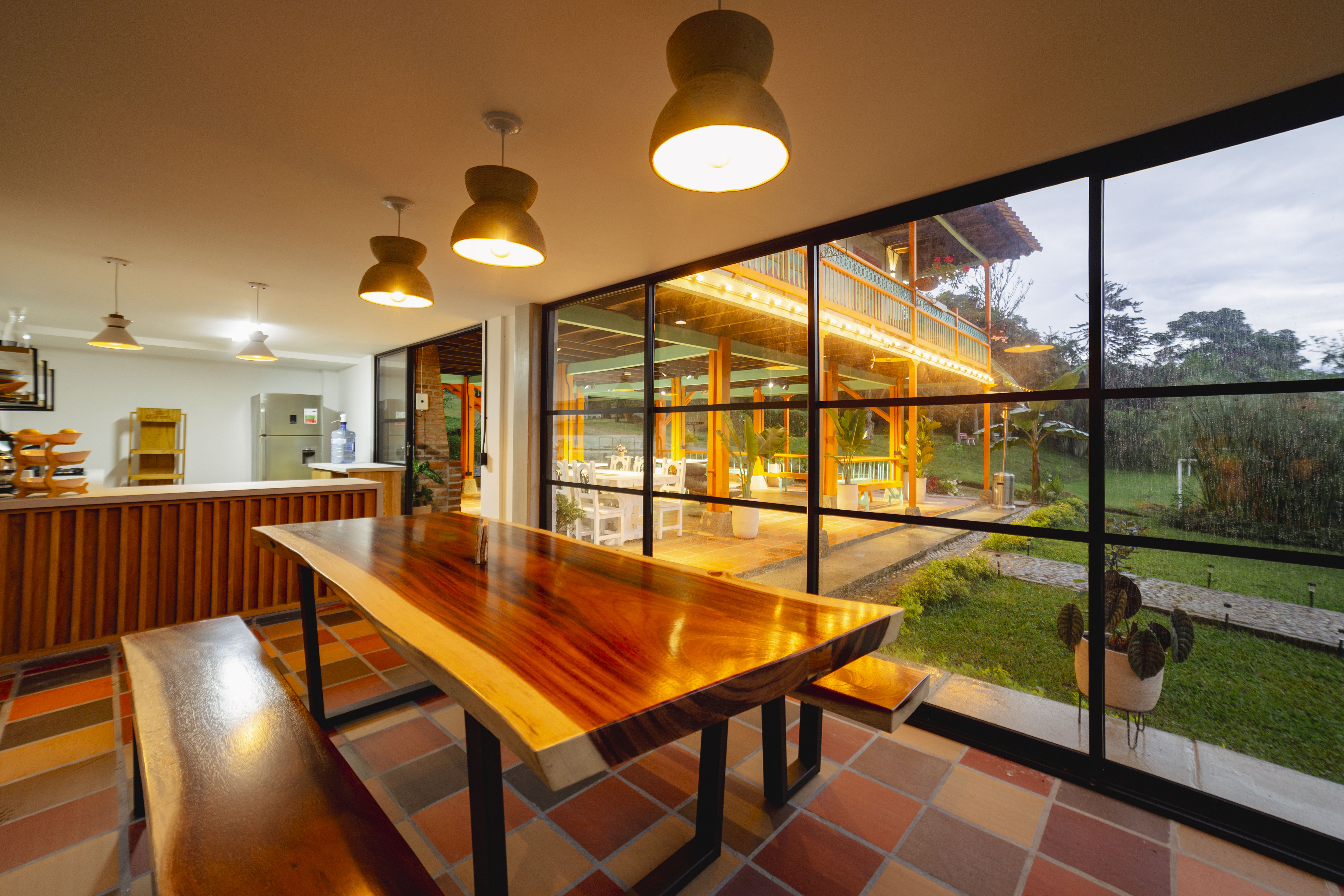
I arrived at Isla de Pascua hostel in early July with a pair of Swarovski binoculars, a field guide to the birds of Colombia, and a spreadsheet on my laptop for recording sightings. The staff, it turned out, were already familiar with birding guests and had recommendations ready: which trails to take, which guides to hire, which feeding stations to visit, and — critically — what time to set my alarm.
Dawn in the cloud forest
The answer to the alarm question was 4:30 AM. Early, even by Swedish summer standards where the sun barely sets. But cloud forest birding is a dawn activity — the first hours of light are when bird activity peaks, before the afternoon mist rolls in and reduces visibility.
On my first birding morning, I joined a local guide named Don Hernán, who has been leading birdwatching excursions in the forests around Jardín for over fifteen years. We drove out of town in darkness and hiked up a trail into the forest as the sky turned from black to gray to the palest blue. The transition from the agricultural zone into the cloud forest was dramatic — one moment we were walking past coffee plants and banana trees, and the next we were surrounded by moss-draped trees, bromeliads, orchids, and ferns that dripped with condensation.
The first bird I heard before I saw it — a clear, melodious whistle from somewhere in the canopy. Don Hernán raised his hand, and we stopped. He pointed upward, and there, perched on a branch about fifteen meters above us, was a golden-headed quetzal. Its iridescent green body caught a shaft of early light, and the gold of its head seemed to glow from within. I raised my binoculars with shaking hands.
In five days of birding around Jardín, I recorded 127 species. One hundred and twenty-seven. I will list a few highlights for the birders reading this, and for everyone else, I will simply say: the diversity is real, it is measurable, and it is breathtaking.
Pro tip: Base yourself at Isla de Pascua — For serious birdwatching, hire a local guide. They know the species, the calls, and the exact locations. The hostel staff can arrange excellent guided birding excursions departing at dawn.
The yellow-eared parrot
On my third morning, I saw the bird I had come to see. We had driven to a reserve higher in the mountains where a small population of yellow-eared parrots feeds on wax palm fruits. The species was once thought to be on the brink of extinction — in the late 1990s, the known population was estimated at fewer than 100 individuals. Conservation efforts, including habitat protection and community engagement programs in towns like Jardín, have helped the population recover to over 1,000 birds, though it remains vulnerable.
Don Hernán knew exactly where to position us. We sat quietly on a hillside facing a stand of wax palms — those impossibly tall, slender palms that are Colombia's national tree — and waited. At 6:47 AM (I checked my watch), a group of seven yellow-eared parrots flew in from the southeast, their distinctive calls echoing across the valley. They landed in the palms and began feeding, their yellow ear patches visible even at distance through my binoculars.
I sat and watched them for forty-five minutes. I counted, I noted behaviors, I recorded the GPS coordinates. But I also cried, which is not standard scientific methodology. There is something about seeing a species that was nearly lost — that humans almost erased from the planet — alive and feeding and calling to each other in its native habitat. It is data and emotion simultaneously, and I do not think you need to separate the two.
Ecology of the coffee landscape
What fascinated me as an environmental scientist was the relationship between Jardín's agricultural landscape and its biodiversity. This is not a case of pristine wilderness — the valley has been farmed for over a century, primarily for coffee. But the traditional shade-grown coffee cultivation practiced here creates a remarkably hospitable habitat for wildlife.
Shade-grown coffee farms maintain a canopy of native trees above the coffee plants, providing habitat for birds, insects, and other organisms. The result is an agricultural landscape that functions as a corridor between patches of primary forest, allowing species to move through the landscape and maintaining genetic connectivity between populations. This is conservation through land use — one of the most effective and sustainable approaches to biodiversity protection.
I visited a coffee farm on my fourth day and spent as much time looking at the trees above the coffee as at the coffee itself. In a single hour on the farm, I counted twenty-three bird species using the shade canopy — tanagers, warblers, hummingbirds, and flycatchers moving through the branches above the neat rows of coffee plants. The farmer told me his family has maintained the shade trees for three generations, not primarily for the birds but because shade improves coffee quality. Conservation and agriculture aligned by happy accident, sustained by tradition.
Sustainable travel and what it actually means
I want to be direct about something. I study environmental systems, and I am acutely aware of the carbon footprint of international air travel. I flew from Stockholm to Bogotá — approximately 10,000 kilometers — generating roughly 1.5 tonnes of CO2 equivalent. That is a significant impact, and no amount of reusable water bottles or bamboo toothbrushes offsets it.
What does offset it, in my calculation, is the value of what I experienced and what I can communicate as a result. Jardín's cloud forest ecosystem is globally significant. The conservation work happening here — led by local communities, not international NGOs — is a model for how biodiversity protection can work in the developing world. And the sustainable tourism infrastructure, including hostels like Isla de Pascua that support local guides and contribute to the local economy, demonstrates that tourism can be a force for conservation when it is done thoughtfully.
I will use my data, my photographs, and my scientific platform to advocate for the protection of this ecosystem. If my visit generates even a fraction of the attention and funding that this region needs and deserves, then the carbon cost of my flight was an investment, not an expense.
The last morning count
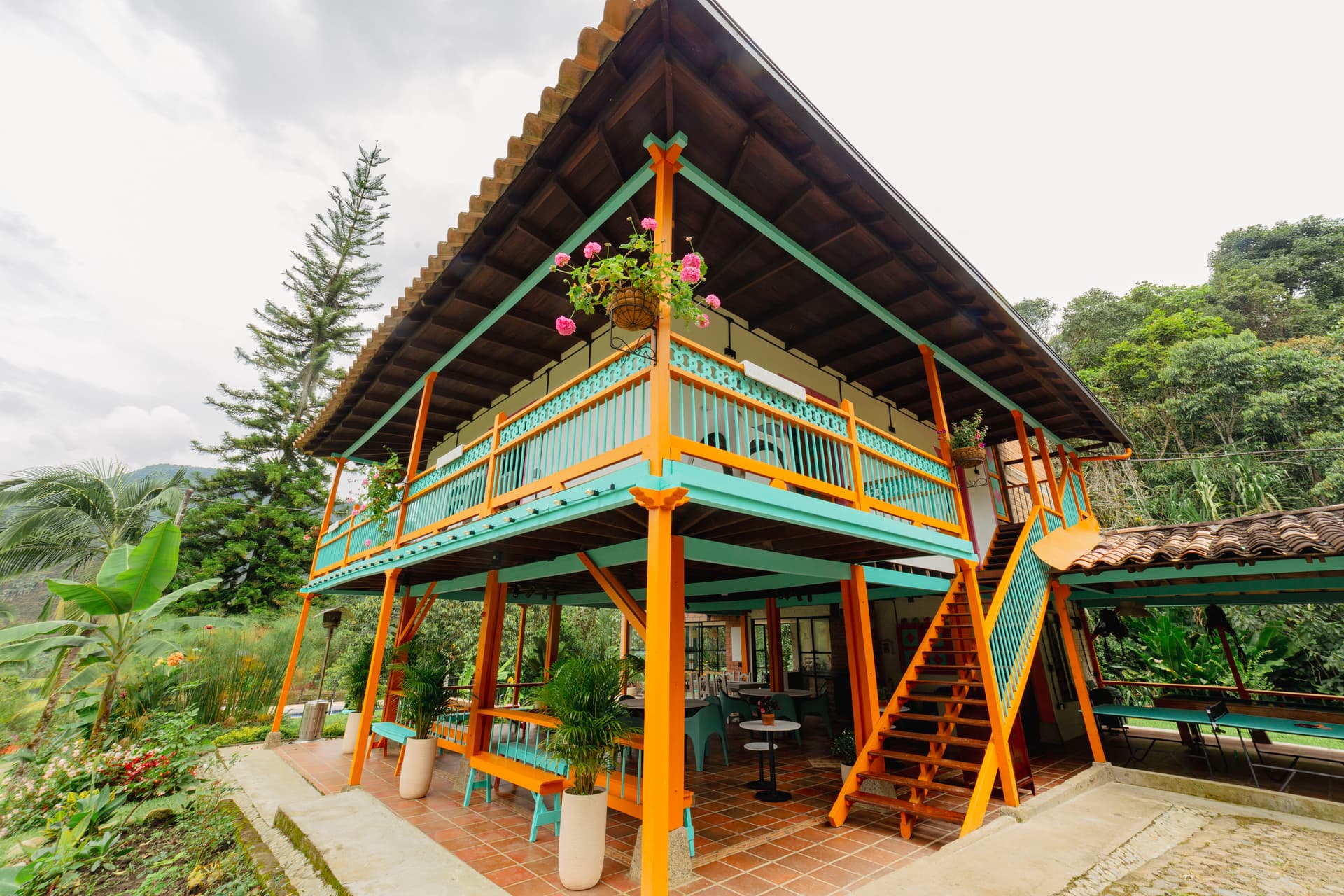
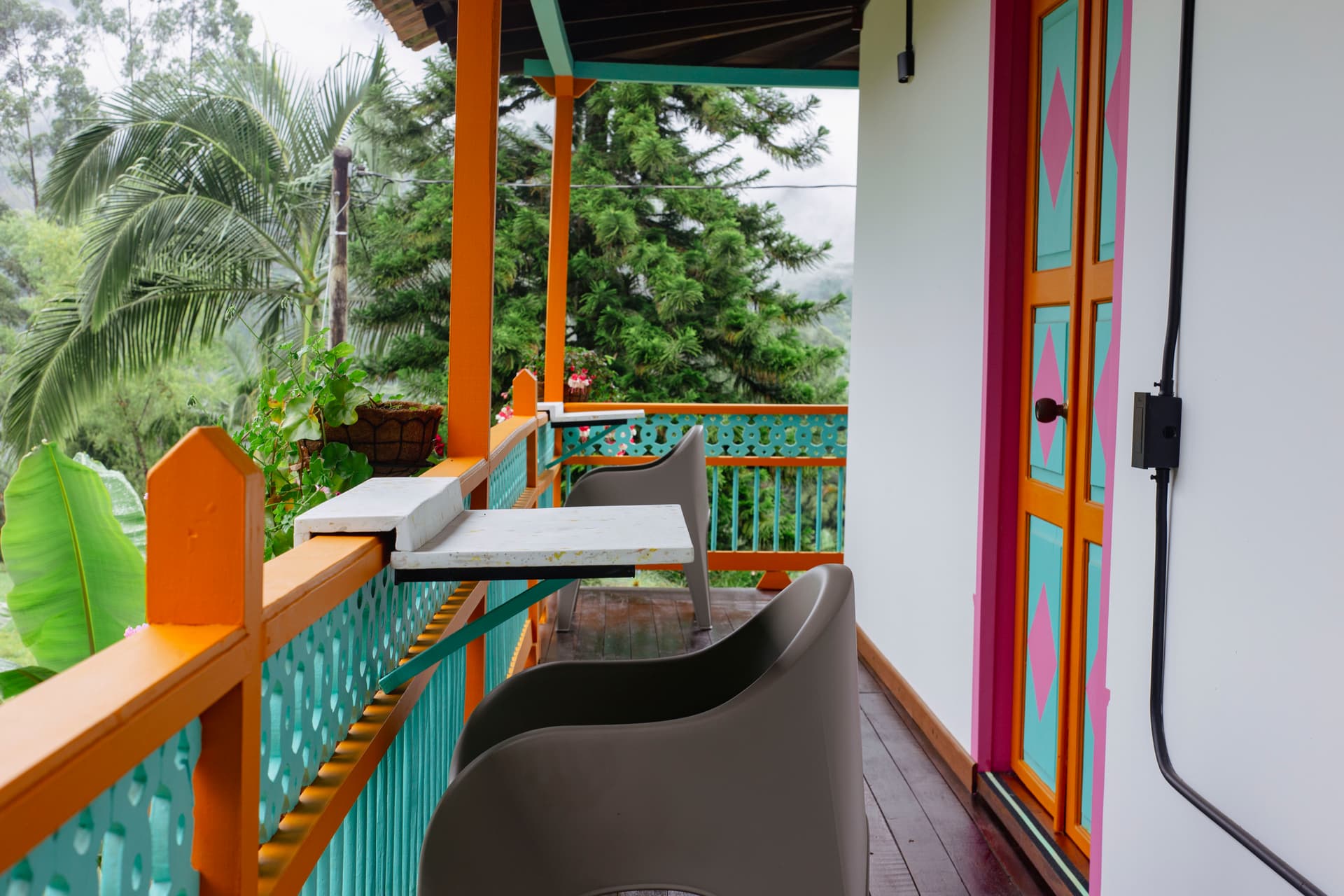
On my final morning at Isla de Pascua, I sat on the hostel terrace at dawn with my binoculars and my notebook and did a simple point count — recording every species I could see or hear from a single location over thirty minutes. I counted thirty-one species without leaving my chair. Hummingbirds at the flowering bushes in the garden. Tanagers in the fruit trees. A pair of toucanets that flew across the valley and landed in a tree at the edge of the property. Swallows hunting insects above the roof.
Thirty-one species from a hostel terrace. In Sweden, a good morning count at our research station yields maybe twelve to fifteen species. The richness here is not subtle — it is overwhelming, constant, and deeply moving to anyone who understands what it represents: a functioning ecosystem, maintained by a community that values its natural heritage, in a world where such things are increasingly rare.
I came to Jardín to add species to my life list. I left with something more important — the conviction that places like this can be saved, and that the people who live here are already doing the work.
Nina Lindström is an environmental scientist at Uppsala University, Sweden. She stayed at Isla de Pascua hostel in July 2025. Her bird count total for the trip: 127 species in 5 days.
Ready to experience Jardín?
Book Now Isla de Pascua