Written by Felix Gruber — Austria
Stay: January 2026, 5 nights
The Andes vs. The Alps: Felix's Story from Austria
I should start with a disclaimer: I am not an unbiased observer when it comes to mountains.
I have been a certified mountain guide in the Austrian Alps for eighteen years. I grew up in Innsbruck, surrounded by peaks that most people only see on postcards. I have guided clients up the Großglockner, across the Stubaier Höhenweg, and through conditions that would make sensible people turn around and go home. Mountains are not just my profession — they are my language. I read them the way musicians read sheet music.
So when I tell you that the mountains around Jardín, Colombia, left me genuinely speechless, I need you to understand the weight of that statement. These are not the Alps. They are something else entirely — something I was not prepared for and cannot stop thinking about.
I arrived at Isla de Pascua hostel on a Thursday afternoon in January, with a backpack full of professional-grade hiking gear, a detailed topographic awareness from weeks of research, and the quiet arrogance of a man who has been going up and down mountains since he could walk. Five days later, I left with every assumption about mountain hiking thoroughly recalibrated.
Altitude Comparison: What Nobody Tells You
Let me start with the technical. Jardín sits at approximately 1,750 metres above sea level. For reference, Innsbruck is at 574 metres. Many of the hikes around Jardín reach 2,200 to 2,500 metres. This is modest by Alpine standards — our mountain huts often sit higher than the peaks around Jardín.
But altitude alone tells you nothing about the experience.
In the Alps, the air at 2,000 metres is dry, thin, and clear. You can see for a hundred kilometres on a good day. The terrain above the treeline is exposed — rock, scree, glacier, sky. It is beautiful in a clean, sharp, almost architectural way.
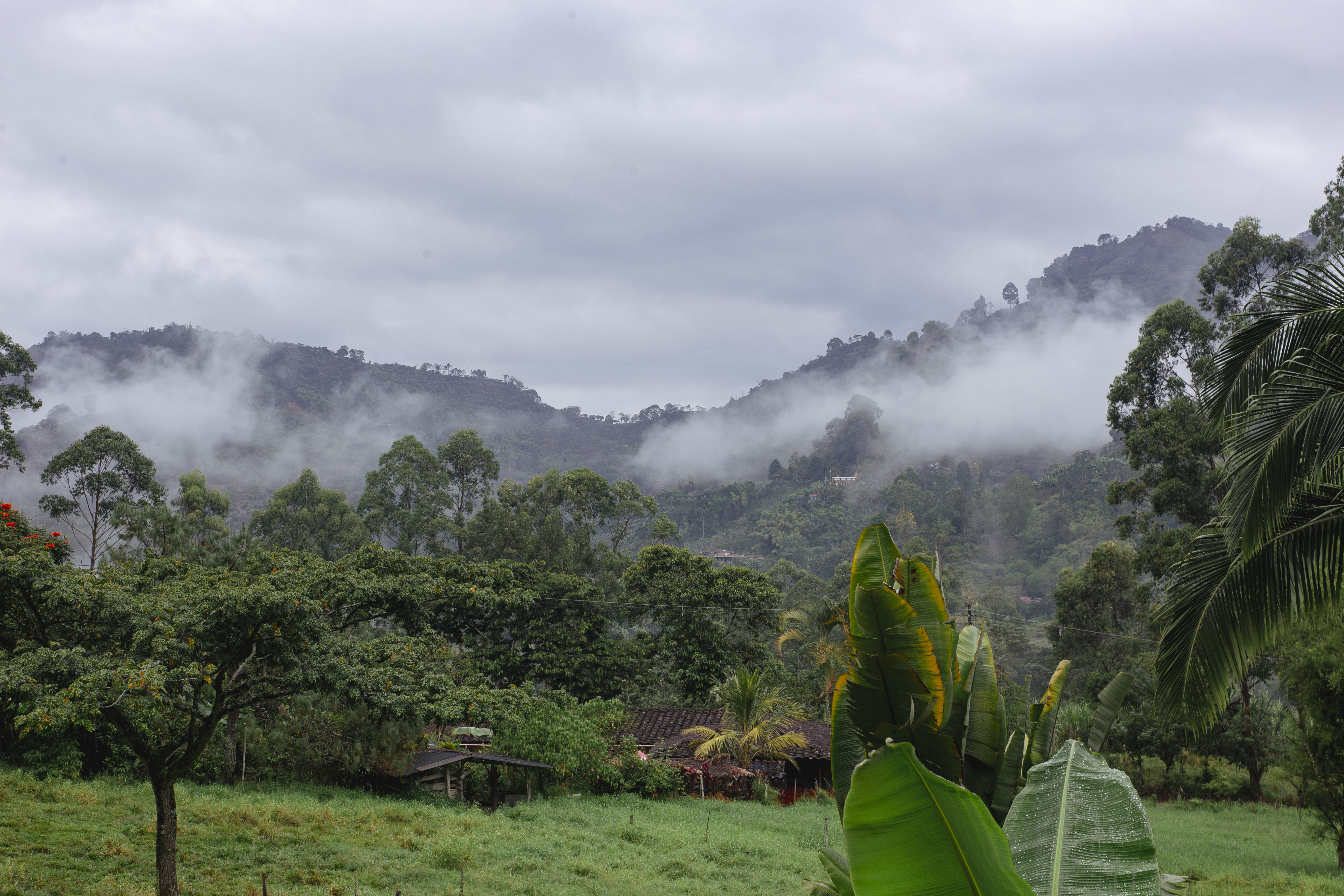
In the Andes at Jardín, the air at 2,000 metres is thick, humid, and alive. You can sometimes see fifty metres before the cloud forest swallows everything in white. The terrain is never exposed — it is wrapped in vegetation so dense that the trail feels less like a path through nature and more like a tunnel carved through a living organism. Every surface is covered: moss, ferns, orchids, bromeliads, fungi. The biodiversity per square metre is staggering.
This is the first thing that surprised me. In the Alps, the mountain is the protagonist. In the cloud forests around Jardín, the forest is. The mountain is merely the stage.
Trail Assessment: Cueva del Esplendor
My first hike was to Cueva del Esplendor — the famous cave with a waterfall pouring through its ceiling. As a guide, I assess trails automatically. It is a professional habit I cannot switch off.
Distance: Approximately 12 kilometres round trip, depending on the route.
Elevation gain: Roughly 500 metres, which is moderate by any standard.
Technical difficulty: Low to moderate. No technical climbing, no exposed ridges, no glacier crossings. By Alpine standards, this is a category T2 hike — a mountain hike, not a mountaineering expedition.
But here is the critical difference: the mud.
In eighteen years of Alpine guiding, I have never encountered mud like the mud on the Cueva del Esplendor trail. This is not the polite, firm mud of a European forest path after rain. This is deep, sucking, boot-stealing, ankle-swallowing mud that has a personality and a grudge. You do not walk through it — you negotiate with it. Every step is a small diplomatic encounter with a substance that would very much like to keep your shoe.
My professional hiking boots — Austrian-made, waterproofed, designed for glacier approaches — were completely overwhelmed within the first hour. I looked at the Colombian guide leading our group, a young man in rubber boots that cost perhaps twenty dollars, navigating the same terrain with the casual grace of a dancer. He glanced at my expensive boots and smiled a smile that said everything.
The cave itself, however, deserves its reputation. A waterfall pouring through a natural skylight in the rock ceiling, creating a curtain of water that fills the space with mist and sound. From a geological perspective, it is a fascinating formation — the limestone has been eroded by millennia of water flow, creating this perfect circular opening. From a human perspective, it is simply one of the most beautiful things I have seen on Earth.
Trail Assessment: Cristo Rey
The Cristo Rey hike is a different proposition. A steep ascent up a hill directly behind the town, rewarded with a panoramic viewpoint and a statue of Christ.
Distance: Approximately 4 kilometres round trip.
Elevation gain: Around 400 metres, concentrated into a relatively short distance. This makes it steep — steeper, in places, than many Alpine approaches.
Technical difficulty: Low. The path is well-established. But the gradient will test your cardiovascular fitness, particularly if you are not acclimatised to tropical humidity. I summit Alpine peaks without difficulty; the Cristo Rey hike had me breathing hard. Not from altitude — from heat and humidity. My body is calibrated for cold, dry mountain air. The warm, wet air of the Colombian Andes is a different cardiovascular challenge entirely.
The view from the top, however, is extraordinary. The entire valley of Jardín spreads below you — the town, the river, the coffee farms climbing the hillsides, the mountains layered behind each other like the wings of a theatre stage. In the Alps, the views are vast and horizontal. Here, the view is intimate and vertical — everything is close, layered, textured. You see not just the landscape but the details: individual trees, individual houses, individual people moving through the plaza far below.
I went up at sunrise. The mist was lifting from the valley, revealing the town in stages, and the light was soft and golden and completely unlike the sharp, crystalline Alpine dawn. It was gentler. Warmer. Less dramatic but more emotional.
The Trails Nobody Writes About
The guided hikes are excellent, but as a professional, I was most interested in the trails that are not in the guidebooks. The dirt roads through the coffee farms. The footpaths that connect small fincas on the hillsides. The unmarked routes through patches of cloud forest that the locals use as shortcuts.
I spent two days exploring these with nothing but a compass, a GPS watch, and a supply of water and snacks. The terrain is consistently beautiful and consistently challenging — not technically, but physically. The combination of steep gradients, humid air, uneven surfaces, and unpredictable weather (a clear morning can become a torrential downpour by 2 PM) means that these trails demand a different kind of fitness than Alpine hiking.
In the Alps, the challenge is often environmental: cold, altitude, exposure. Here, the challenge is biological: heat, humidity, mud, and the sheer density of vegetation. Both are legitimate. Both demand respect. But they require different preparations, different gear, and different mindsets.
One afternoon, I was walking along a ridge above the town when I came across a farmer leading a mule loaded with coffee sacks. We walked together for an hour, communicating through gestures and my limited Spanish and his complete lack of German. He showed me a path down to a hidden waterfall that I never would have found on my own. We sat by the waterfall, he shared his lunch (rice, beans, and an avocado the size of my fist), and we watched the water crash over the rocks without needing to say a word.
This encounter would not happen in the Alps. Not because Austrian farmers are unfriendly — they are not — but because the mountain culture is different. In the Alps, the trail is a regulated space with marked routes and mountain hut infrastructure. Here, the trail is simply where life happens. Farmers, children walking to school, horses carrying supplies — the path is shared, and sharing it means meeting people in a way that formal tourism infrastructure does not allow.
The Hostel as Base Camp
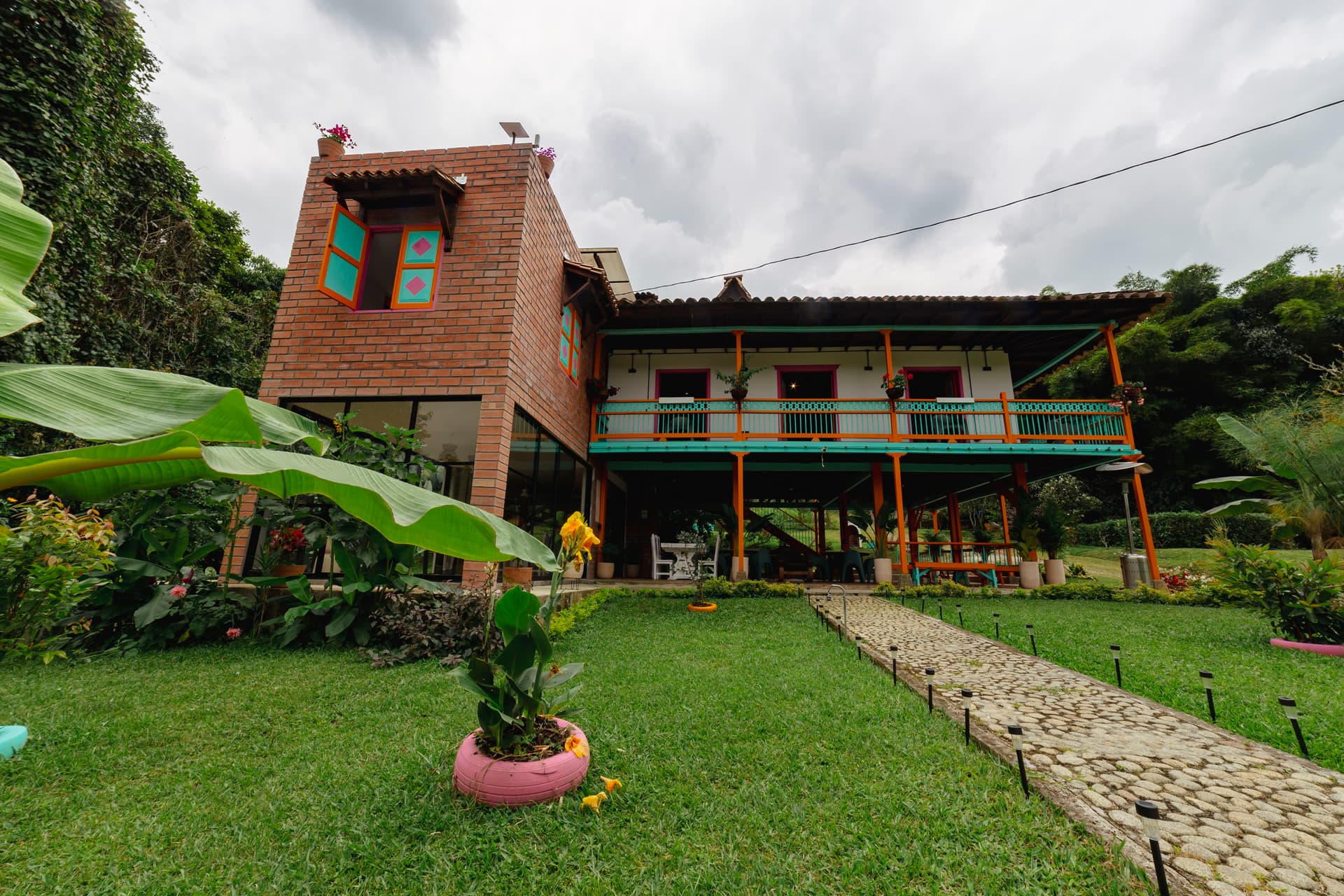
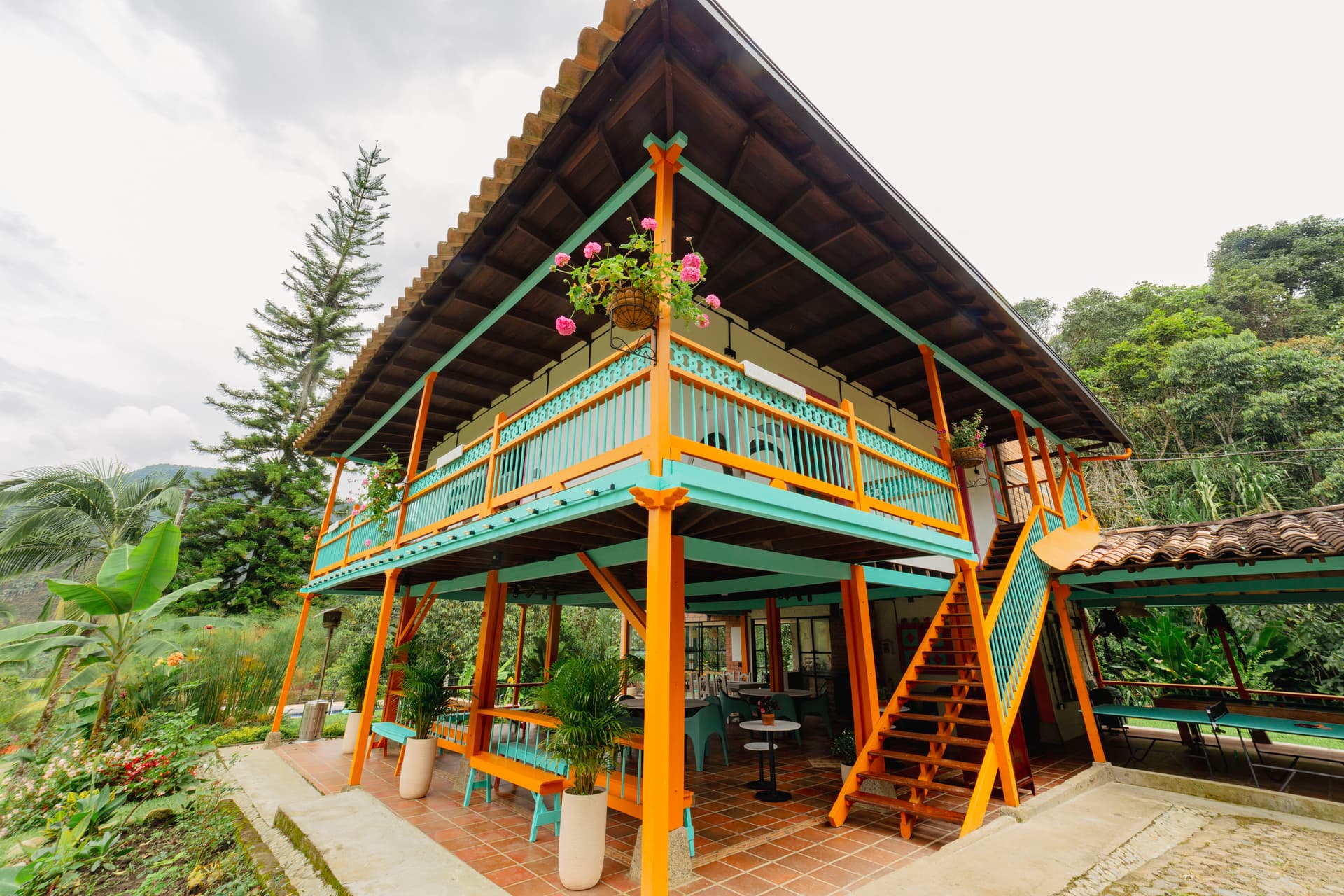
A good base camp matters. In mountaineering, your base camp is where you recover, refuel, plan, and prepare. Isla de Pascua functioned as an excellent base camp.
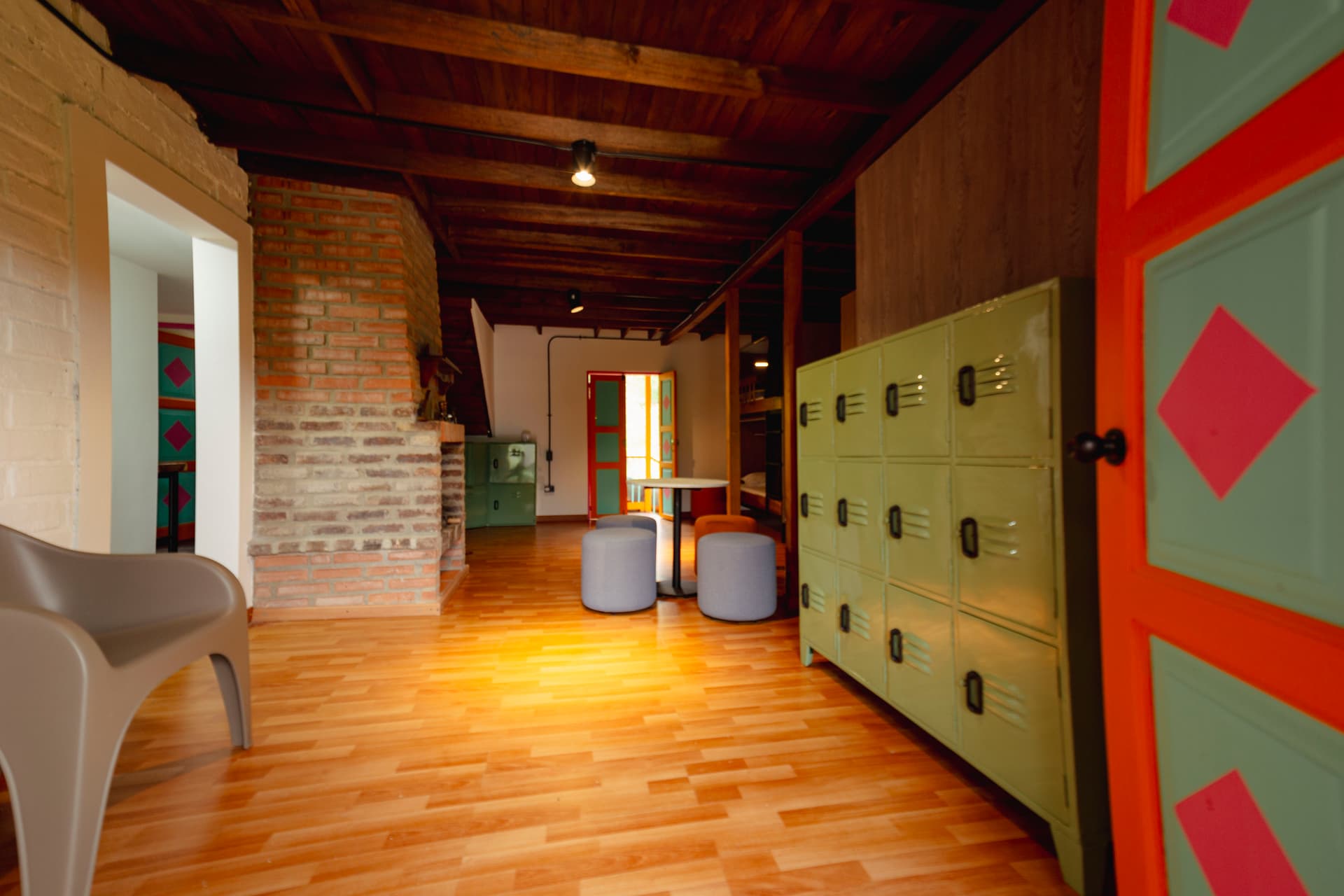
The practical elements: hot showers after muddy hikes (essential), a kitchen for preparing early-morning breakfast before dawn departures (useful), reliable WiFi for checking weather forecasts (important), and comfortable beds for genuine rest (critical).
But beyond the practical, the hostel provided something that most base camps do not: community. After a day of hiking alone, returning to a common area filled with travellers sharing stories over dinner was deeply satisfying. I found myself explaining mountain safety principles to a group of backpackers heading to Cueva del Esplendor, and in return, they taught me about Colombian slang, Colombian coffee culture, and how to properly eat a mango without destroying my shirt. Fair exchange.
The pool — I must mention the pool. After eight hours of hiking through humid cloud forest, submerging in cool water while staring at the same mountains I had just traversed was a recovery method I will be recommending to every client and colleague. The Alps have nothing comparable. We have mountain lakes, yes, but they are generally cold enough to cause cardiac events. The Isla de Pascua pool is civilised.
Professional Assessment
If a client asked me — and several have, since I returned — whether the hiking around Jardín is "worth it" for experienced mountain enthusiasts, my answer would be this:
The trails around Jardín will not give you the adrenaline of an Alpine summit, the technical challenge of a via ferrata, or the raw exposure of a high-altitude traverse. What they will give you is something I had not experienced in eighteen years of professional guiding: the feeling of being inside a mountain ecosystem rather than on top of it.
The Alps teach you to conquer. The Andes around Jardín teach you to immerse. Both are valid. Both are valuable. But the immersion — walking through a cloud forest where every step reveals a new orchid, a new bird, a new perspective — is something that no amount of Alpine expertise can prepare you for. It is humbling in the best possible way.
To my fellow mountain professionals: go. Bring your skills, your fitness, your appreciation for terrain. Leave your assumptions at home. And for the love of all that is holy, wear rubber boots.
— Felix, back in Innsbruck, planning his return with better footwear
Ready to experience Jardín?
Book Now Isla de Pascua