Written by Erik Larsen — Norway
Stay: October 2025, 6 nights
From Fjords to Cloud Forests: A Norwegian in Jardín's Mountains
I grew up in Tromsø, above the Arctic Circle, where the mountains are granite and snow and silence. I've hiked Norway's peaks since I could walk — Trolltunga, Preikestolen, the Lofoten ridgelines — and I've always believed, with the quiet confidence of a Scandinavian, that our mountains are the most beautiful on Earth.
Jardín's mountains are nothing like Norway's. They are better in ways I never expected, and worse in ways that made me laugh, and different in ways that expanded my understanding of what a mountain can be.
The Altitude Adjustment
The first thing you notice — and by "notice" I mean "feel in every gasping breath" — is the altitude. Jardín sits at about 1,750 meters above sea level. That's roughly the same as Tromsø's nearby peaks, so I assumed I'd be fine. What I didn't account for was that I'd spent the previous week at sea level in Cartagena, and the bus ride from Medellín climbed even higher through passes before descending into Jardín's valley.
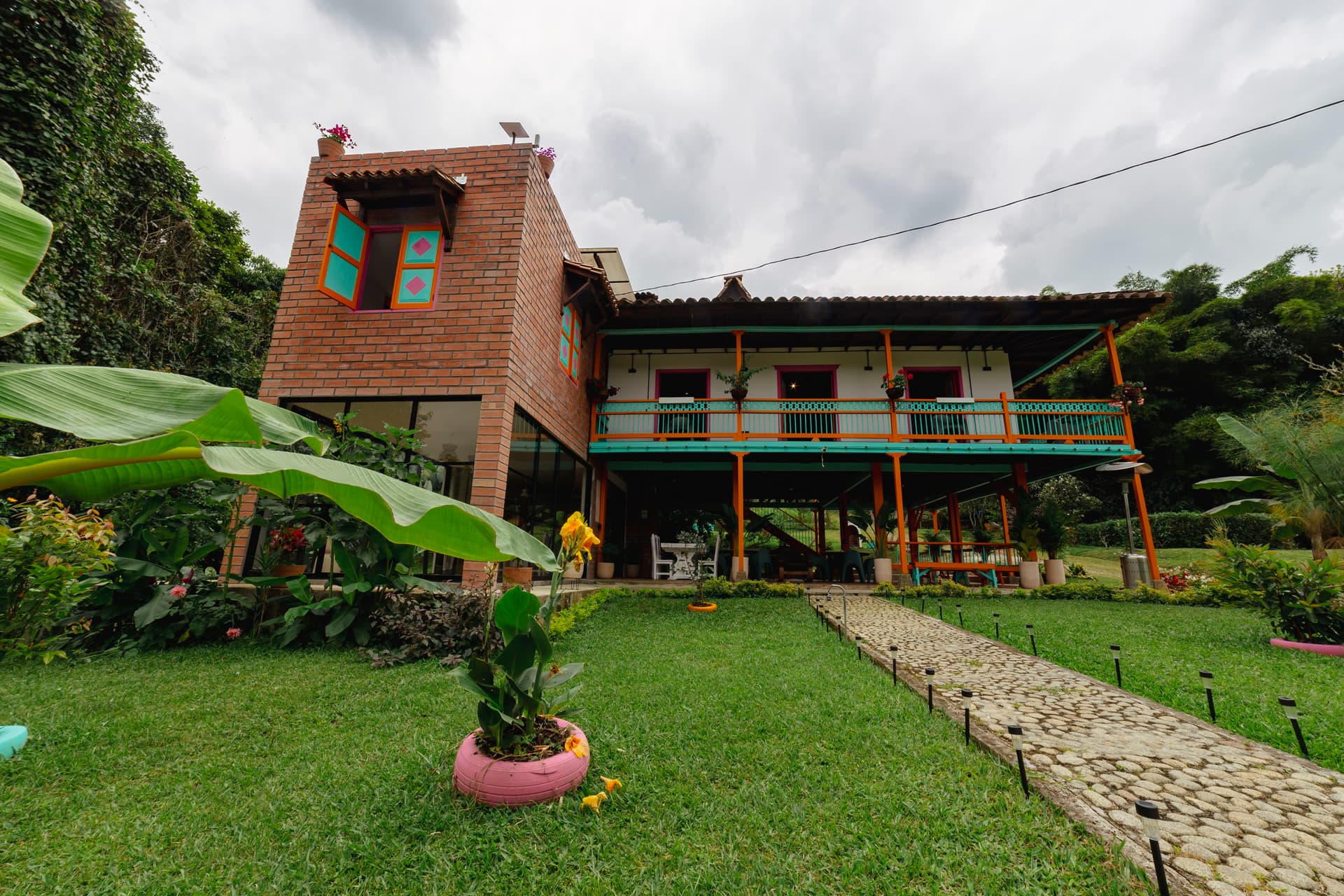
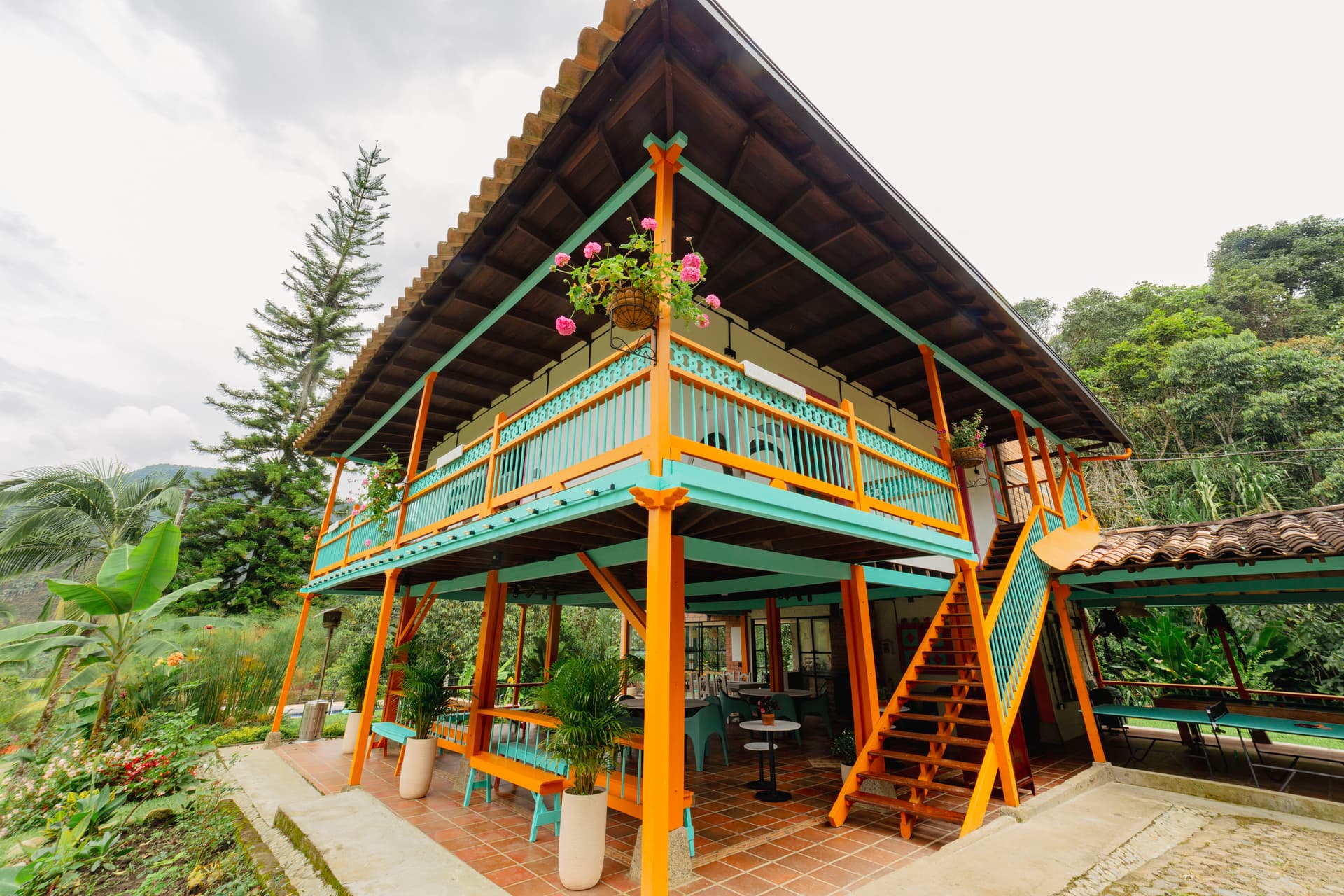
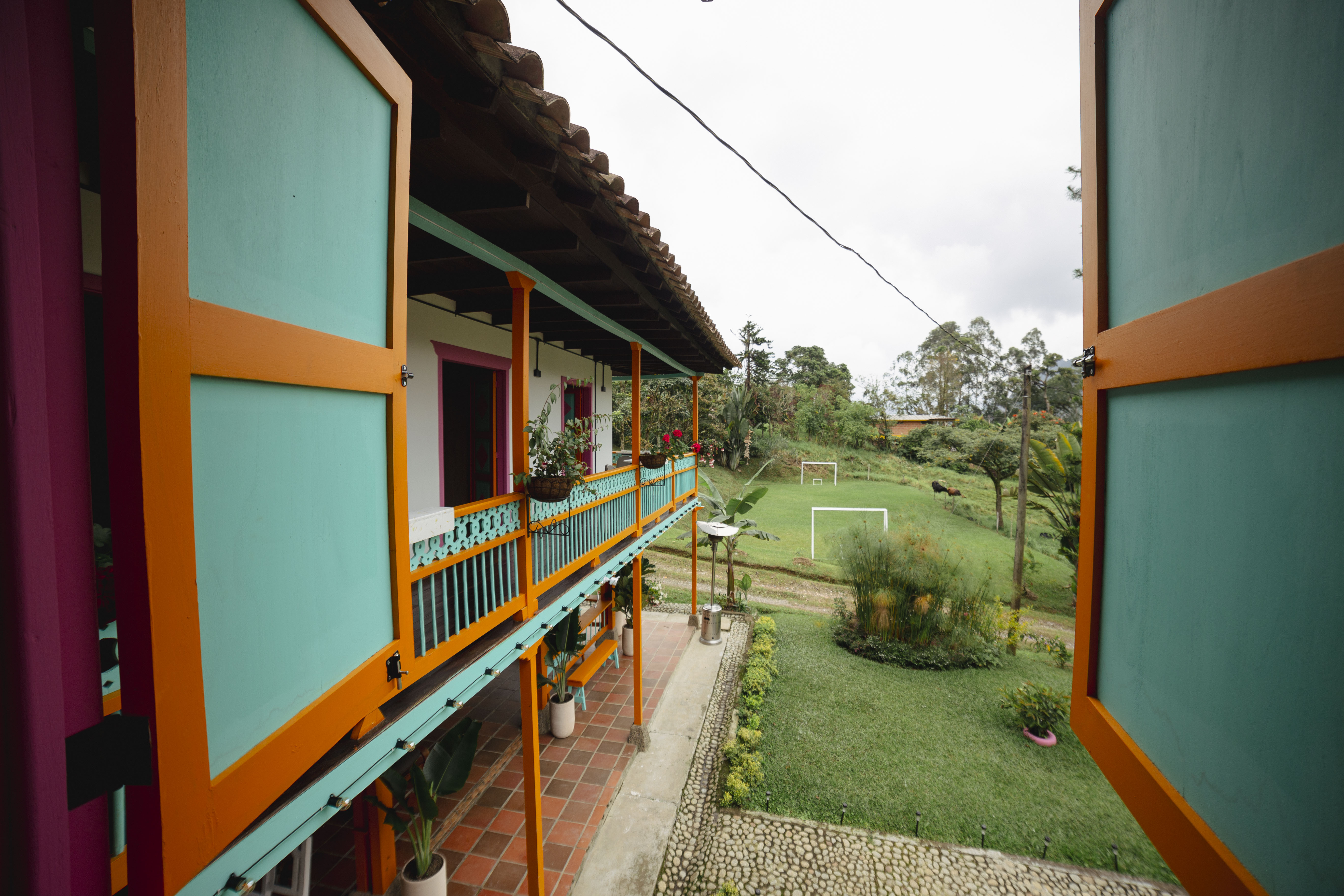
I arrived at Hostel Isla de Pascua slightly lightheaded and breathing like I'd just finished a cross-country ski race. The staff — who have clearly seen this before — handed me a cup of coca tea and told me to sit in the garden for an hour. Good advice. The garden at Isla de Pascua is the kind of place where sitting for an hour feels like a reward, not a punishment. Hummingbirds visited the flowers. The pool caught the afternoon light. Mountains surrounded everything like walls of green felt.
By evening, I felt normal. By the next morning, I felt extraordinary.
The Green That Doesn't Exist in Norway
Norwegian mountains are beautiful, but their beauty is austere. In winter, they're white and grey and blue. In summer, they're grey and green — but a muted, northern green, the color of moss and lichen clinging to rock. The sky is the star in Norway; the mountains are the stage.
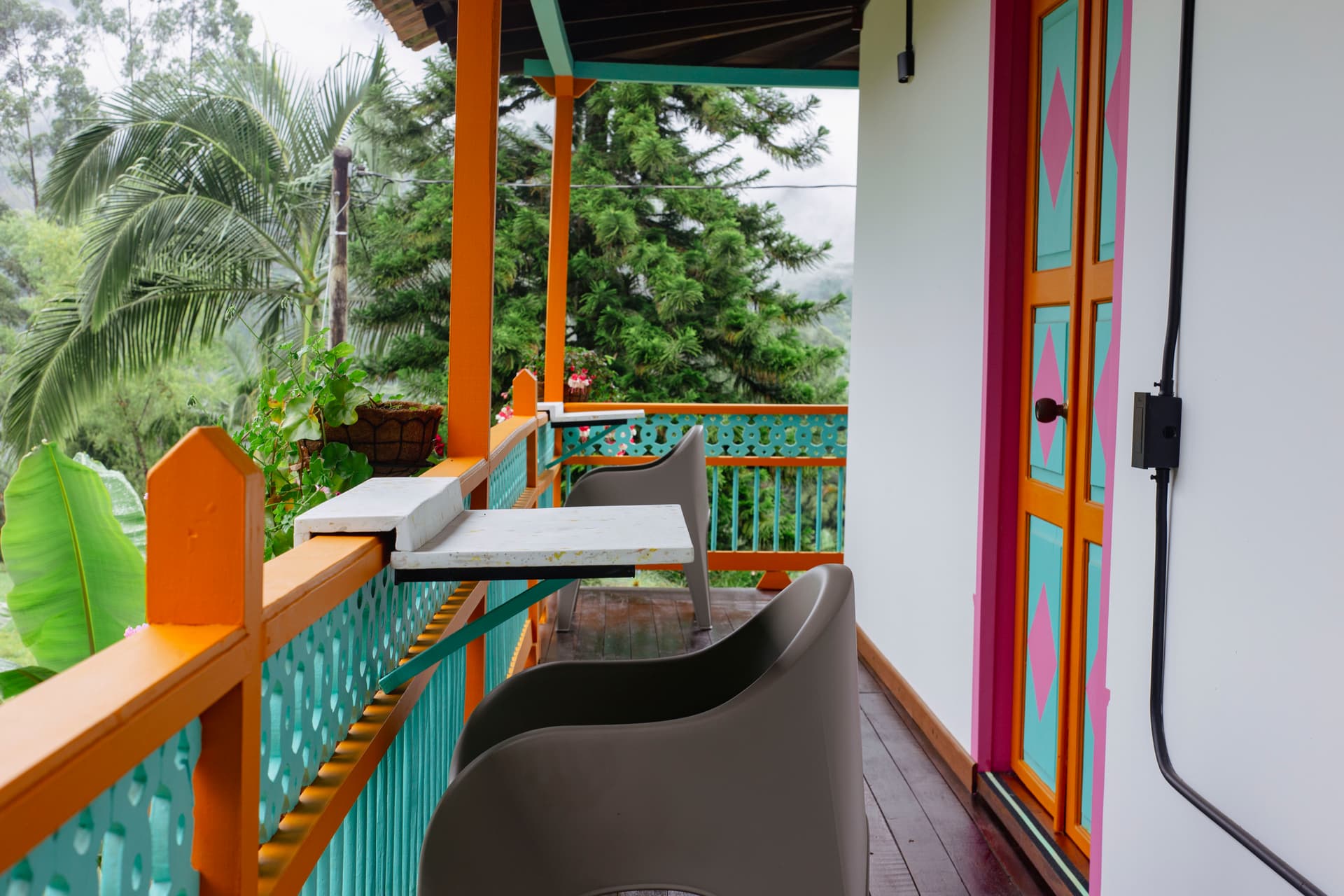
In Jardín, the mountains are the star. And they are green in a way that doesn't exist in my vocabulary. Every shade imaginable — emerald, jade, lime, forest, sage, chartreuse — layered on top of each other in a canopy so dense you can't see the soil beneath. Cloud forests drape the upper slopes like living curtains. Coffee plantations quilt the middle altitudes in orderly rows. And everything — everything — is growing, reaching, climbing toward the light.
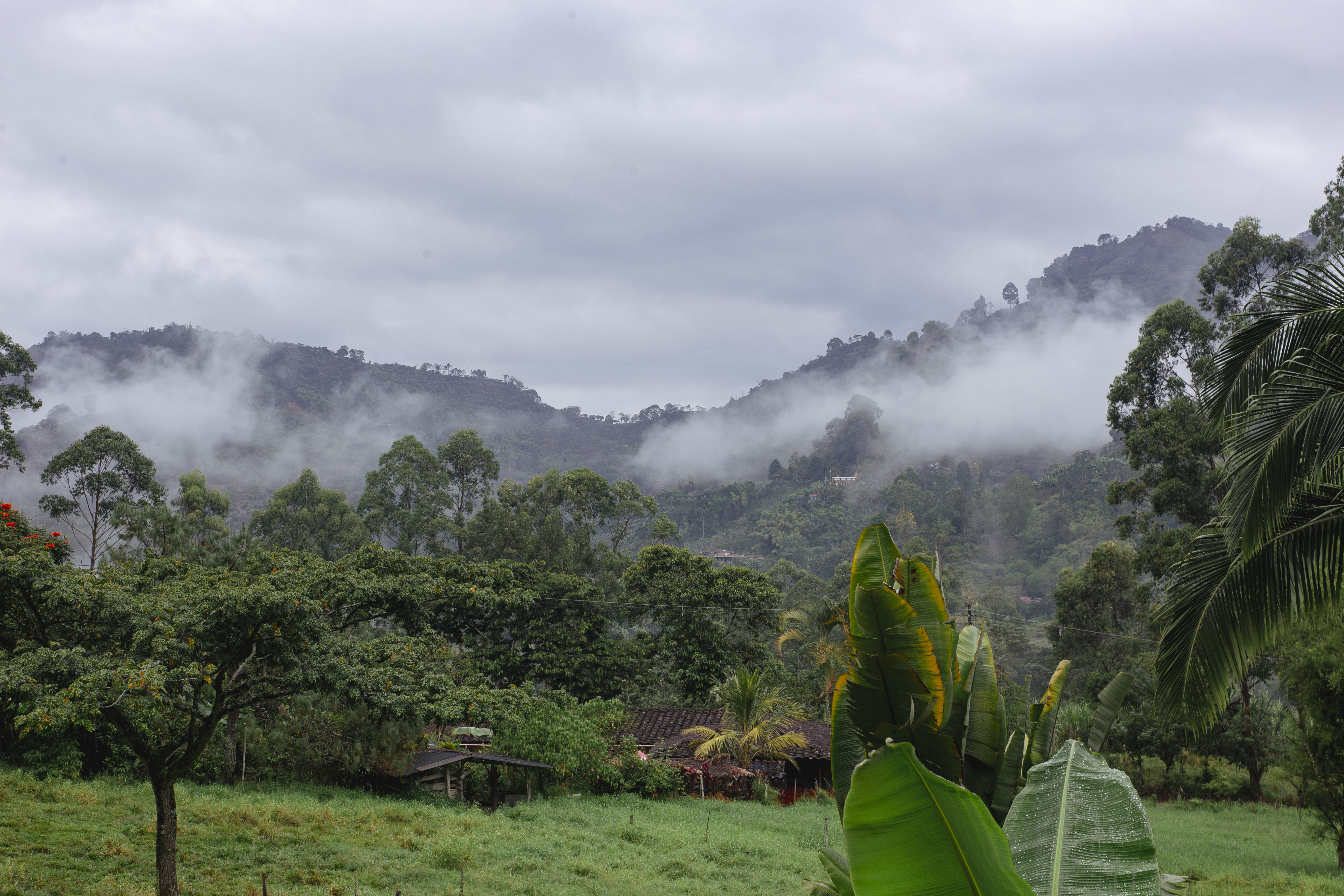
I spent my first full day on a hike to Cueva del Esplendor, and I want to be honest about something: the trail would not impress a Norwegian in terms of difficulty. It's moderate, well-marked, and relatively short. But in terms of what you see along the way, it destroyed every expectation I had.
In Norway, a mountain hike reveals geology. Layers of rock, glacial scars, the slow story of ice and time. In Jardín, a mountain hike reveals biology. I lost count of the species I encountered in the first kilometer alone. Bromeliads clinging to tree trunks like passengers on a crowded bus. Orchids — tiny, exquisite — tucked into crevices. Ferns the size of my living room back home. And the birds. My God, the birds.
The Birds That Broke My Brain
I'm not a birdwatcher. I never have been. In Norway, I can identify a puffin and an eagle and maybe a ptarmigan on a good day. Birds were background noise — pleasant, but not the point.
Jardín changed that. The birdwatching here is unlike anything I've experienced in nature, anywhere. On a single morning walk from the hostel, a local guide pointed out seventeen species. Seventeen. In two hours. Tanagers in colors I'd associate with tropical fish, not birds. Toucans — actual toucans, not zoo toucans — moving through the canopy like they owned it. And hummingbirds everywhere, hovering and darting and shimmering in the light like living jewelry.
The guide told me that the Jardín region is home to over 300 bird species. In all of Norway, we have about 270. This single Colombian valley contains more avian biodiversity than my entire country. I sat with that fact for a while, and it rearranged something in my understanding of the natural world.
The Coffee Mountain
On day four, I joined a coffee farm tour, and this was where the comparison between Norwegian and Colombian mountains became most interesting to me.
In Norway, our mountains produce very little. Some reindeer grazing, some hydroelectric power, tourism. The mountains are magnificent but economically sparse. In Jardín, the mountains produce one of the world's most celebrated agricultural products — coffee — and the relationship between altitude, climate, soil, and quality is as precise and fascinating as any geological process I've studied.
The farmer explained that Jardín's coffee grows at around 1,600 to 1,900 meters — the sweet spot for arabica. The altitude slows the maturation of the coffee cherry, concentrating the sugars and developing complex flavors. The cloud forest climate provides the shade, moisture, and temperature variation that the plants need. The volcanic soil delivers the minerals. Everything connects. The mountain is not just the setting for the coffee farm — it is the coffee farm.
I tasted coffee cherries straight from the tree. I watched the wet processing — the fermentation, the washing. I held sun-dried beans in my hand and smelled something that was simultaneously familiar (I drink Norwegian filter coffee daily) and completely foreign. When the farmer roasted a small batch and brewed it for us, I tasted notes I'd never identified before: caramel, citrus, something almost floral.
I have drunk coffee every day of my adult life, and I had never understood coffee until that afternoon on a mountainside in Jardín.
The Comparison I Stopped Making
By day five, I stopped comparing Jardín to Norway. I realized the comparison was limiting — like trying to evaluate a symphony by comparing it to a folk song. Both beautiful, both valid, both mountain experiences. But fundamentally different kinds of beauty.
Norwegian mountains teach you about endurance, solitude, and the power of emptiness. Jardín's mountains teach you about abundance, connection, and the power of fullness. In Norway, the mountains humble you with their indifference. In Jardín, they embrace you with their generosity — the fruit on every tree, the bird on every branch, the coffee on every slope.
I took a long walk on my last evening, up a trail behind the hostel, and sat on a rock above the valley as the sun went down. The light turned the mountains gold, then orange, then deep violet. Mist began to gather in the valley floor. The sounds of the town drifted up — music, laughter, the faint bark of a dog. And I felt something I haven't felt since I was a boy in Tromsø, standing on a peak after my first real climb: pure, uncomplicated wonder.
What I Brought Home
I brought home two kilos of Jardín coffee, a notebook full of bird species I need to look up, and a quiet conviction that I need to travel more to places that challenge my assumptions. Norway's mountains will always be my first love — the landscape of my childhood, the terrain of my identity. But Jardín's mountains showed me that beauty is bigger and stranger and more varied than any single geography can contain.
To my fellow Scandinavians, and to anyone who thinks they've seen enough mountains: you haven't. Come to Jardín. Wear good boots. Bring binoculars. And prepare to have your definition of "mountain" beautifully, permanently expanded.
Ready to experience Jardín?
Book Now Isla de Pascua