Written by Chris Henare — New Zealand
Stay: July 2025, 3 nights
The Big Fella in the Small Town
Right, so here's the thing — I almost didn't come to Jardín. I was in Medellín, having a great time, plenty of nightlife, good gyms, the works. My mate Dave (another Kiwi, met him at a hostel in Cartagena) was heading to Guatapé, and I was about to tag along when this Colombian bloke at the bar overheard us planning and said, "If you want to see real Colombia, skip Guatapé. Go to Jardín."
I'd never heard of it. Looked it up. Tiny mountain town, population maybe 15,000. No major tourist attractions listed on the first Google page. My kind of place, honestly. I've always found the best spots are the ones that don't show up on "Top 10" lists.
Dave went to Guatapé. I went to Jardín. Three days later, I was trying to convince Dave to come join me because he was missing out massively.
Arriving Like a Giant
I'm 6'4" and about 105 kilos. Not exactly built for Colombian buses. The ride from Medellín had my knees around my ears for four hours, which is about as comfortable as it sounds. But the views were unreal — genuinely some of the most beautiful country I've seen, and I've driven the length of the South Island, so the bar is high.
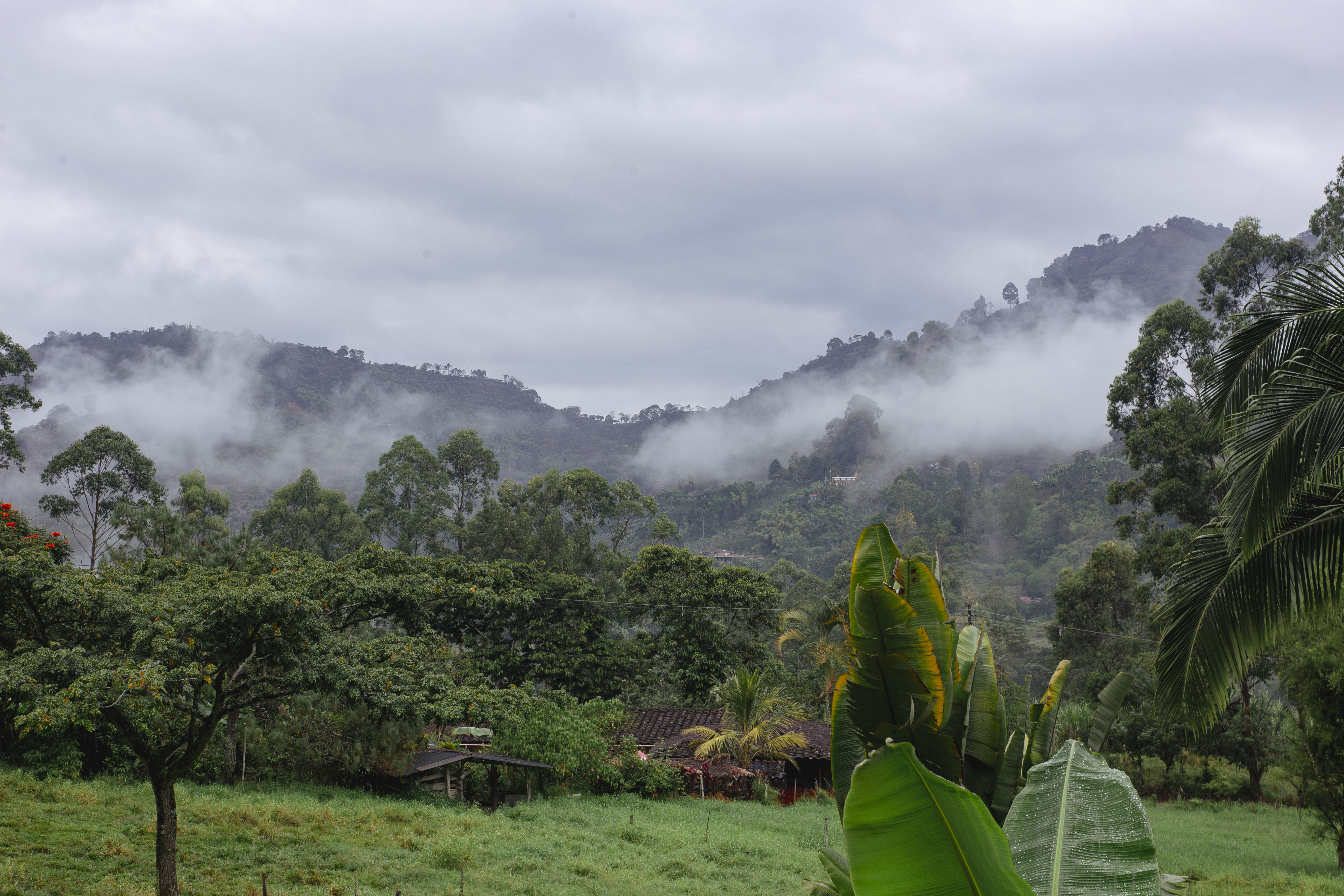
Jardín itself hit different from the moment I stepped off the bus. After weeks in big Colombian cities, this was like someone turned the volume down. Cobblestone streets, old blokes playing chess in the plaza, kids running around, that massive church rising up like something out of a movie. Peaceful. Proper peaceful.
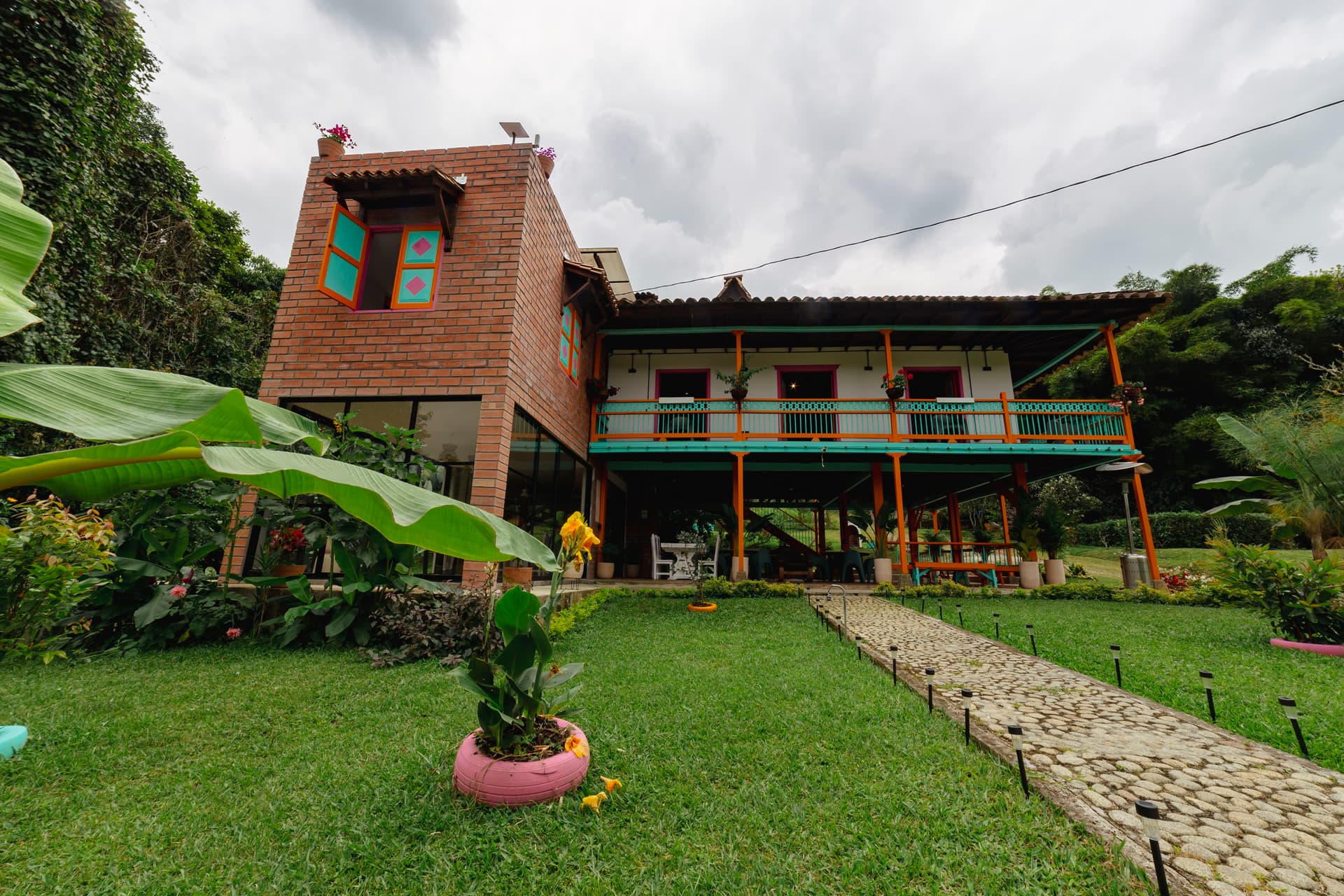
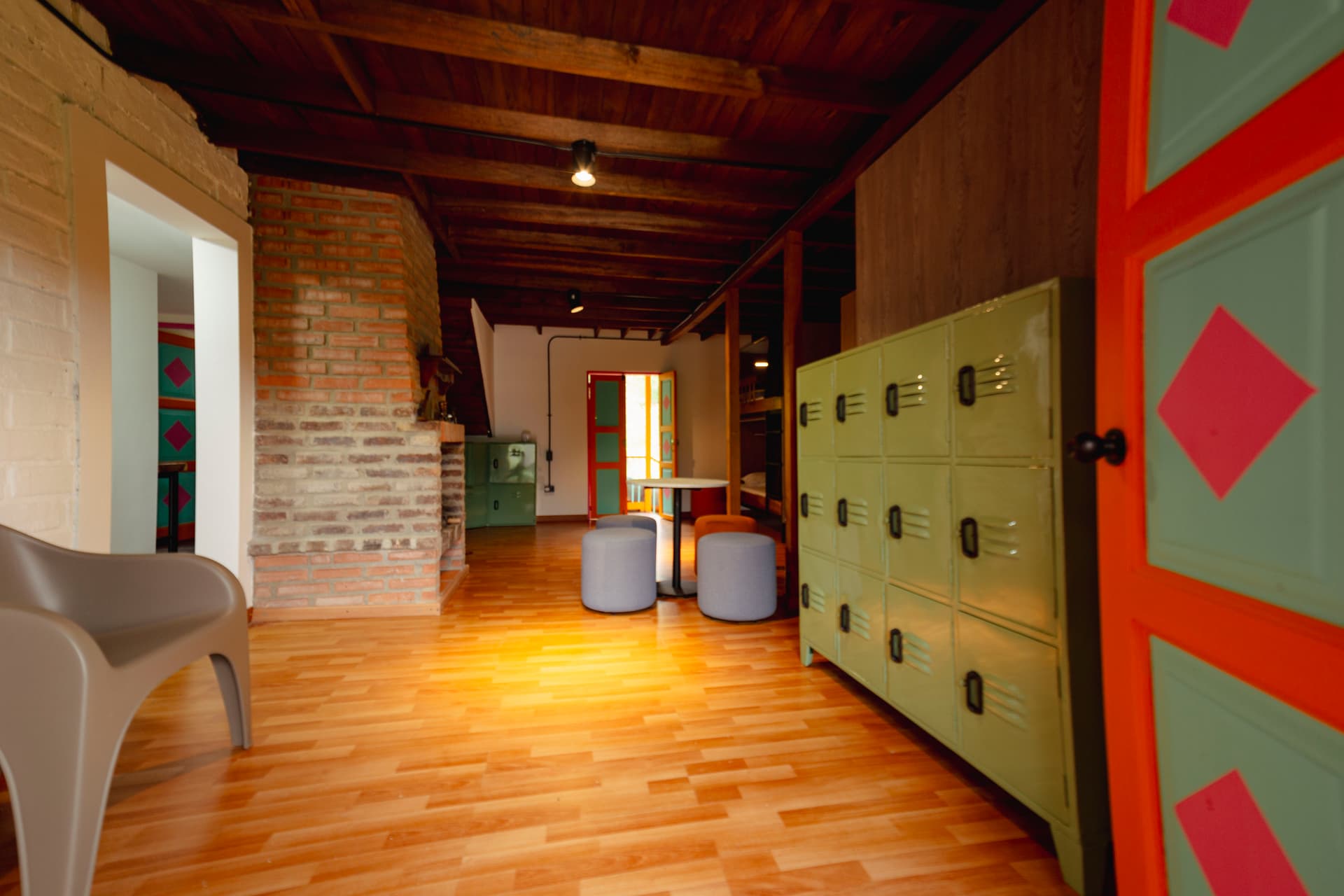
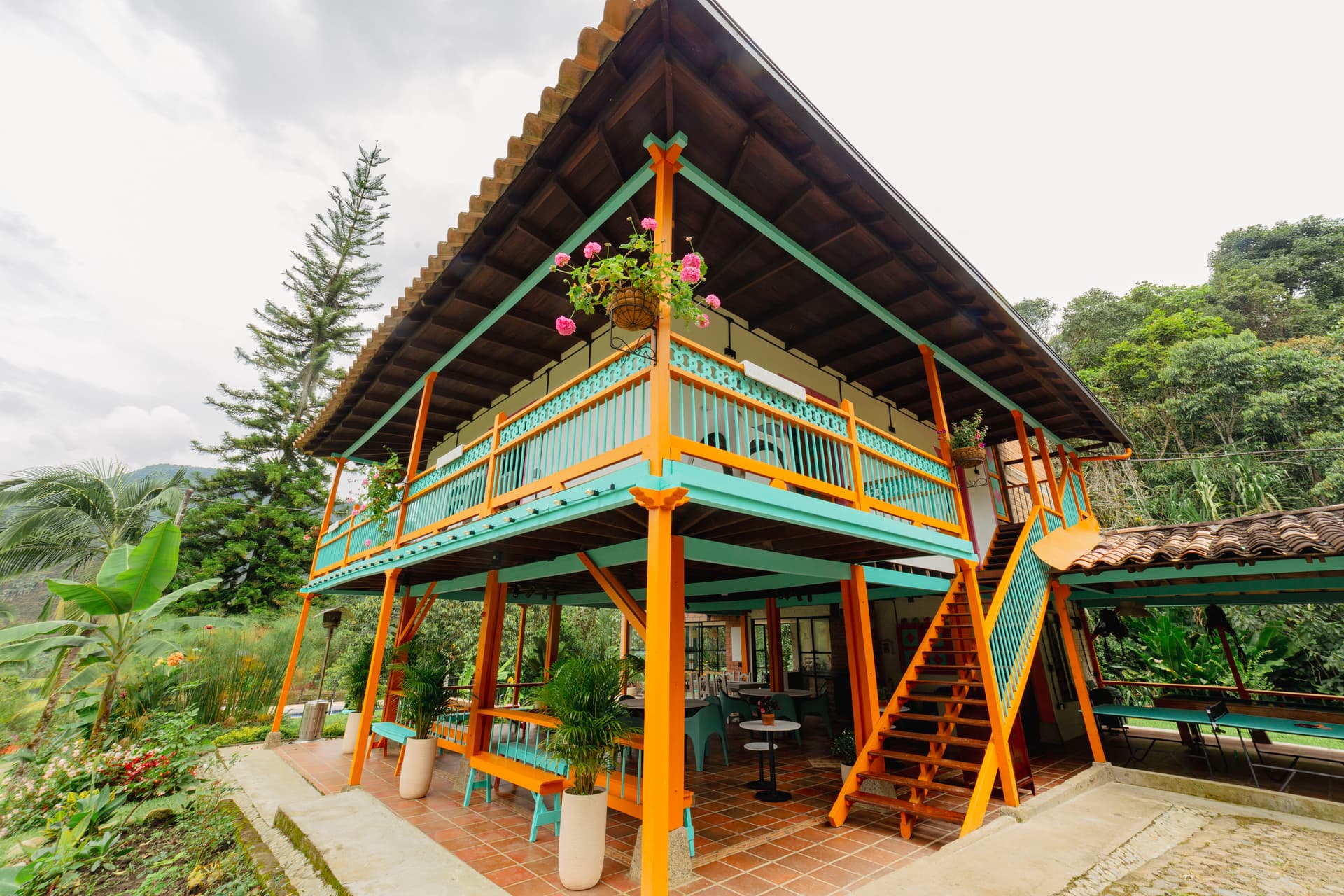
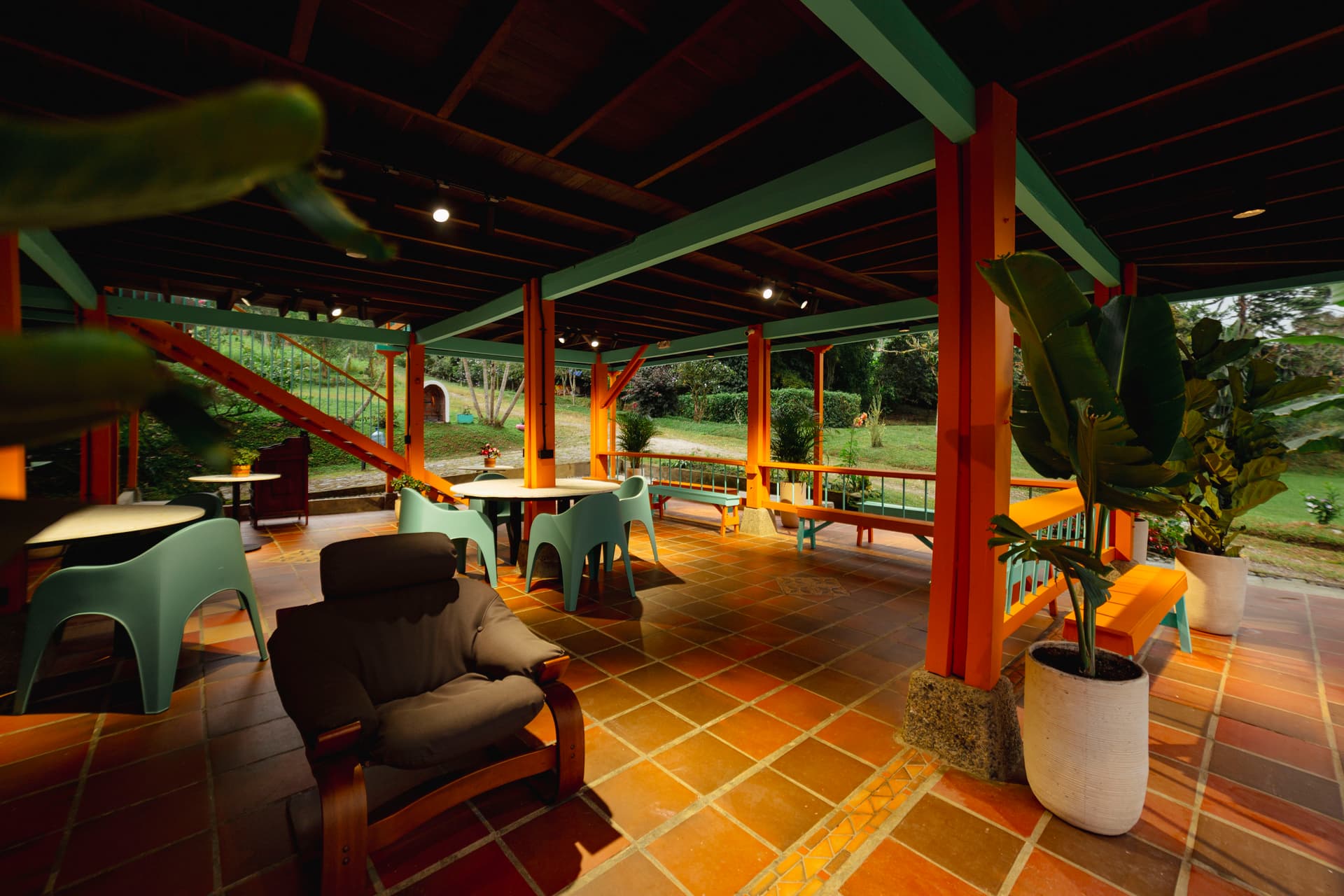
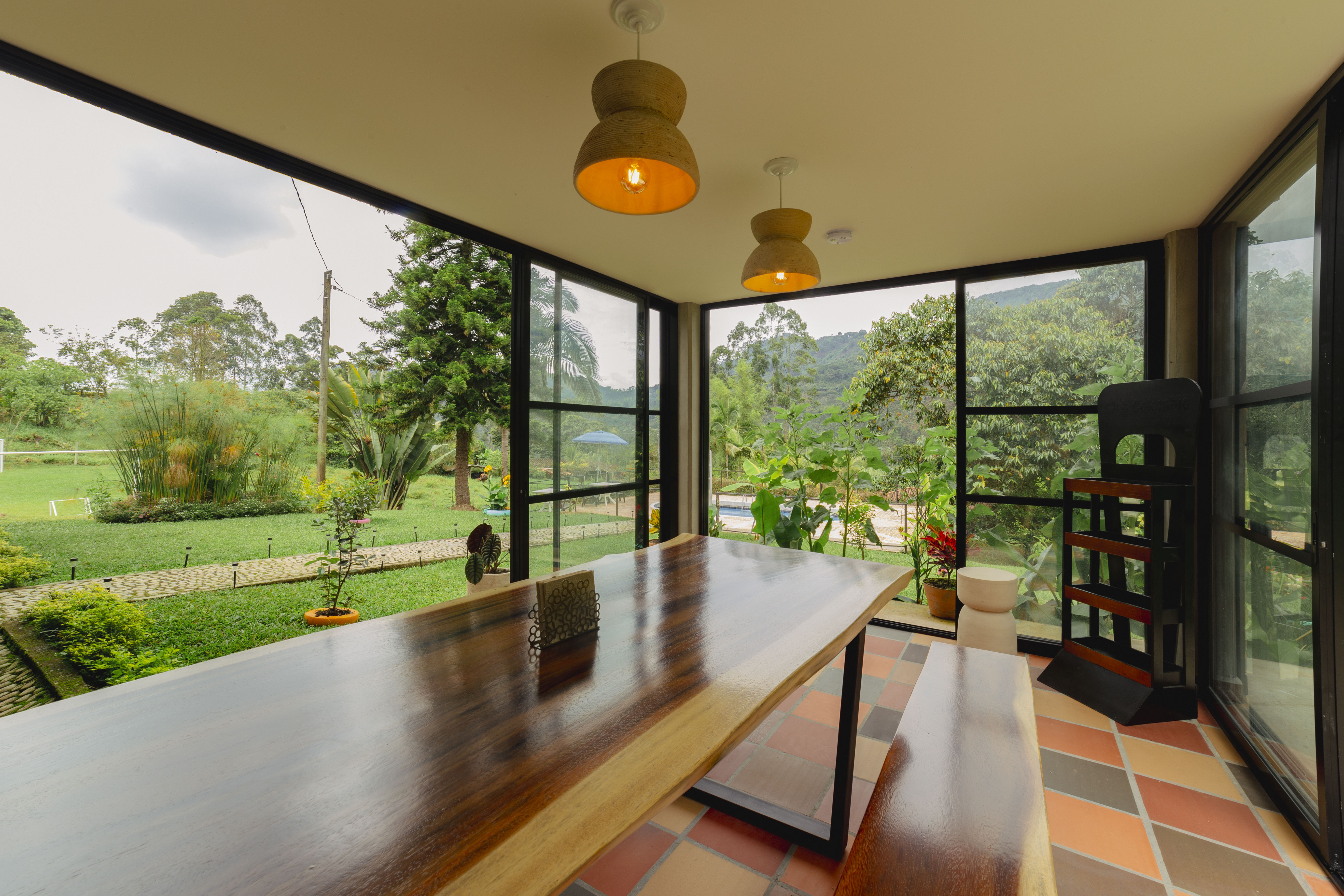
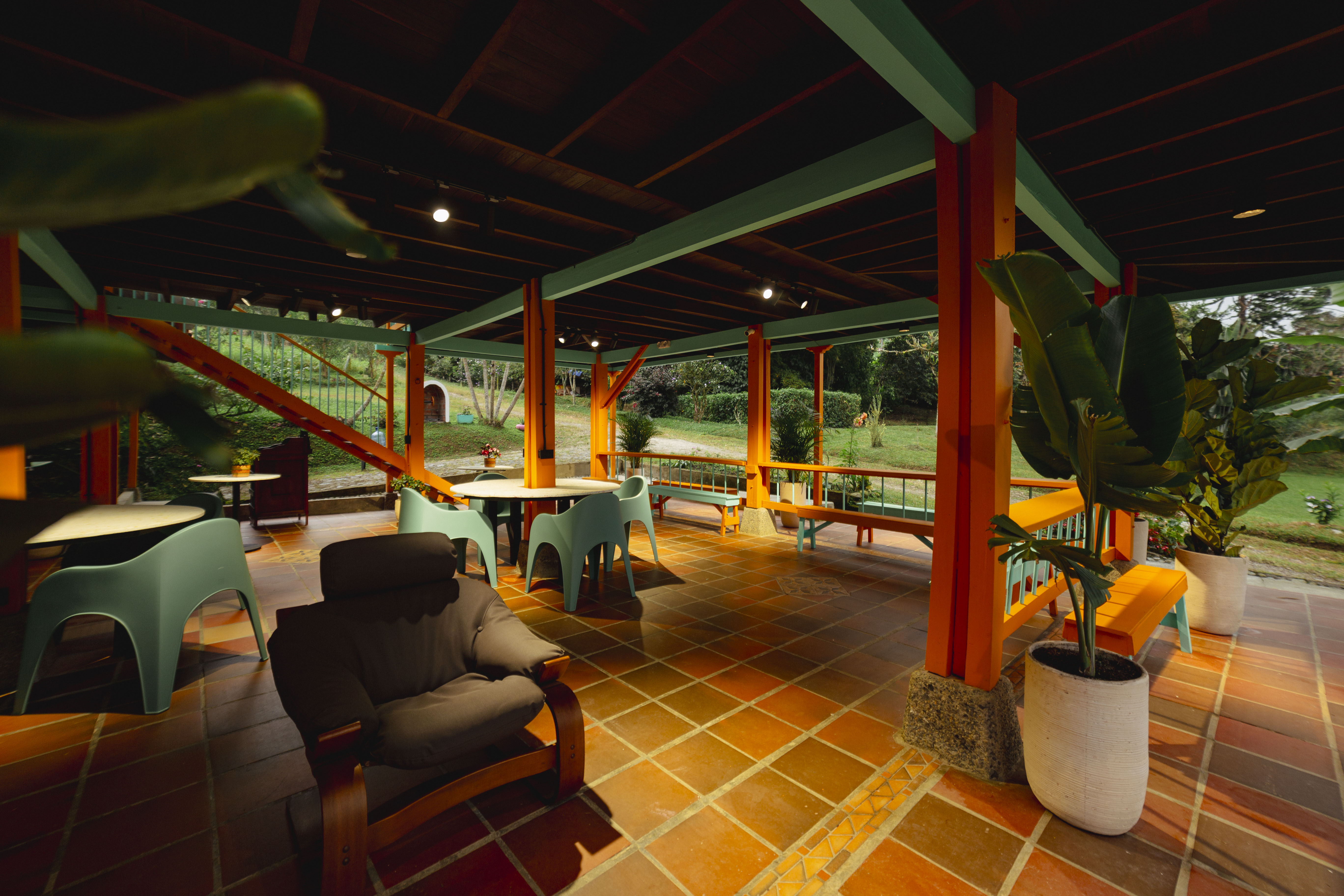
I checked into Isla de Pascua and the staff had a good laugh about finding me a bed that fit. They sorted me out though — good people. The hostel had this brilliant common area with a pool, hammocks, and a bar. Within twenty minutes I had a beer in my hand and was yarning with a German couple about travel plans. This is what hostels are supposed to be.
Discovering Tejo (and My New Obsession)
Second day, one of the locals at the hostel asked if I wanted to play tejo. I had no idea what it was. He explained: you throw a heavy metal disc at a clay pit packed with small gunpowder packets, and the goal is to make them explode.
Sorry, what?
A sport where things explode? Sign me up immediately.
We walked to the tejo court — a proper local spot, not touristy at all. Older guys with weathered hands and serious expressions were already playing. They looked at me like I'd wandered in from another planet. Fair enough. I probably looked ridiculous.
The first throw, I overcooked it completely. The disc went sailing over the pit and nearly took out a wall. Everyone cracked up laughing. The second throw was better. The third one — boom. Direct hit. Gunpowder everywhere. The old guys cheered like I'd scored a try against Australia.
From that moment on, I was hooked. We played for three hours. They kept buying me beers (the local beer is decent, nothing flash, but cold and cheap). By the end, they were calling me "El Grande" and trying to recruit me for their weekend team. I've played rugby in front of thousands of people, but I'm not sure I've ever felt more celebrated than when I nailed three explosions in a row in a tejo court in Jardín.
The Unexpected Depth
Here's where I'm going to get a bit serious, and bear with me because this isn't really my style.
I came to Colombia expecting good times, cheap beers, and beautiful scenery. I got all of that. But Jardín gave me something I wasn't expecting — real conversations.
On my second night at Isla de Pascua, there was this sort of impromptu gathering in the common area. A mix of travelers and locals. Someone brought a guitar. Someone else brought aguardiente (that anise-flavored firewater that Colombians love — took me three tries to stop pulling a face after each shot).
I ended up sitting next to this older Colombian guy named Don Hernán. He must have been in his sixties. Through a combination of my terrible Spanish, his handful of English words, and a lot of hand gestures, we had one of the most genuine conversations I've had in years.
He told me about growing up in Jardín, about his coffee farm, about his kids who'd moved to Medellín and Bogotá. I told him about New Zealand, about rugby, about how I'd quit my corporate job to travel after my dad passed away last year. We understood each other without understanding half the words. There's something about sitting in a mountain town at night, sharing a drink with a stranger, that strips away all the nonsense.
The Plaza at Night
The main plaza at night is something special. It's not wild nightlife — there are no clubs, no bottle service, no velvet ropes. It's better than that.
Families are out walking. Old couples sit on benches. Kids play football on the cobblestones. Music drifts out of the bars and restaurants lining the square. People eat ice cream and empanadas and generally just enjoy being alive.
I sat on a bench with a beer and just watched. In New Zealand, we'd call this "sweet as." In Colombia, they probably have a better word for it, but I don't know enough Spanish to find it. It was just... right. Everything felt like it was exactly where it was supposed to be.
There are a few bars worth checking out around the plaza. Nothing fancy, but the kind of places where the bartender knows everyone's name and the music is whatever someone put on their phone. I got into a surprisingly competitive pool game with a couple of local lads who were about half my size but ten times better at pool. Lost badly. Bought them beers anyway.
The Morning After (and the Hike)
I won't pretend I felt amazing on my last morning. The aguardiente had done its work. But someone at the hostel had organized a group hike to Cristo Rey, and I figured sweating it out was better than lying in a hammock feeling sorry for myself.
Good decision. Great decision, actually. The hike is steep — my rugby fitness helped here, though my knees had opinions — and the view from the top is one of those moments where you just stand there with your mouth open. The entire valley spread out below, mountains disappearing into clouds, the town looking like a toy village from up high.
I stood up there for a good twenty minutes, just breathing. A Colombian family offered me some fruit they'd brought. I gave them some of my trail mix. We took photos for each other. No common language necessary.
Why Three Nights Wasn't Enough
I was supposed to stay one night. A quick stop between Medellín and wherever came next. I extended to three and honestly could have done a week.
Jardín isn't the kind of place that grabs you with a flashy sales pitch. It doesn't have the ruins of Machu Picchu or the beaches of Thailand. It grabs you with something quieter — the way the morning light hits the mountains, the sound of the church bells echoing through the valley, the genuine warmth of people who aren't performing hospitality but just naturally live it.
The Takeaway
Look, I'm not a travel blogger. I'm a bloke from Auckland who used to tackle people for a living and now wanders around South America trying to figure out what's next. I don't have poetic words for what Jardín did to me.
But I'll say this: it made me slow down. It made me sit with strangers and actually listen. It made me play a sport involving explosions and love every second. It made me hike up a mountain with a hangover and feel grateful for the pain because the view was that good.
If you're the kind of traveler who measures a place by its Instagram potential, Jardín might seem quiet. If you measure it by how it makes you feel — go. Stay at Isla de Pascua. Play tejo. Talk to Don Hernán (if he's still hanging around the hostel — tell him El Grande says kia ora).
You won't regret it. That's a promise from a Kiwi, and we don't make those lightly.
— Chris Henare, Auckland, New Zealand. July 2025.
Ready to experience Jardín?
Book Now Isla de Pascua