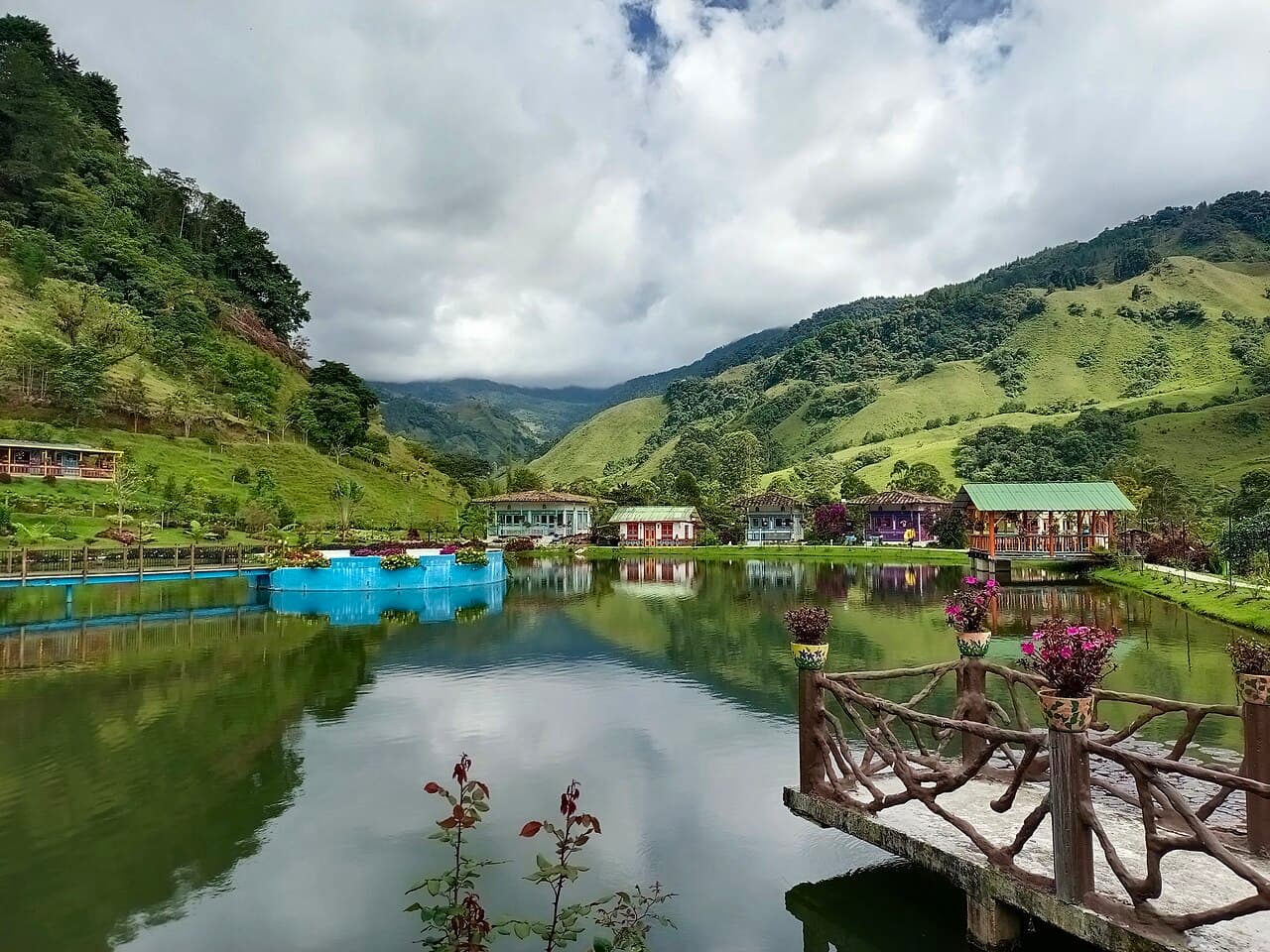
The digital nomad scene in Colombia has exploded over the past few years. Medellín and Bogotá are obvious choices, but a growing number of remote workers are discovering that small-town Colombia offers something the big cities can't — a slower pace, lower costs, deeper cultural immersion, and the kind of daily routine that actually feels like living abroad rather than just working abroad with better weather.
Jardín is one of the best small-town options for digital nomads in Colombia. But can you actually get work done here? Is the internet reliable enough for video calls? Where do you sit with your laptop? This guide covers everything you need to know about working remotely from Jardín.
Can You Really Work Remotely from Jardín?
The short answer: yes, absolutely. The longer answer involves some caveats.
Jardín is a small town of about 18,000 people in southwest Antioquia. It doesn't have the coworking infrastructure of Medellín or the fiber-optic speeds of Bogotá. What it does have is reliable enough internet for most remote work, a handful of excellent spots to work from, and a quality of life that makes the minor inconveniences worth it.
If your work involves constant video conferencing with large groups, real-time collaboration tools, or uploading massive files, you might find Jardín's internet frustrating on occasion. But if you're a writer, designer, developer, consultant, or anyone who can structure their heavy-bandwidth work around the best connectivity windows, Jardín works beautifully.
Internet Infrastructure
Jardín's internet has improved significantly in recent years. The town has 4G LTE coverage from all major Colombian carriers (Claro, Movistar, Tigo), and many accommodations now offer dedicated WiFi connections.
Typical speeds you can expect:
- Accommodation WiFi: 15–50 Mbps depending on the property
- Café WiFi: 5–20 Mbps (variable)
- Mobile data (4G): 10–30 Mbps
- Best available (Isla de Pascua): 50 Mbps dedicated
For context, you need about 3–5 Mbps for a reliable Zoom call, 10 Mbps for comfortable general work, and 25+ Mbps for heavy uploads or multiple simultaneous streams. Most of the time, Jardín delivers what you need.
Power outages are rare but do happen, usually during heavy rainstorms. They're typically resolved within an hour. A laptop with decent battery life and a mobile hotspot as backup will keep you covered for the occasional disruption.
Isla de Pascua: The Digital Nomad Hub
If you're serious about working remotely from Jardín, Isla de Pascua hostel should be your first choice for accommodation. It's not just a place to sleep — it's become the de facto coworking space and digital nomad community hub in town.
Coworking Setup
Isla de Pascua has invested in infrastructure specifically for remote workers:
- Dedicated WiFi network: 50 Mbps connection with a separate network for coworkers, so your Zoom call doesn't compete with someone streaming Netflix in the dorm
- Work-friendly common areas: Large tables with comfortable seating, good natural lighting, and enough space that you don't feel crowded
- Power outlets everywhere: No hunting for outlets or awkwardly sharing with five other people
- Quiet hours and zones: The common area has an understood "work mode" during daytime hours
Beyond the Desk
What makes Isla de Pascua special for digital nomads isn't just the WiFi — it's the lifestyle it enables:
- Swimming pool: Take a midday break with a dip. It sounds like a small thing, but having a pool for work breaks dramatically improves your daily routine
- Common kitchen: Cook your own meals to keep costs down, or share cooking duties with other long-term guests
- Social atmosphere: Meet other remote workers, exchange tips, share meals, and build the kind of micro-community that combats the loneliness of nomad life
- Walking distance to everything: The plaza, cafés, restaurants, and trailheads are all within a few minutes' walk
Pricing for Long-Term Stays
Isla de Pascua offers competitive rates for digital nomads staying longer:
- Dorm bed: Starting around $10–12 USD per night, with weekly and monthly discounts
- Private room: $25–40 USD per night depending on the room and season
- Monthly rates: Negotiable for stays of 30+ days — ask directly for the best deal
Compared to a coworking membership in Medellín ($100–200/month) plus a separate apartment ($400–800/month), Jardín with Isla de Pascua can cut your monthly costs significantly while giving you a far more interesting daily experience.
Where to Stay in Jardín
Isla de Pascua is a social hostel with a swimming pool, coworking space with 50 Mbps WiFi, and a common area that makes it easy to meet other travelers. It's steps from the main square and the best base for exploring everything Jardín has to offer.
Learn more about Isla de Pascua →Cafés with Good WiFi
When you want a change of scenery from your accommodation, Jardín has several cafés where you can comfortably work:
Café Macanas
The best café in town for remote work. Café Macanas offers:
- WiFi: 15–20 Mbps, generally reliable
- Seating: Indoor and outdoor options with tables large enough for a laptop
- Power: Outlets available at several seats
- Coffee: Excellent specialty coffee from local farms
- Atmosphere: Quiet enough to focus, especially on weekday mornings
- Food: Light meals and pastries available
The coffee alone is worth the visit — this is one of the best places in Jardín to taste single-origin beans from nearby fincas. Work for a couple of hours, then reward yourself with a pour-over.
Café Europa
Another solid option on the plaza:
- WiFi: 10–15 Mbps
- Seating: Plaza-facing tables with great views but potential distractions
- Power: Limited outlets — charge up beforehand
- Coffee: Good quality, reasonable prices
- Atmosphere: More social and lively, better for lighter work tasks
Other Options
- The plaza itself has open WiFi in some areas, but it's unreliable and slow — not recommended for actual work
- Some restaurants will let you work during off-peak hours if you order food and drinks
- The local library occasionally has WiFi access but limited hours
Pro tip: Base yourself at Isla de Pascua — Establish a routine: mornings at your accommodation for focused work, afternoons at a café for lighter tasks and socializing. This gives you variety without sacrificing productivity.
SIM Cards and Mobile Data
Having a Colombian SIM card with a data plan is essential backup — and sometimes your primary connection. Here's what you need to know:
Which Carrier
Claro has the best coverage in Jardín and the surrounding area. Movistar and Tigo work in town but can be spotty on trails and rural roads. For a digital nomad, Claro is the safest bet.
Getting a SIM Card
You can buy a Claro SIM card in Jardín at small phone shops around the plaza for about 5,000–10,000 COP ($1–2 USD). You'll need your passport. Activation is usually immediate.
Data Plans
- Daily: 1–3 GB for 3,000–5,000 COP
- Weekly: 5–10 GB for 10,000–20,000 COP
- Monthly: 15–40 GB for 25,000–60,000 COP ($6–15 USD)
For remote work backup, a 20 GB monthly plan (around 35,000 COP / $9 USD) is the sweet spot. Use it as a hotspot when WiFi drops out or when you need a reliable connection for an important call.
Mobile Hotspot Tips
- Claro 4G in Jardín typically delivers 15–25 Mbps download speeds
- Signal is strongest in and around the plaza area
- Coverage drops in valleys and on hiking trails outside town
- Consider bringing a dedicated mobile hotspot device if you rely heavily on backup connectivity
Cost of Living for Digital Nomads
One of Jardín's biggest draws for digital nomads is affordability. Here's a realistic monthly budget:
Monthly Breakdown (USD)
| Expense | Budget | Comfortable |
|---|---|---|
| Accommodation (Isla de Pascua) | $250–350 | $400–600 |
| Food (mix of cooking and eating out) | $200–300 | $350–500 |
| Coffee (daily café habit) | $30–50 | $50–80 |
| SIM card / data | $10–15 | $10–15 |
| Activities (weekends) | $50–100 | $100–200 |
| Transport (occasional) | $20–40 | $40–80 |
| Miscellaneous | $30–50 | $50–100 |
| Total | $590–905 | $1,000–1,575 |
Compare that to Medellín ($1,200–2,500/month) or Bogotá ($1,000–2,000/month), and the savings are significant. Even the comfortable tier in Jardín costs less than a budget month in Medellín, and your daily quality of life — fresh mountain air, zero traffic, natural beauty — is arguably better.
For a detailed breakdown of all costs in Jardín, check our budget and cost guide.
Community and Social Life
The biggest concern most digital nomads have about small towns is loneliness. Jardín handles this surprisingly well.
The DN Community
Jardín doesn't have a massive digital nomad scene like Medellín or Bansko, but it has a small, tight-knit community of remote workers who cycle through. At Isla de Pascua, you'll regularly meet other nomads — developers, writers, designers, consultants, and entrepreneurs who've chosen quality of life over big-city amenities.
The community is small enough that you actually get to know people. Instead of the revolving door of a Medellín coworking space where you never see the same face twice, Jardín fosters real connections.
Local Social Life
Colombians are incredibly social, and Jardín is no exception. The plaza is the town's living room — on any evening, you'll find locals gathered, playing tejo, sharing aguardiente, and enjoying the mountain air. With even basic Spanish, you'll be welcomed into conversations and invited to local events.
For nightlife options, check our restaurants and nightlife guide and nightlife guide.
Language
Spanish is essential for daily life in Jardín. English is spoken at some tourist-oriented businesses, but for grocery shopping, interacting with locals, and navigating daily life, you'll need at least basic Spanish. This is actually a feature, not a bug — immersion is the fastest way to learn, and Jardín forces you to practice daily.
Time Zone Advantages
Jardín sits in the Colombia Time Zone (COT), which is UTC-5 — the same as US Eastern Standard Time. This is a significant advantage for remote workers:
- US East Coast: Same time zone (during EST) or 1 hour behind (during EDT)
- US West Coast: 2–3 hours ahead, depending on daylight saving
- Europe: 6–7 hours behind, allowing morning overlap
- Australia: Tough — 14–16 hours difference
If your clients or team are US-based, Colombia's time zone is one of the best in Latin America for synchronous work. You can keep normal working hours without the sunrise calls that plague nomads in Southeast Asia.
A Day in the Life: Remote Worker in Jardín
Here's what a typical workday looks like for a digital nomad in Jardín:
6:30 AM — Wake up to birdsong and mountain air. Coffee from the kitchen at Isla de Pascua.
7:00 AM — Morning walk to the plaza. Watch the town wake up. Maybe catch the sunrise light on the basilica.
7:30 AM — Breakfast at the accommodation or a local bakery. A fresh arepa and hot chocolate costs about 5,000 COP ($1.25 USD).
8:00 AM – 12:00 PM — Focused work session. This is your most productive window. Use the dedicated WiFi, knock out your most important tasks.
12:00 PM — Lunch. A menú del día at a local restaurant runs 12,000–15,000 COP ($3–4 USD) and includes soup, main course, juice, and dessert.
12:45 PM — Pool break or short walk. Clear your head, move your body.
1:30 PM – 5:00 PM — Afternoon work session. Move to a café for lighter tasks, or stay at base for calls and meetings.
5:00 PM — Done for the day. Head to the plaza for a coffee, explore a local trail, or join other travelers for sunset drinks.
6:30 PM — Dinner. Try a different local restaurant each night — it's affordable enough to eat out daily.
8:00 PM — Evening socializing at the hostel, reading, or light work. Early to bed — mountain towns run on early schedules.
Pros and Cons vs. Medellín
Many digital nomads in Colombia bounce between Medellín and smaller towns. Here's an honest comparison:
Jardín Advantages
- 50–60% lower cost of living than Medellín
- Zero traffic, zero pollution — walk everywhere in 10 minutes
- Genuine cultural immersion — you're not in a gringo bubble
- Nature at your doorstep — cloud forest, waterfalls, coffee farms
- Better mental health — slower pace, natural beauty, less screen time
- Unique experience — most nomads go to Medellín, Jardín sets you apart
Medellín Advantages
- Faster, more reliable internet — fiber optic widely available
- Dedicated coworking spaces — Selina, WeWork, and dozens of independents
- Larger social scene — bigger DN community, more events and meetups
- Better healthcare — major hospitals and clinics
- More dining and nightlife options — every cuisine, every price point
- Airport — international flights without the bus ride
The Sweet Spot
Many experienced nomads find the best approach is to alternate: spend 2–4 weeks in Jardín for focused, deep work and recharging, then head to Medellín for a week of meetings, socializing, and city amenities. The 4-hour bus ride makes this entirely practical.
Check our transport guide for getting between the two.
Practical Tips for DN Life in Jardín
Bring a good laptop charger and surge protector. Power fluctuations can happen during storms. A basic surge protector costs a few dollars and protects your gear.
Download offline versions of your key tools. Google Docs offline mode, Slack's offline features, and locally stored files will save you during the rare connectivity gap.
Learn basic Spanish before arriving. Even A2 level makes daily life dramatically easier and more enjoyable. Jardín isn't an English-friendly environment, and that's part of its charm.
Establish a routine quickly. The lack of structure in a small town can lead to unproductive days. Set work hours, stick to them, and use the natural beauty as a reward for focused effort.
Join local activities on weekends. Take a coffee farm tour, hike to Cueva del Esplendor, or explore the 3-day itinerary over your first weekend to get oriented and energized.
Budget for occasional Medellín trips. Even the most devoted small-town nomad needs city access sometimes. Budget for a monthly bus trip ($15 round trip) and a night or two in Medellín for errands, shopping, and socializing.
Is Jardín Right for Your Remote Work Life?
Jardín isn't for every digital nomad. If you need fast, guaranteed internet for all-day video calls, or if you crave the energy and options of a big city, Medellín is the better base. If you're brand new to nomad life and want easy infrastructure, start in the city.
But if you've been on the road for a while and you're craving something real — a place where your daily life feels meaningfully different from home, where you can do great work and also hike to waterfalls on your lunch break, where your cost of living drops and your quality of life rises — Jardín might be exactly what you need.
The digital nomads who fall in love with Jardín share a common trait: they value depth over convenience. They'd rather have one excellent café and a tight community than fifty coworking spaces full of strangers. They'd rather hear birdsong than traffic. They'd rather spend $800 a month and feel alive than $2,000 a month and feel interchangeable.
Start with our comprehensive Jardín travel guide to plan your trip, and check out where to stay for all accommodation options.
Ready to experience Jardín?
Book Now Isla de Pascua